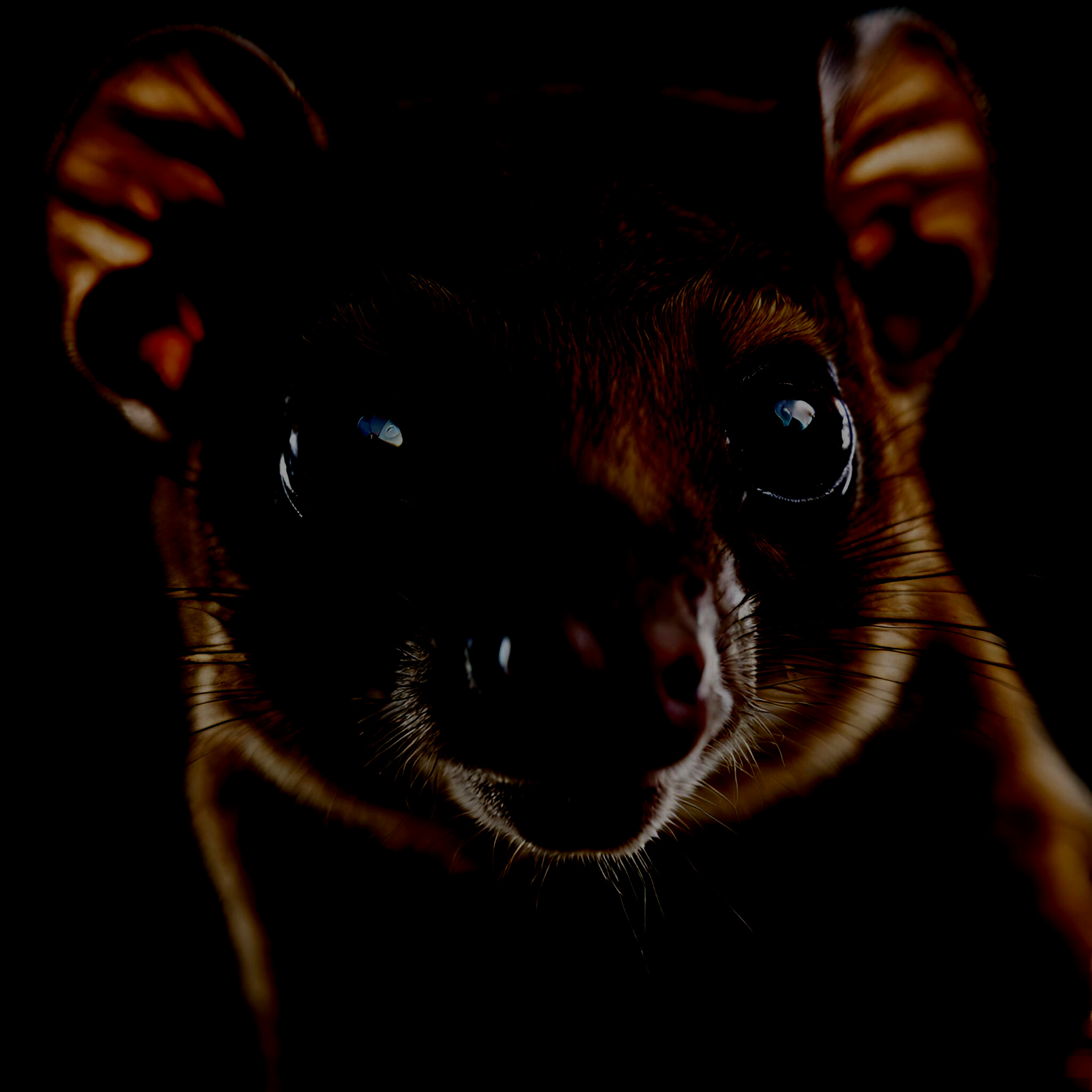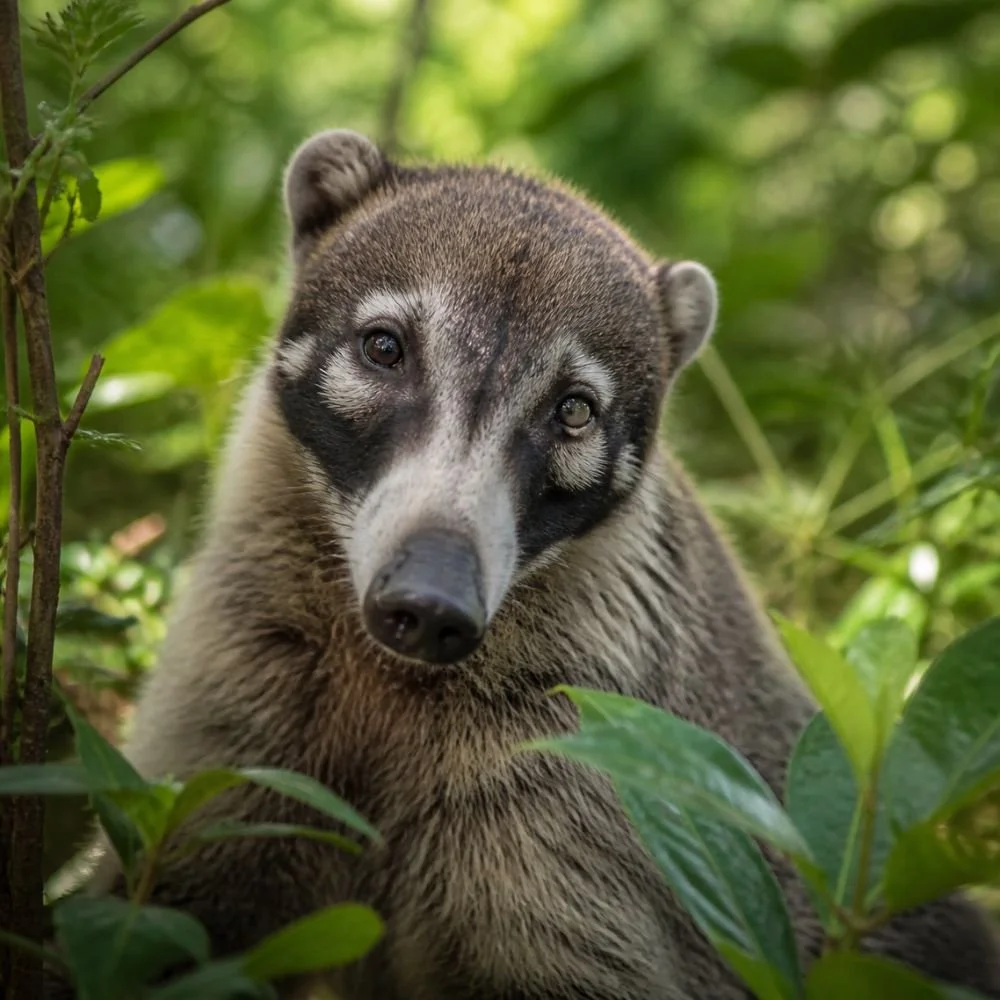
Lady Aldara Velt, presenting the softer side of a matriarch whose absence has generated more opinions than her presence ever could.
NIGHTSHADE TEA: OLD ACQUAINTANCES AND OTHER MISPLACEMENTS
By Kin Kajuu, Pollinator. Columnist. Problem.
My fellow nocturnal revelers,
I have lately been informed that a creature may belong to two social circles without being required to explain the arrangement to either.
This is a pleasing theory. It is also an excellent way to ensure that both circles will require an explanation.
The matter arose at a small reception held near the Velt branch, where Lady Aldara Velt, the silver-furred coati matriarch, has been making the reasonable effort to resume acquaintance with creatures who have spent several years developing opinions about her absence. Some of these creatures have been equally industrious in developing contradictory opinions. The canopy is very productive when given no useful work to do.
I attended in the interests of responsible reporting.
The refreshments were adequate.
THE COMPANY ONE KEEPS
The difficulty with a returning family is that the family remembers things the canopy has spent considerable effort forgetting.
Lady Aldara Velt received her guests with her customary composure. Her daughters were present, each in her own manner. Iara, the eldest coati sister and an incurable romantic, appeared delighted by the gathering, the lanterns, and a passing moth whose contribution to the evening was negligible. Branca, the impeccably dressed middle sister with the distinctive kerchief, was turned out to her usual exacting standard. Teca, the youngest coati sister, appeared to have anticipated every conversation and found most of them unnecessary.
Nothing unusual occurred until Cipó, the impeccably composed tayra raised by the Velt family, arrived.
The tayra was greeted warmly by the Velt daughters, then intercepted by members of the Tayra circles, who had apparently arranged their own welcome. Cipó made the necessary introductions, exchanged the appropriate courtesies, and moved between the two groups with such precision that I initially mistook the performance for ease.
It was not ease.
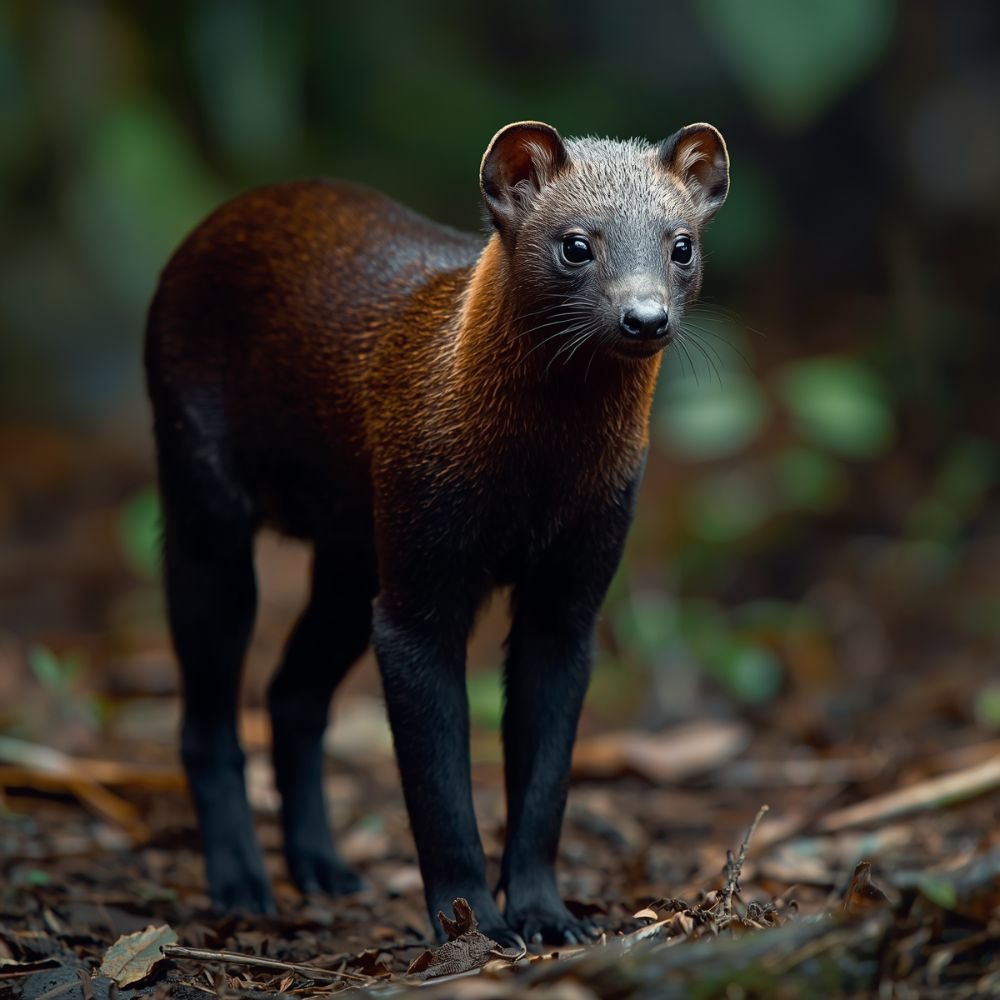
Cipó, looking as though the burden of maintaining diplomatic relations between two families has just become personally his responsibility.
There is a particular formality adopted by creatures who know exactly where they are welcome and have not entirely decided whether to be grateful for it. Cipó displayed this formality throughout the evening. A greeting to one group was followed by a greeting to the other. A conversation with Lady Aldara was interrupted to acknowledge a Tayra elder. An exchange with the Tayra elder was interrupted to answer a question from Branca.
Nobody could reasonably accuse Cipó of neglecting anyone.
Nobody, equally, appeared willing to release him from the obligation of proving it.
I have always considered the ability to move between social circles a considerable accomplishment. It requires tact, timing, and a sound understanding of which creatures will take offense at being greeted second rather than first. I myself have mastered this art, although my own position in the canopy makes the exercise largely unnecessary. One does not queue for recognition when one is already responsible for distributing it.
Cipó, unfortunately, is required to do both.
Lady Aldara watched the proceedings without intervening. She did not summon Cipó back to the Velt group or insist that the Tayras relinquish their claim on his attention. She merely made room whenever he returned.
This was either generous or strategic. With Lady Aldara, the two are not mutually exclusive.
The Tayras, for their part, were scrupulously polite. Their welcome was warm, their questions numerous, and their interest in Cipó's movements almost as great as mine. I do not suggest that anyone was keeping score. I merely note that several creatures appeared to know precisely how long Cipó had spent with each group.
I found this vulgar.
I also counted.
AN ACCOUNT THAT DOES NOT AGREE
The first difficulty arose over a matter that ought to have been settled years ago.
An older agouti, who had known the Velts before their departure, was speaking with two guests near the refreshments. I did not initially pay attention. The agouti was discussing an old journey, and old journeys are generally tedious unless someone failed to return from one.
Then I heard Lady Aldara's name.
The agouti remarked that the Velts had been particular about what they carried when they left. Not their ornaments, which apparently had been of little interest, but their water vessels.
One of the guests observed that this was an odd detail to remember.

Our agouti friend, looking rather pleased with the prospect of making an old Velt story interesting again.
The agouti disagreed.
“I remember because Aldara asked who had counted the vessels,” the agouti said. “Not who had insulted whom.”
There was a pause.
There was a pause.
The guest asked whether an insult had not been the reason for the departure.
The agouti looked at the guest with the exhausted patience of someone who has already answered this question in several different ways.
“That is what people said afterward.”
I should like to be clear that I did not overhear the entire conversation. I heard precisely the portion I have reported, and I have no intention of supplying the missing details from my imagination. My imagination is an instrument of considerable power, and I do not employ it where an actual creature has already supplied the facts.
The accepted account of the Velt departure has always concerned a disagreement, an offense, and the sort of social rupture that allows everyone to choose a side without having to understand the circumstances.
Water vessels are less satisfying.
They suggest preparation. They suggest a practical concern. They suggest that a family leaving its home might have been occupied with something other than the preservation of its reputation.
I find this an inconvenient possibility.
The agouti noticed me listening. I do not believe the creature knew who I was, which is an oversight I shall leave uncorrected for the present. I was not approached, nor did I make inquiries. I had no need to. The canopy has already demonstrated that it prefers the version of events in which someone was insulted to the version in which something was wrong.
The former allows for gossip. The latter might require action.
I returned my attention to the refreshments.

Lady Skirrit, looking pleasantly surprised to discover that the refreshments have not yet run out.
Lady Skirrit, the formidable thorn-backed armadillo of old money, had been standing nearby.
She had not spoken during the conversation. She had not looked at the agouti. She had not looked at me.
Her ears moved once.
I have seen Lady Skirrit make an entire gathering reconsider its position without uttering a word. This was not her most elaborate performance. It was, however, sufficient.
I shall not speculate on what she knows about the Velt departure.
I shall merely observe that Lady Skirrit has never been a creature who wastes movement.
BITE OF THE NIGHT
Pressed fig with salt and fermented nectar reduction
The fig was sound, the salt correctly applied, and the reduction somewhat too pleased with itself. A dish should not require the diner to admire the cook's intentions before being permitted to enjoy the ingredients.
Texture: yielding, with a properly resistant skin.
Flavor: sweet at first, then sharp enough to suggest that the fig has been keeping a separate account of the evening.
Rating: ✦✦✦½ out of 5.
I ate a second portion to confirm my findings. The second portion did not alter them.
NIBBLE NOTE
A Tayra elder asked Cipó whether the evening had been agreeable. Cipó replied that everyone had been most welcoming. The elder appeared satisfied. Cipó did not.
NIGHT NOTES
A young macaw has begun correcting the grammar of other birds’ alarm calls. The practice has caused some confusion during emergencies, though the macaw maintains that panic is no excuse for poor syntax.
A family of porcupines has introduced a formal greeting involving three bows and a carefully negotiated distance. Guests who fail to observe the protocol are being described as uncultured. Guests who observe it correctly are being described as overfamiliar.
A tree snail has filed a complaint against a moss-covered branch for making it impossible to distinguish property boundaries. The branch has declined to comment.
A pair of otters has been seen exchanging the same polished stone at every gathering. Each insists the other is borrowing it. Neither appears willing to surrender possession, and both have begun referring to the stone as evidence of a longstanding friendship.
A young owl has taken to announcing the time at irregular intervals, regardless of whether anyone has asked. The announcements are usually correct. This has done nothing to improve their reception.
A MATTER OF NO IMPORTANCE WHATSOEVER
Leon Cillo, a fellow kinkajou with a long-standing personal grievance against me, has been asking after my affairs again. I mention this only because a creature who has chosen commerce over a respectable life of leisure ought to have sufficient occupation without monitoring mine. I have no intention of discussing him further.
Tumulta, my cousin, a spirited kinkajou whose curiosity routinely exceeds her judgment, has reportedly climbed the tallest tree in the district to investigate whether the honey stored near its crown tastes different from honey stored lower down. She has since announced plans to distill a new honey liquor. I cannot confirm whether this is possible. I can confirm that she has already found volunteers to taste it.
I have declined.
For now.
NEXT WEEK…
Someone will ask Cipó a question that should have been asked years ago, and someone else will insist that the answer is none of our business.
You didn't hear it from me. (You absolutely did.)
KIN KAJUU
Pollinator. Columnist. Problem.