Slab
Thrown, coiled, pinched, or cast—ceramic forms shaped by touch or mold, teetering between purpose and presence.
He Said They Can't Be Alone
He Said They Can't Be Alone
by Akiko Amora
I saw the mug from across the room and knew immediately I was going to buy it and probably injure myself on the rim. This is how most of my better decisions have started.
It was at Greyfield Market, which I was only at because Soo had a table and I'd promised to walk by and look serious while she sold things. The mug was on a different table entirely, which is typical. You go somewhere for one reason and the actual reason is across the room not asking for your attention.
He Said They Can't Be Alone
by Akiko Amora
I saw the mug from across the room and knew immediately I was going to buy it and probably injure myself on the rim. This is how most of my better decisions have started.
It was at Greyfield Market, which I was only at because Soo had a table and I'd promised to walk by and look serious while she sold things. The mug was on a different table entirely, which is typical. You go somewhere for one reason and the actual reason is across the room not asking for your attention.
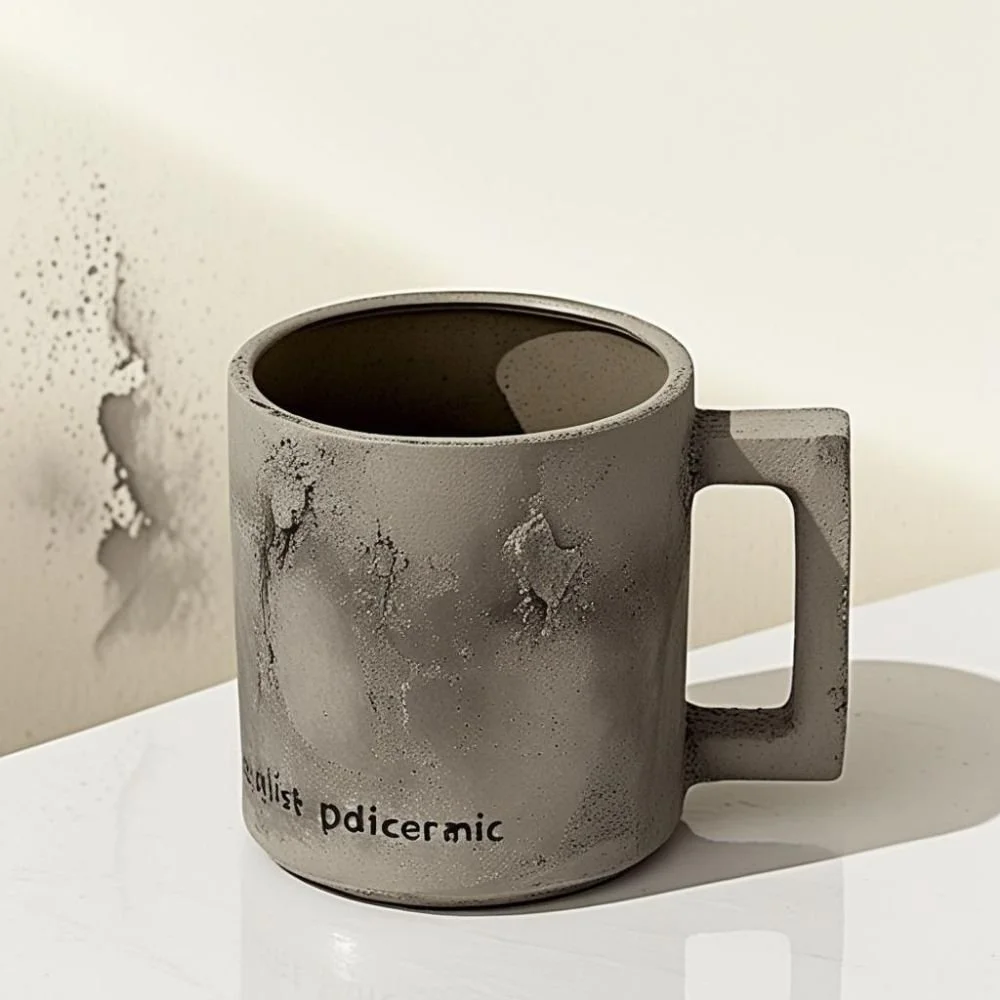
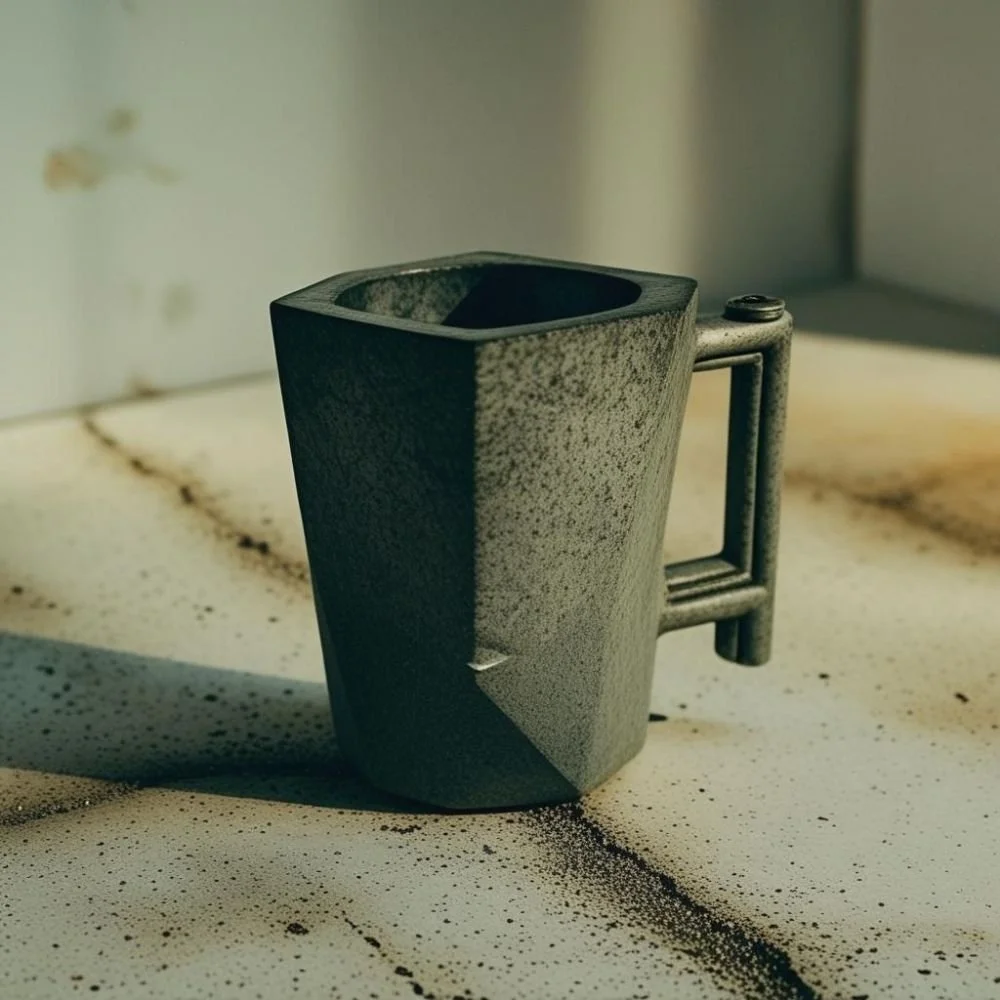
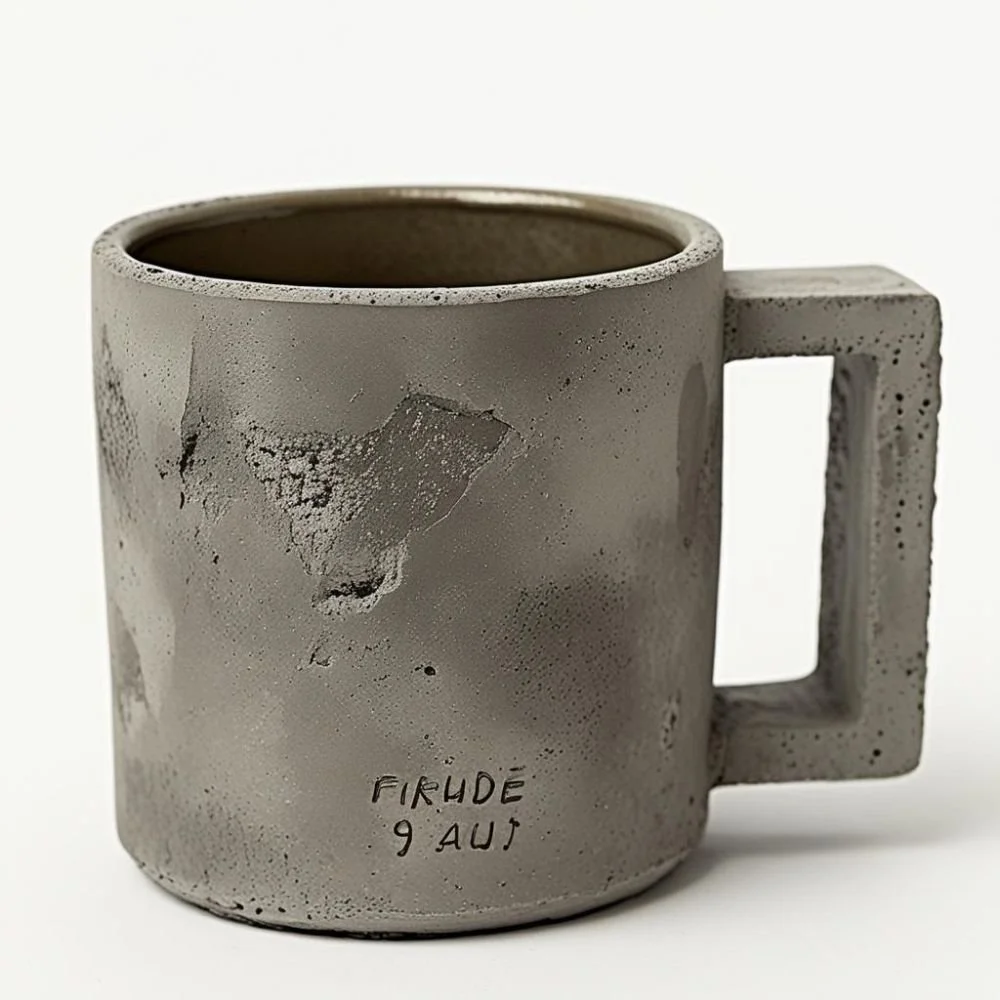
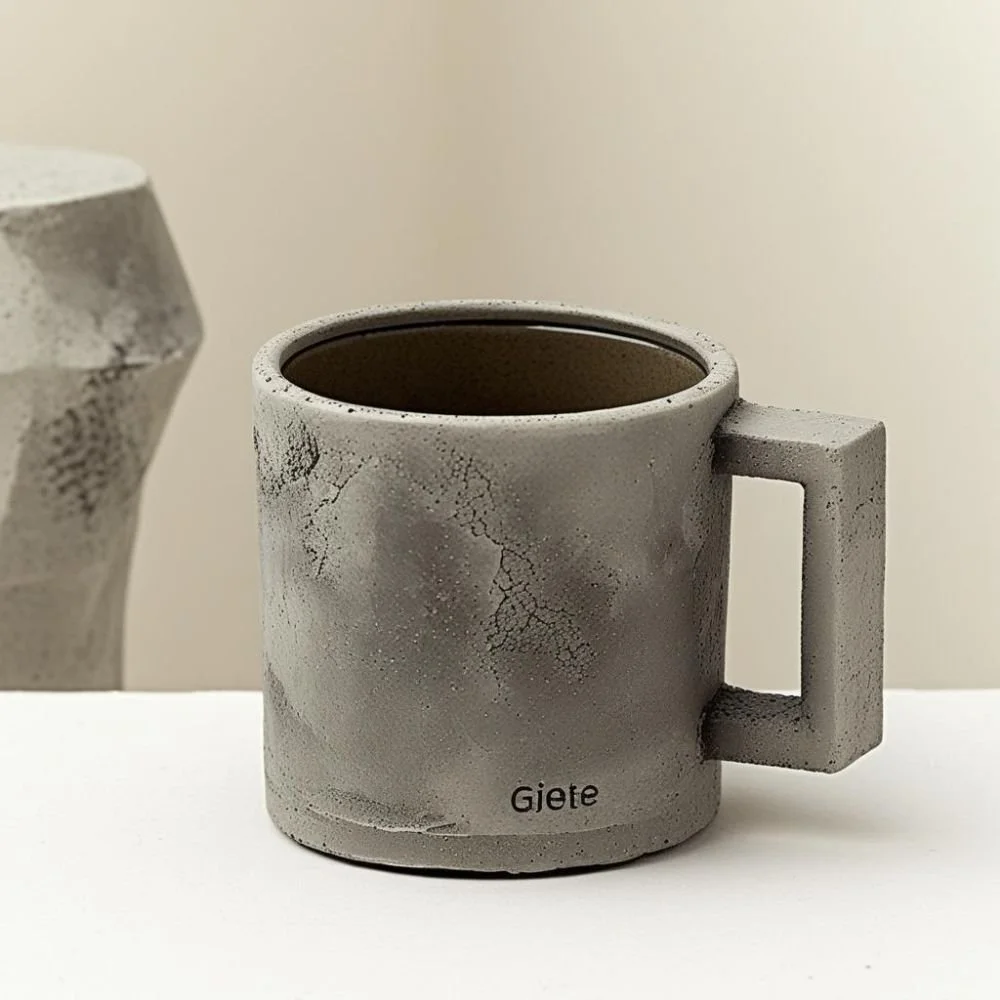
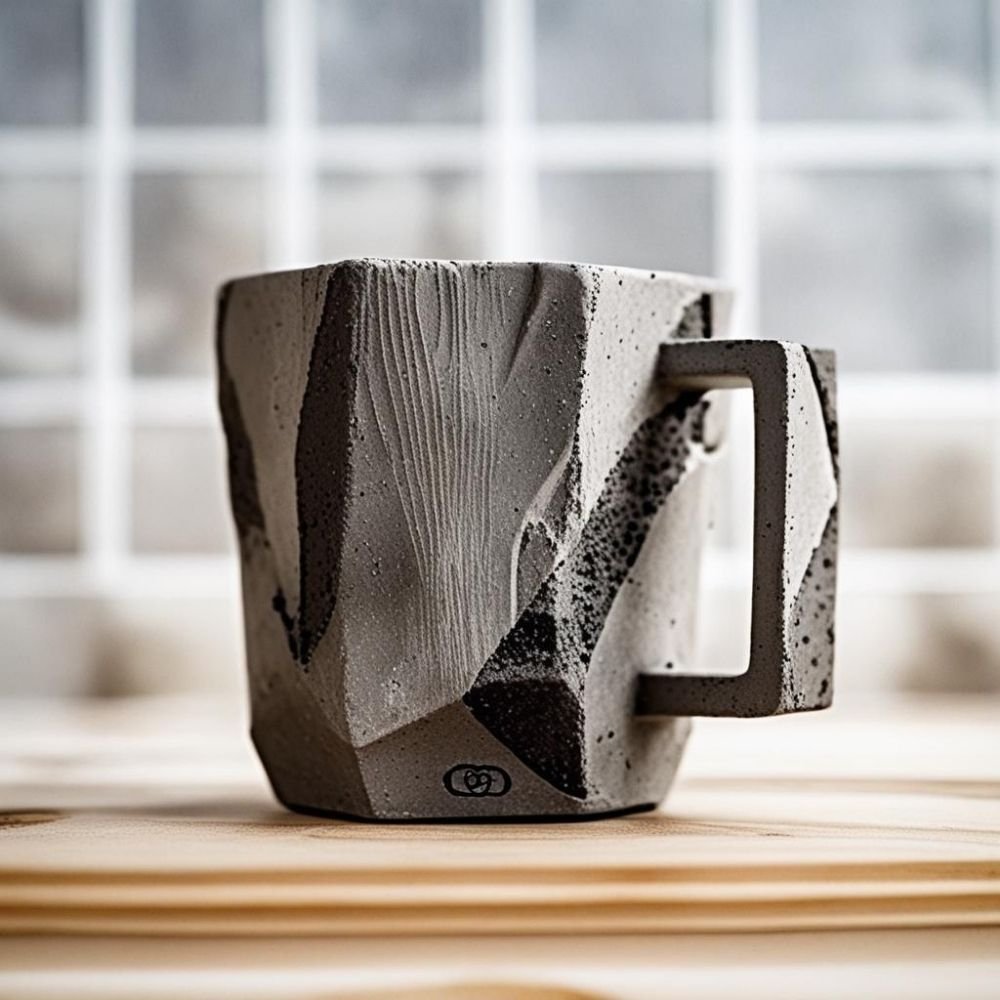
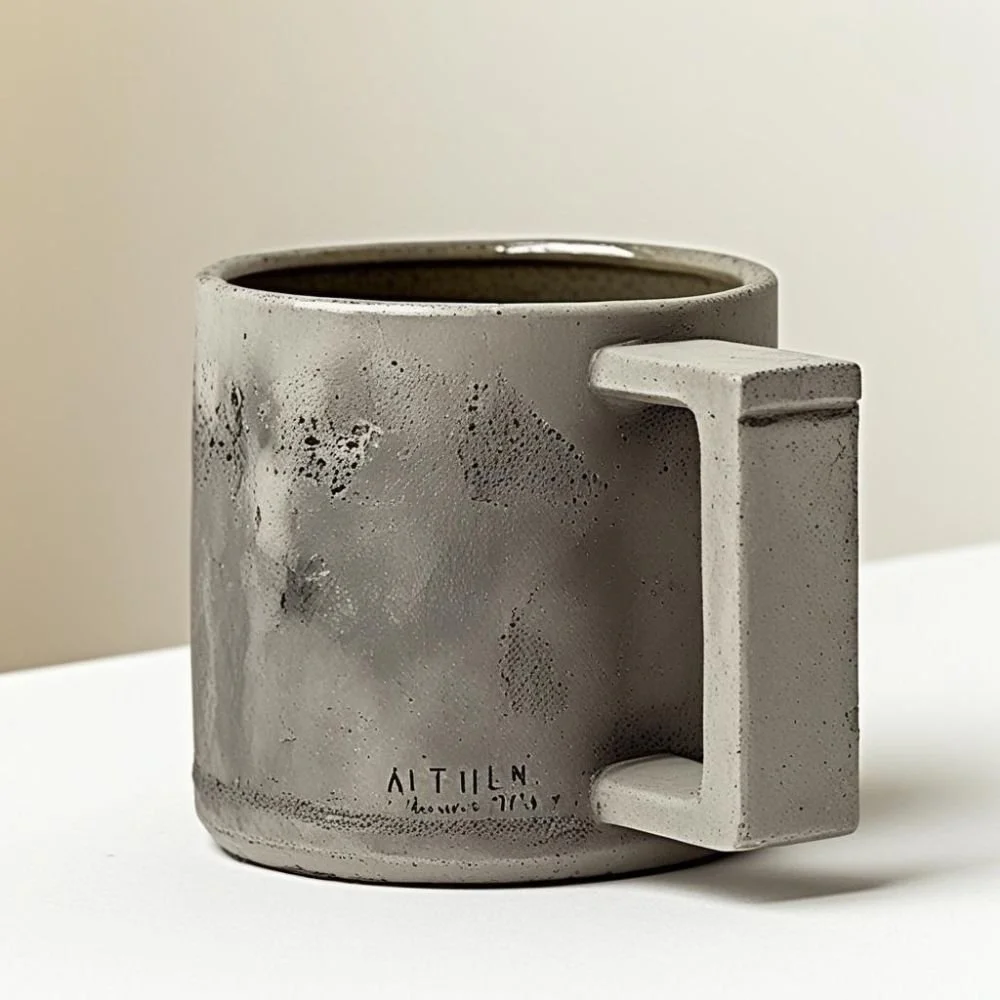
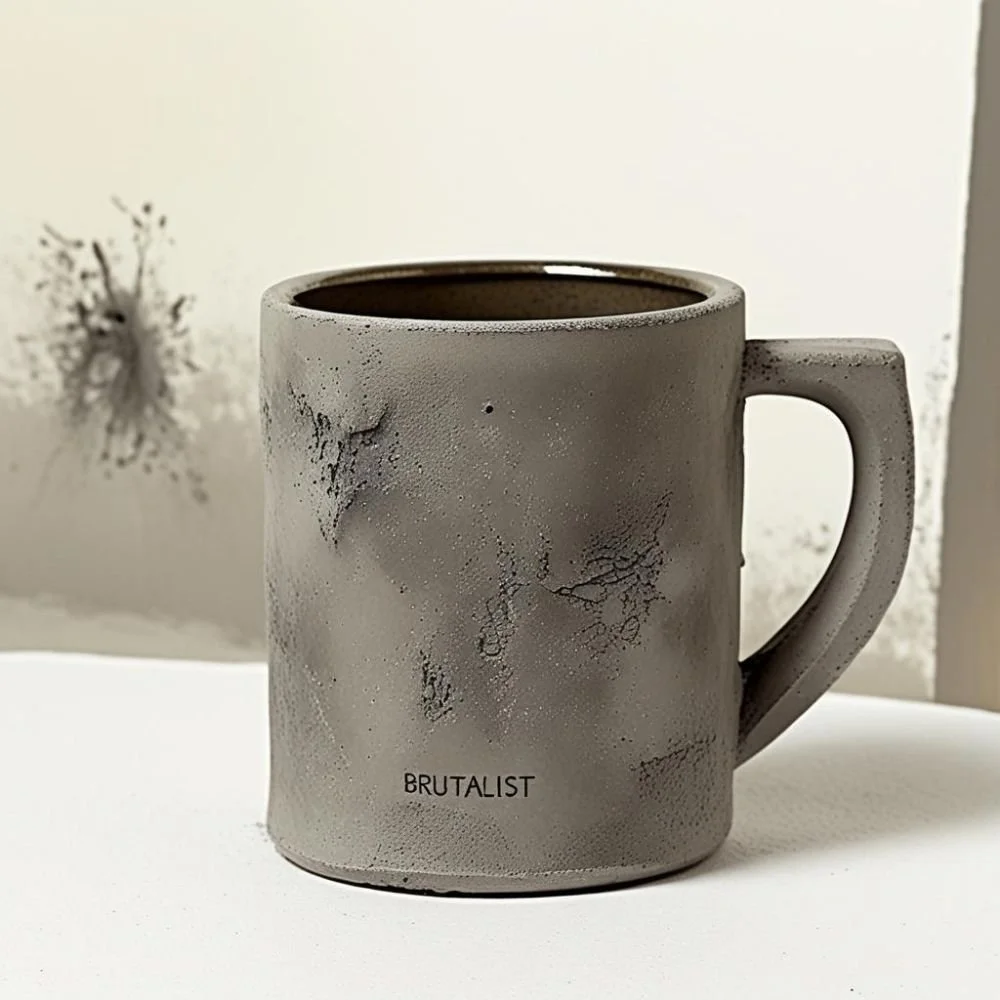
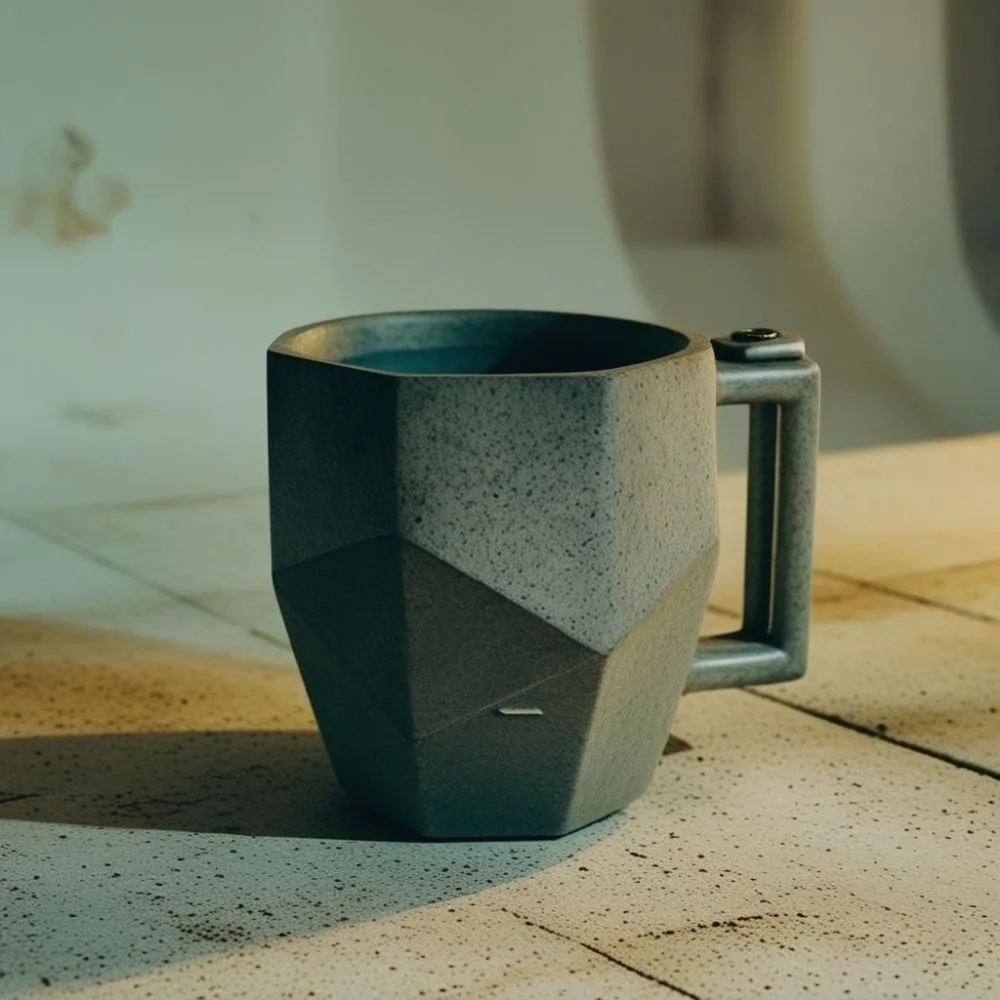
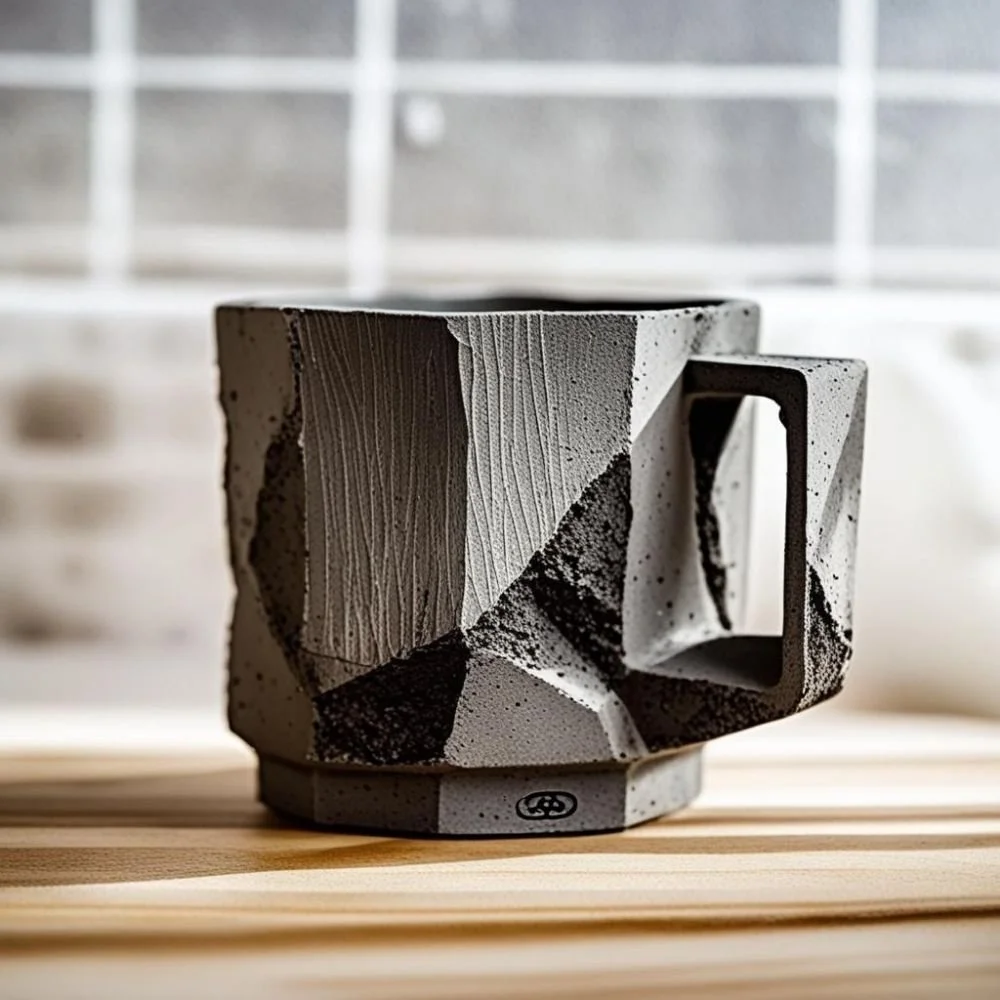
The mug was concrete gray. Walls like a small fortress. The handle a flat rectangular plane that communicated: I am a handle in the way that a manifesto is a document. Technically true. Not the whole story. So textured that my lips recoiled at the thought of drinking from that rim. Seriously, it was not made for the average human mouth. I loved it.
I picked it up. It was heavier than a mug has any business being. I now also thought I might get a wrist strain from this mug as well as lip abrasions. I turned it over. I looked at the treacherous rim again. I bought it.
The person behind the table said, "Kiki."
I looked up.
Morton Lafancciacomo had not changed in the way that people who have always looked exactly like themselves don't change. Same expression of someone who has just heard something incorrect and is deciding whether to address it. He was wearing what I can only describe as a structural jacket. Of course he was.
I said, "Morton."
He said, "I knew you'd buy that one."
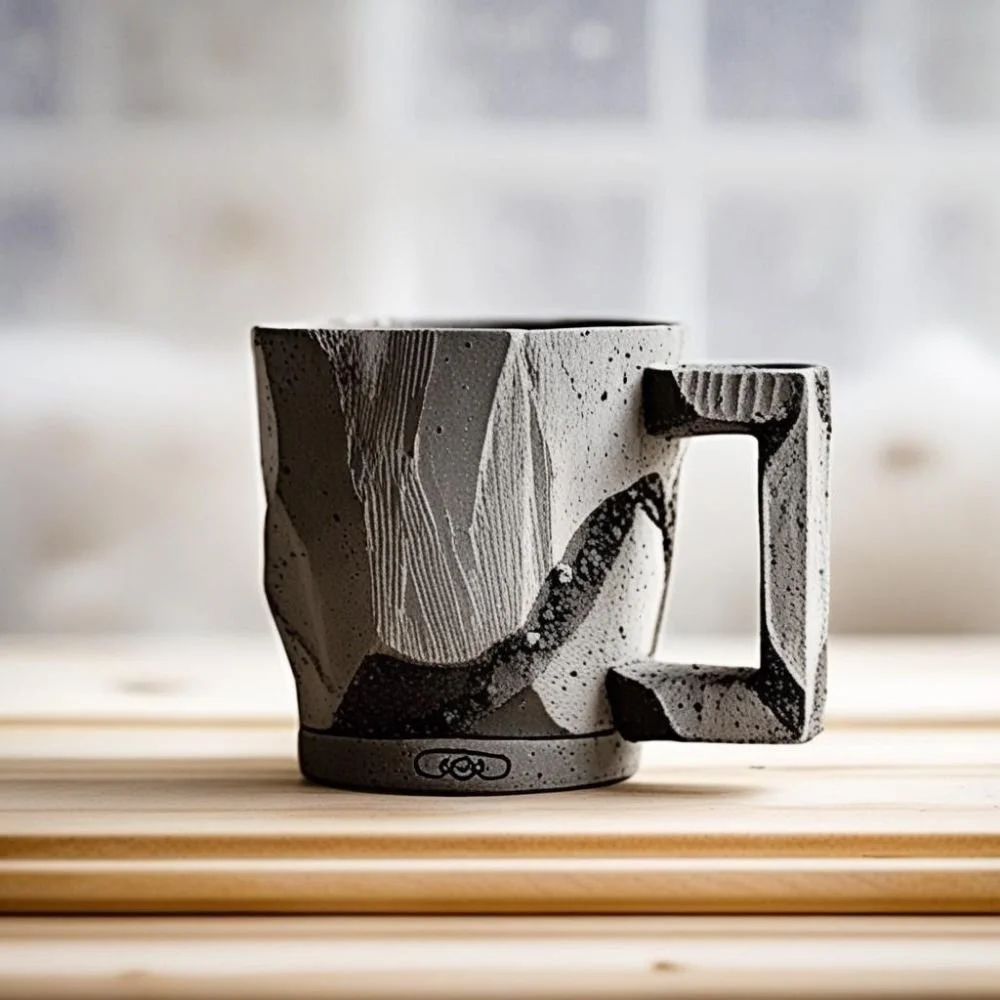
The mug I chose.
Hefty, rough, a fun challenge with your morning coffee
We had met at a residency in 1998, two years after No Cladding came out, when I was still being asked to explain what I had meant by it and he was already deep into arguments about concrete and intention and the difference between severity and emptiness that nobody around him was equipped to have. We had talked for six hours at a dinner that was supposed to be two. I had not seen him since a conference in 2003 where he had gotten into a documented disagreement with a curator about surface finish that had made the newsletter.
He had been making ceramics the whole time. I knew this vaguely. I had not known about the mugs.
"I don't call it brutalism," he said, before I asked. "I never called it that. That's a word other people use so they can put things in a category and stop looking at them."
"What do you call it?"
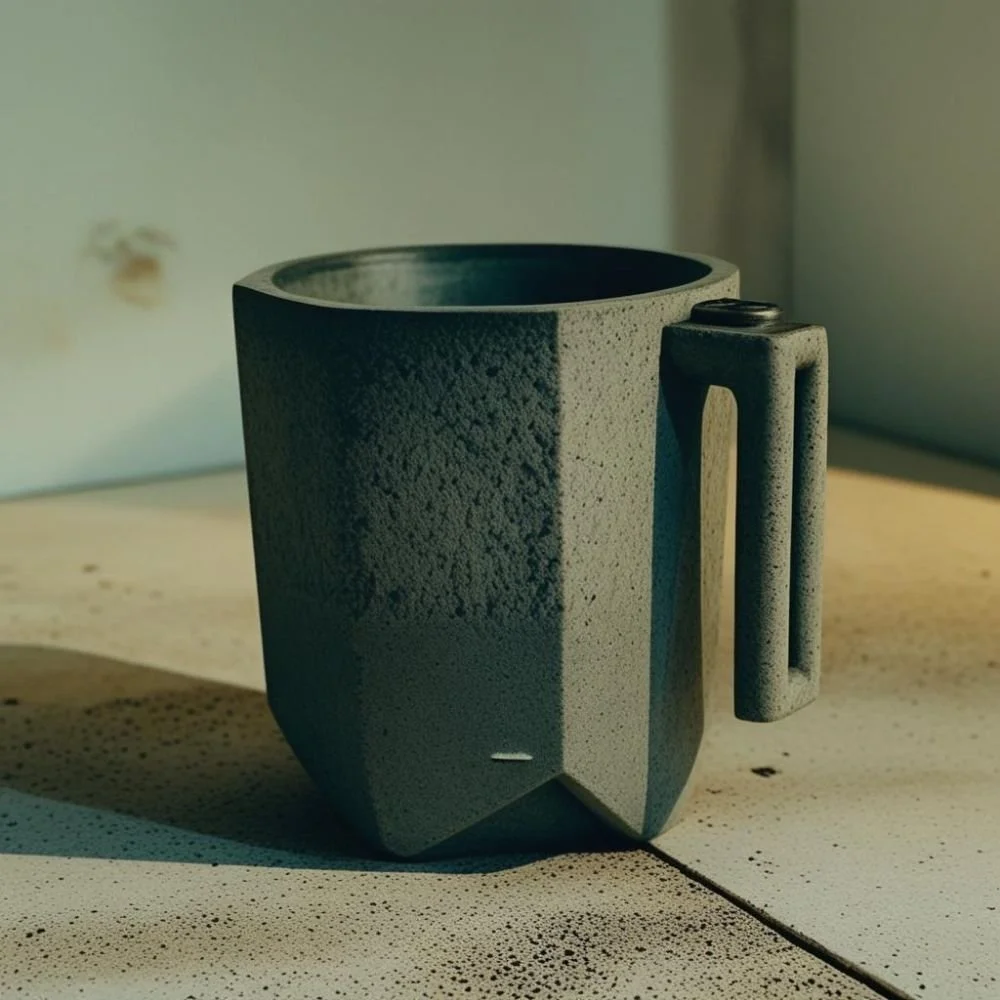
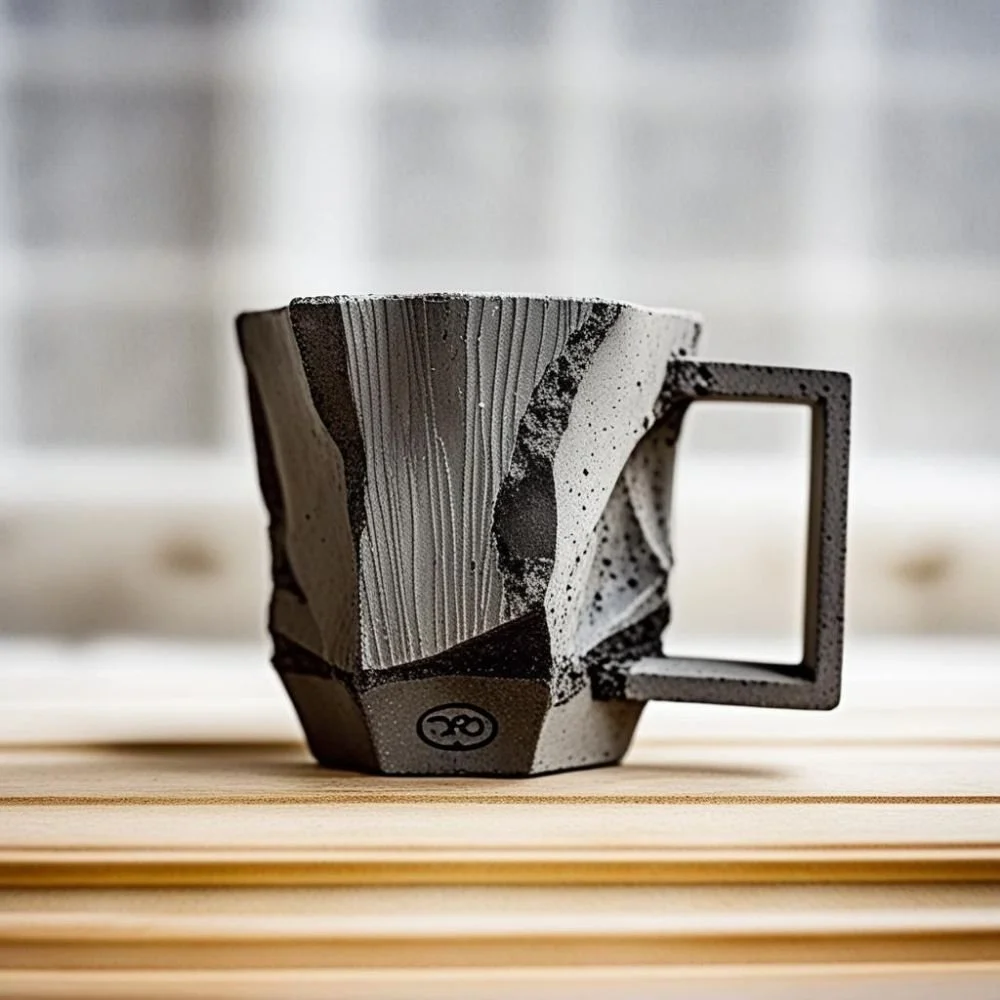
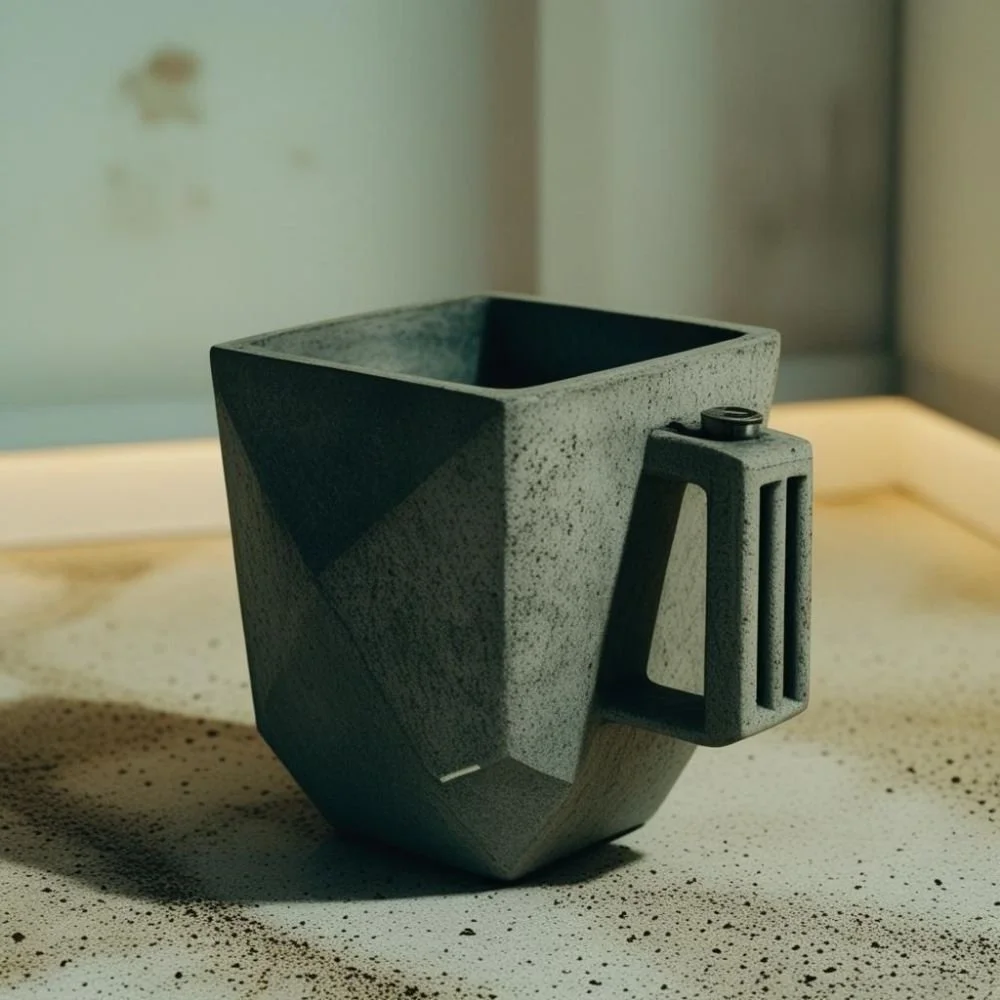
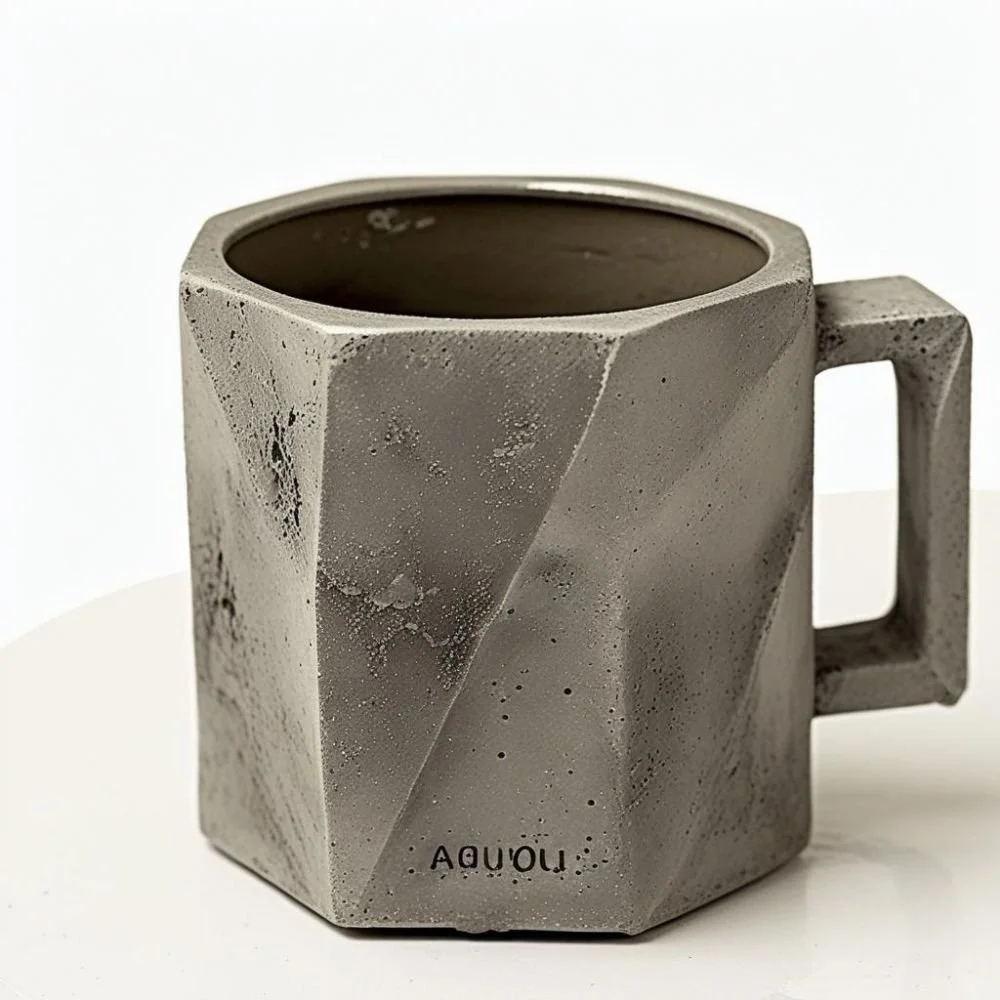
He picked up one of the mugs — not mine, another one, darker, with a seam running up one side like a scar that had decided to stay. "Honest," he said. "I call it honest."
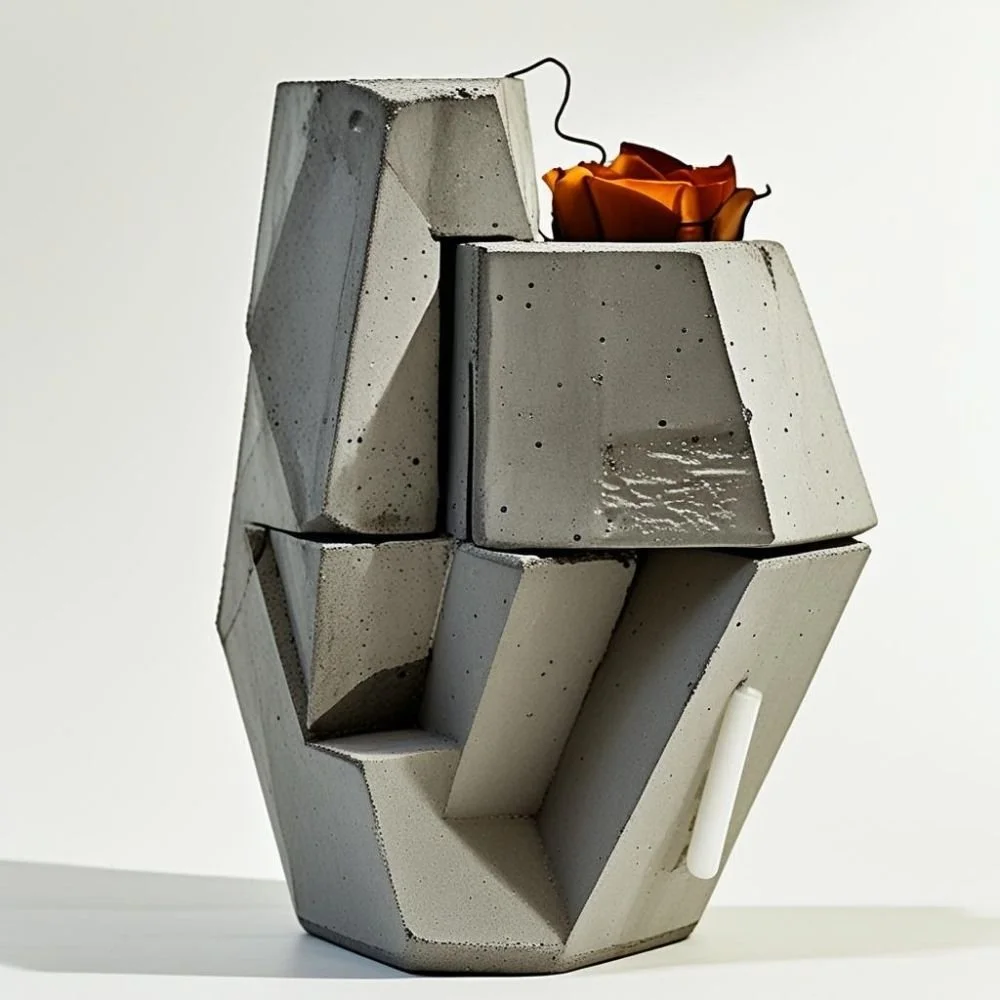
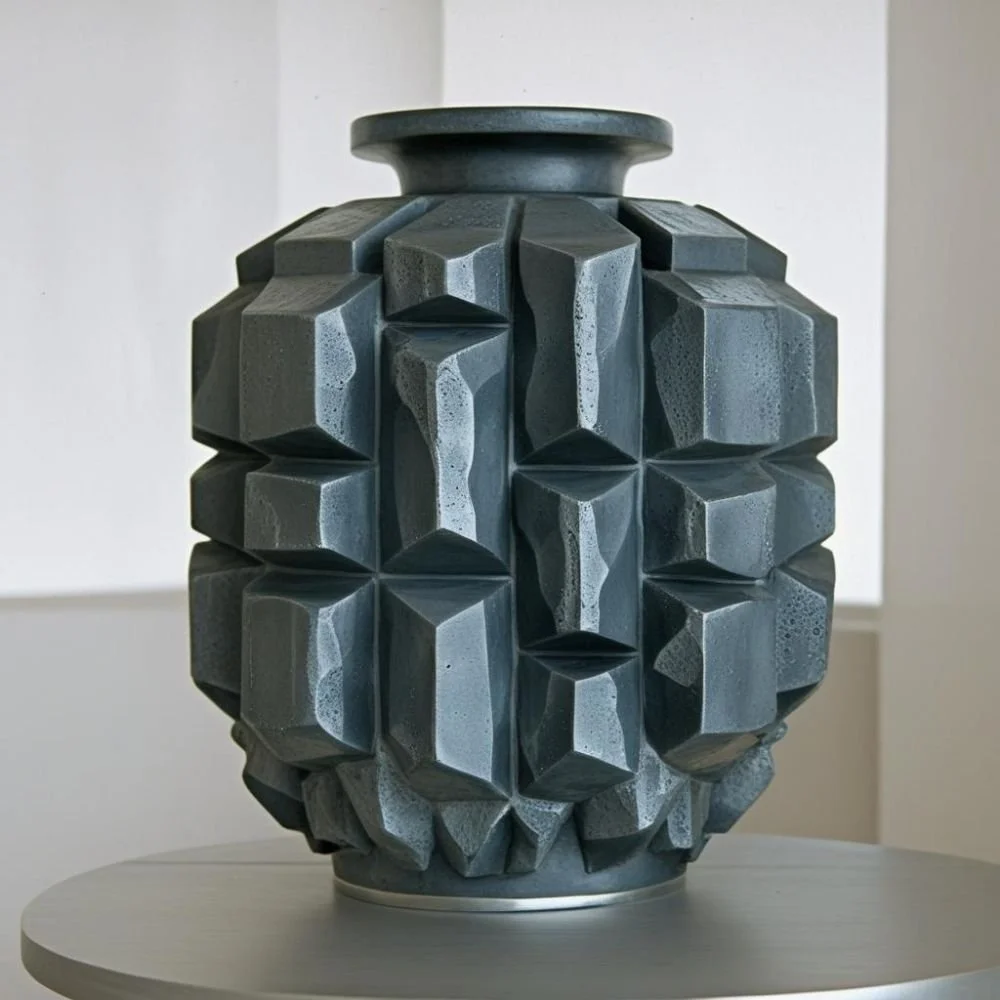
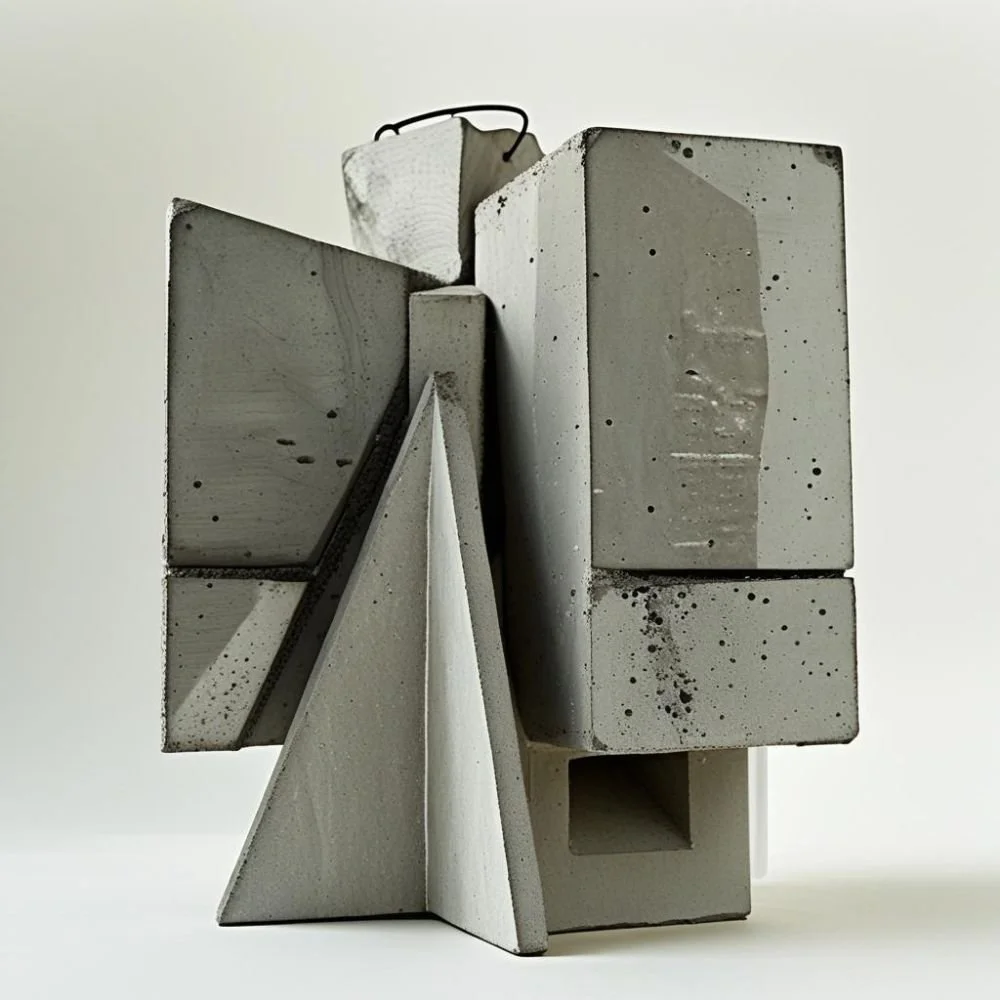
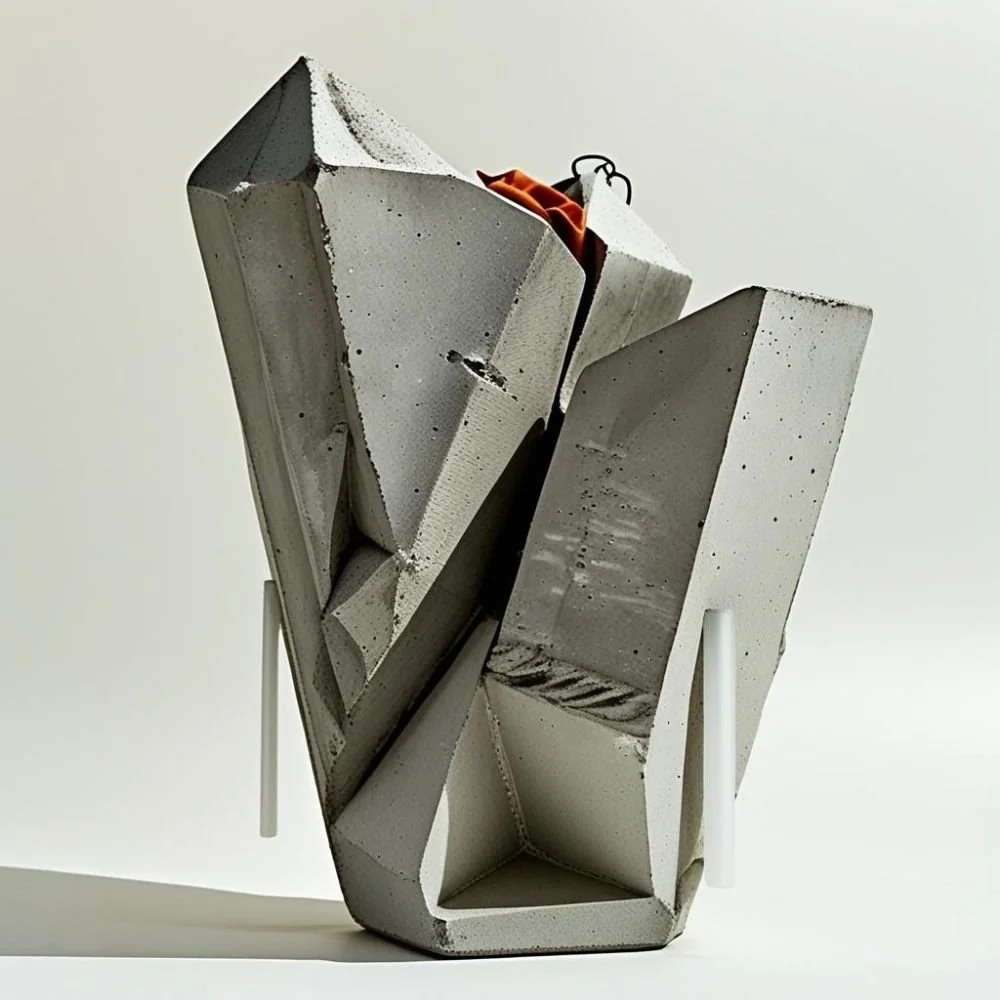
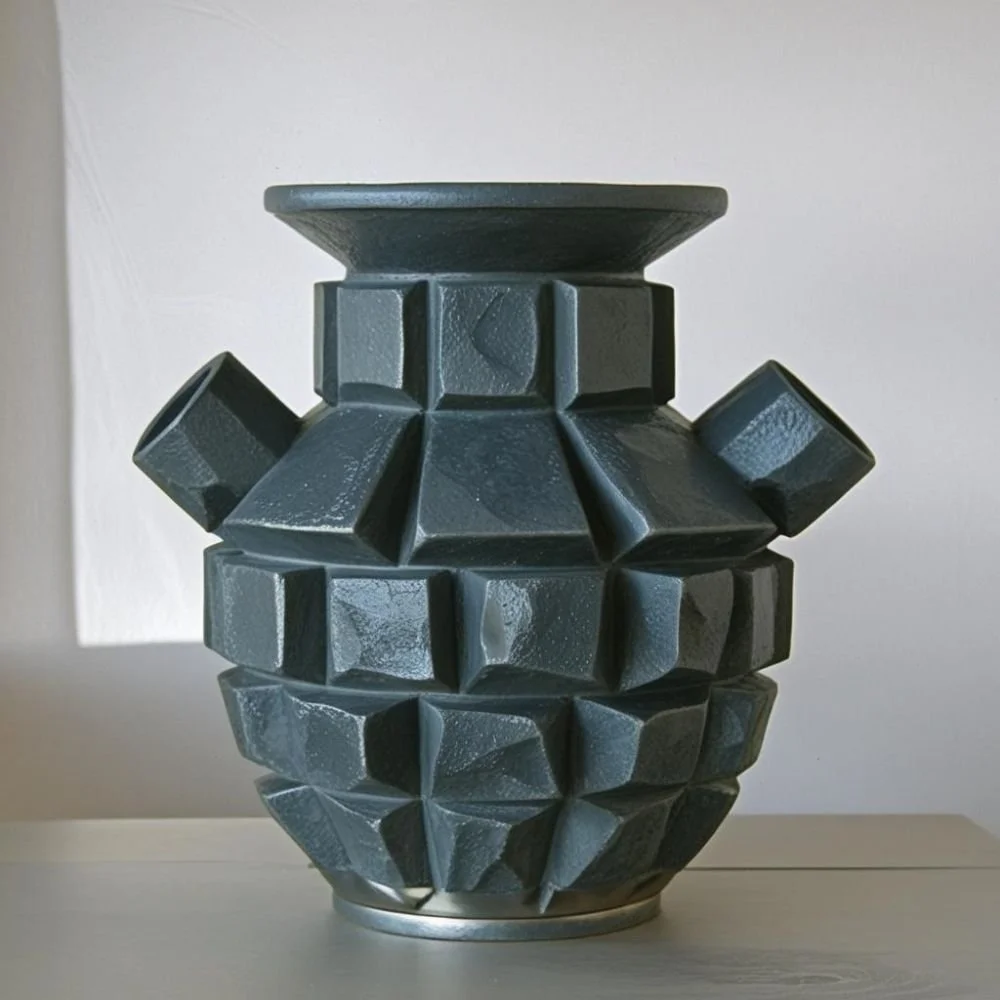
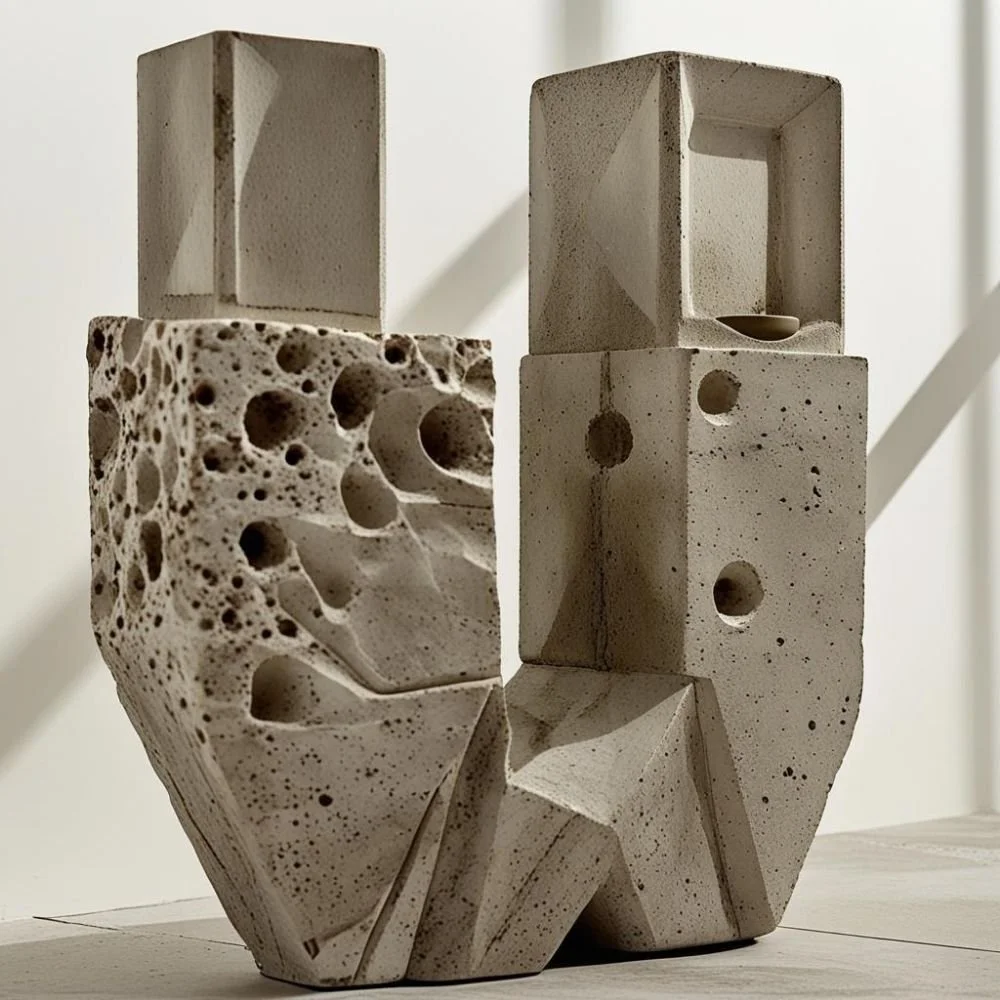
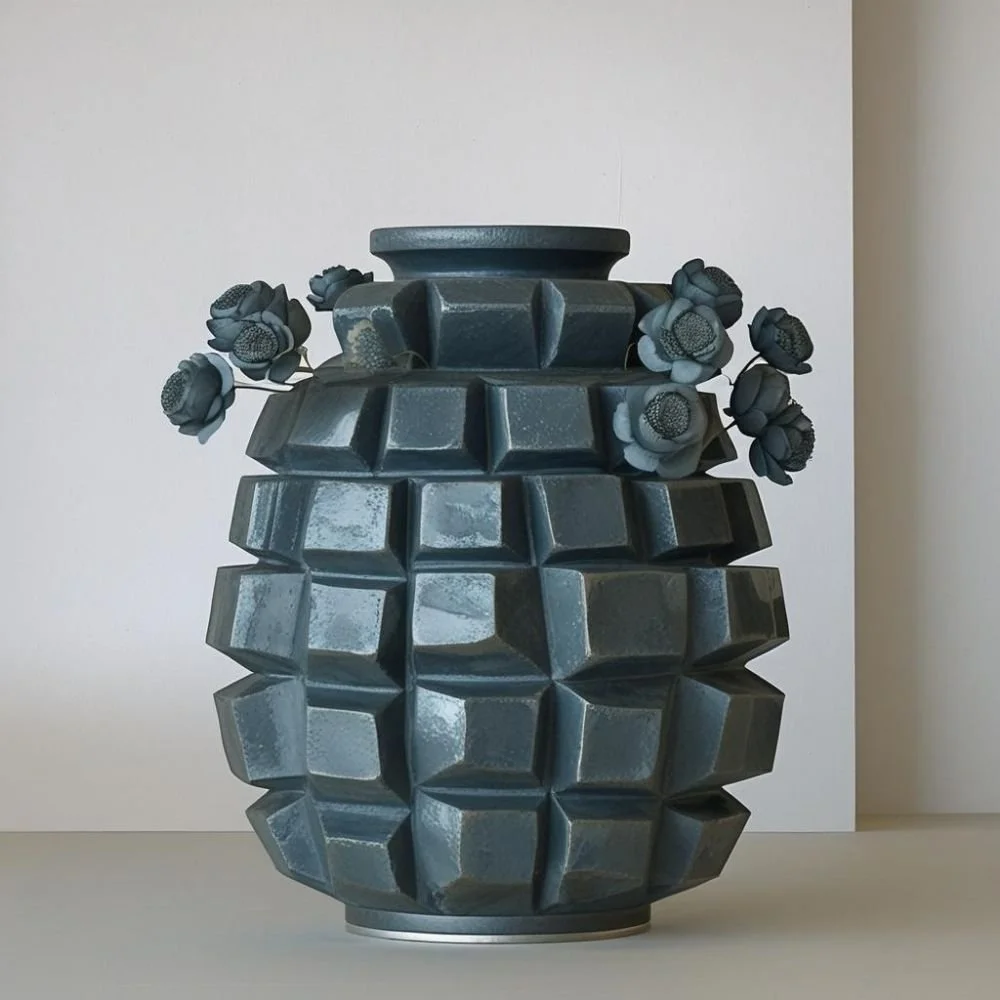
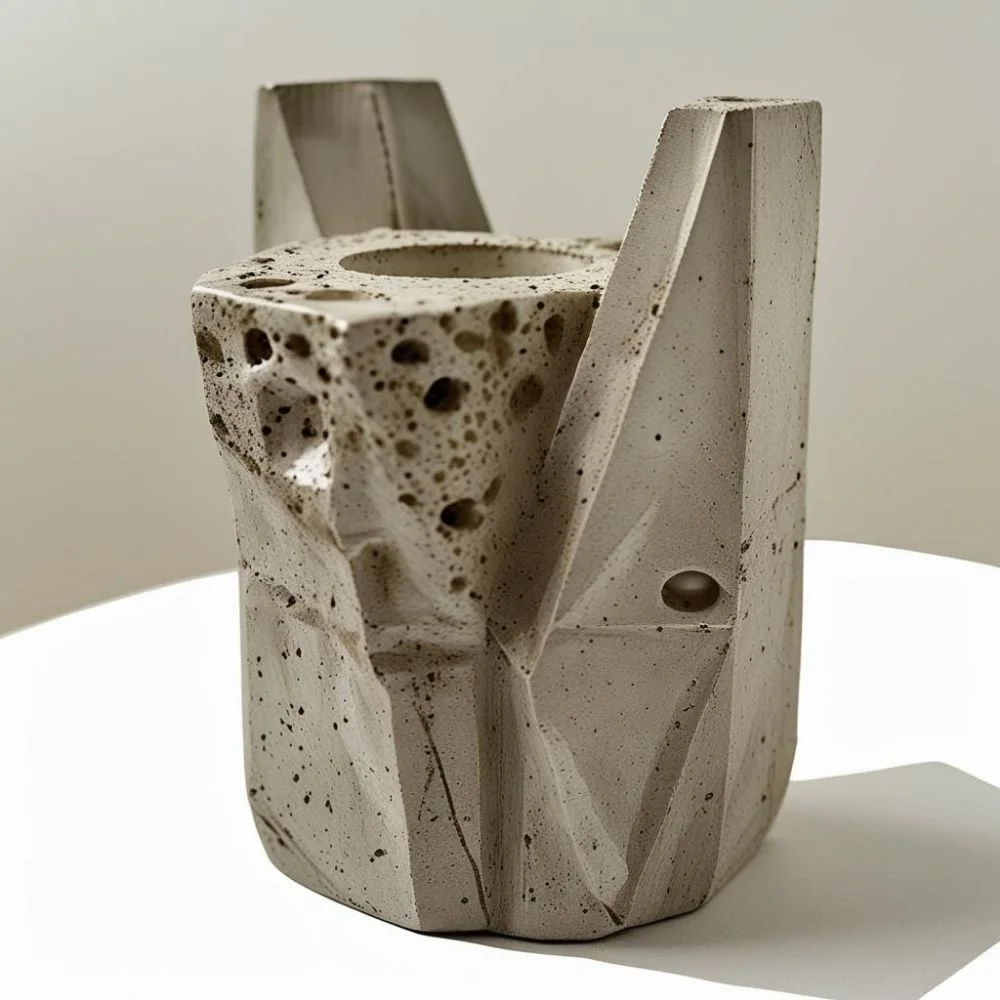
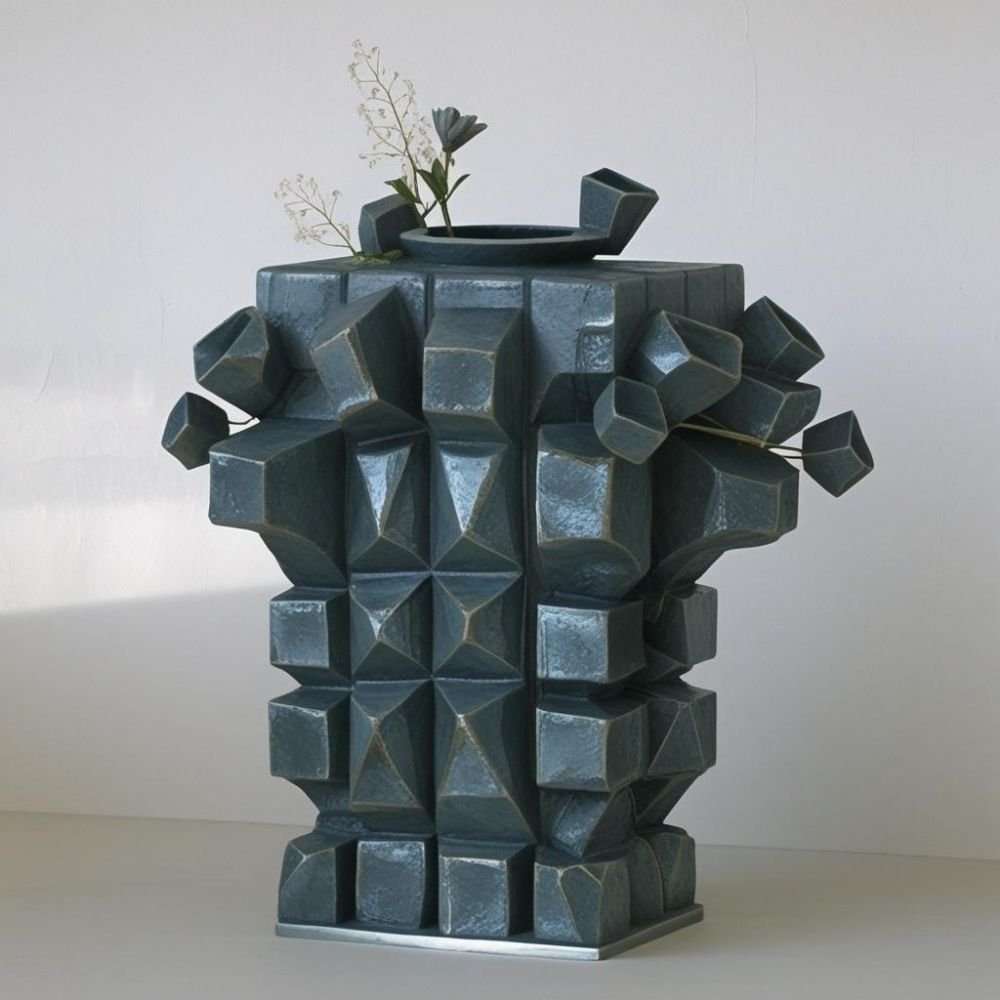
I looked at the table. An unreasonable number of pieces. Mugs in several variations, vases in more, plates that had settled into their own convictions about what a plate should be, entire dining sets, candleholders, lamps that were also somehow small monuments, and one trash can among several who was clearly aware he was funny.
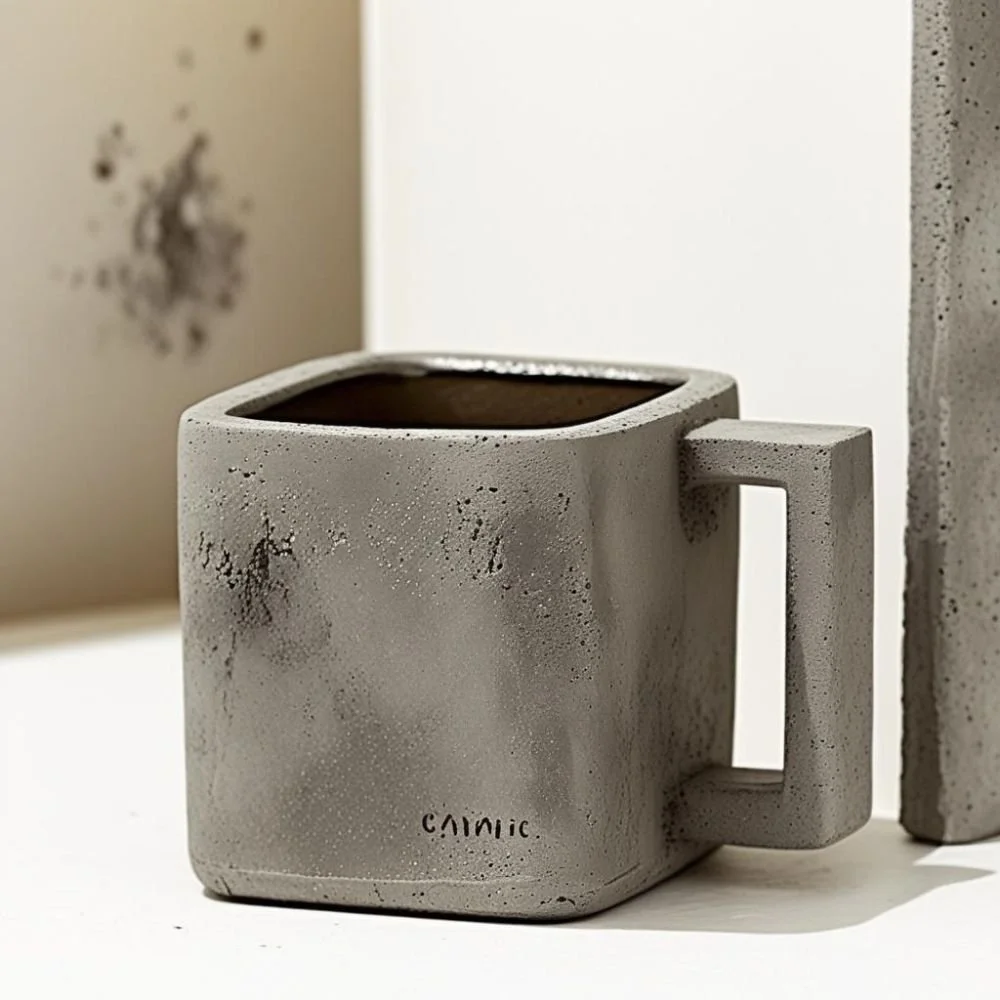
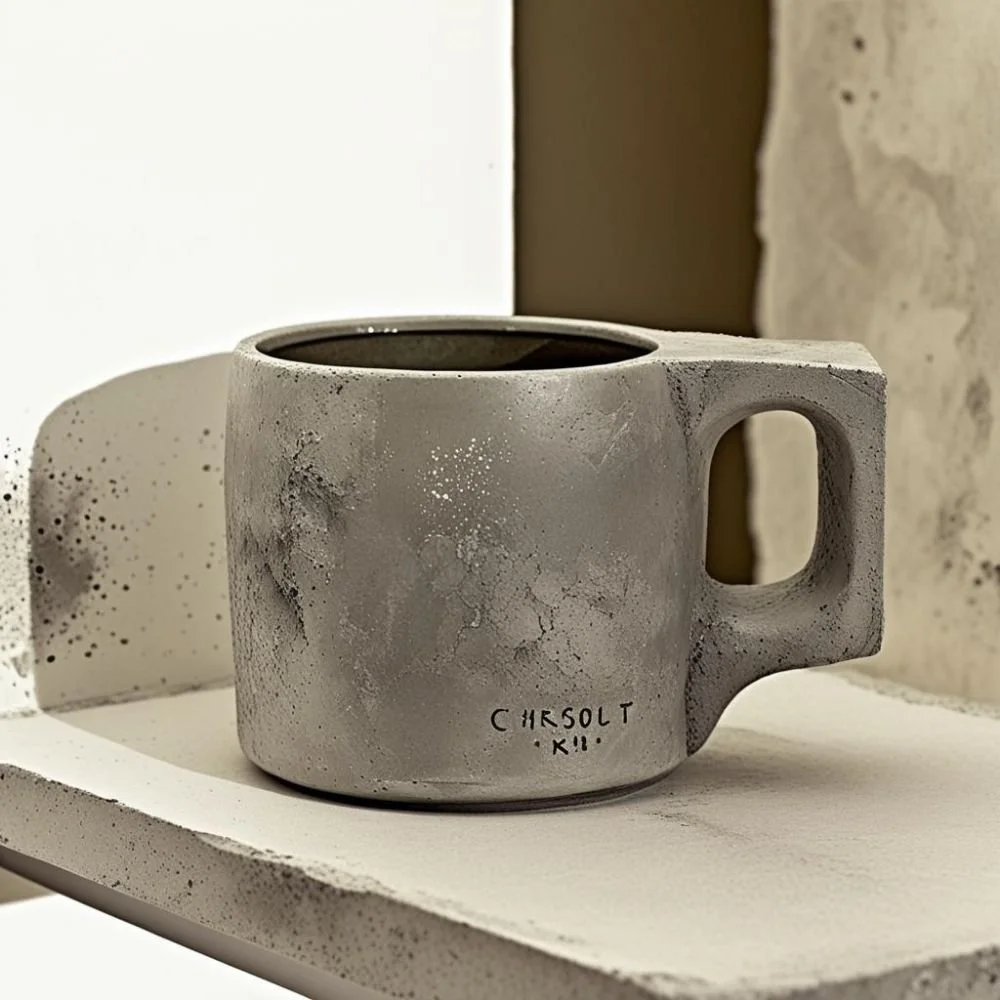
"There's a version of this," Morton said, gesturing at one of the mugs on the far end — slightly smoother, slightly more resolved, the handle almost comfortable, in other words, conventional — "that sells. And I make it sometimes. I'm not going to pretend I don't."
He said it the way you say something you've made your peace with and haven't entirely made your peace with. The almost-comfortable mug sitting there like a small internal argument he was still having with himself about rent and integrity and where exactly the line is.
I said, "I know."
He looked at me. "No Cladding is thirty years."
"Next month."
"I remembered when I made the rim on that one," he said, nodding at my mug. "I was thinking about the costumes."
I showed him the newspaper clipping because I'd had it in my bag for two weeks since my assistant had sent it over for the anniversary materials. Amora's Vision: Severe, Strange, Completely Itself. Me in the angular collar, the geometric shoulder construction, the whole silhouette that the reviewer had called "aggressively architectural" as if that were a criticism. I was thirty years old. I looked like I was made of conviction and good sleep, which is accurate, I was.
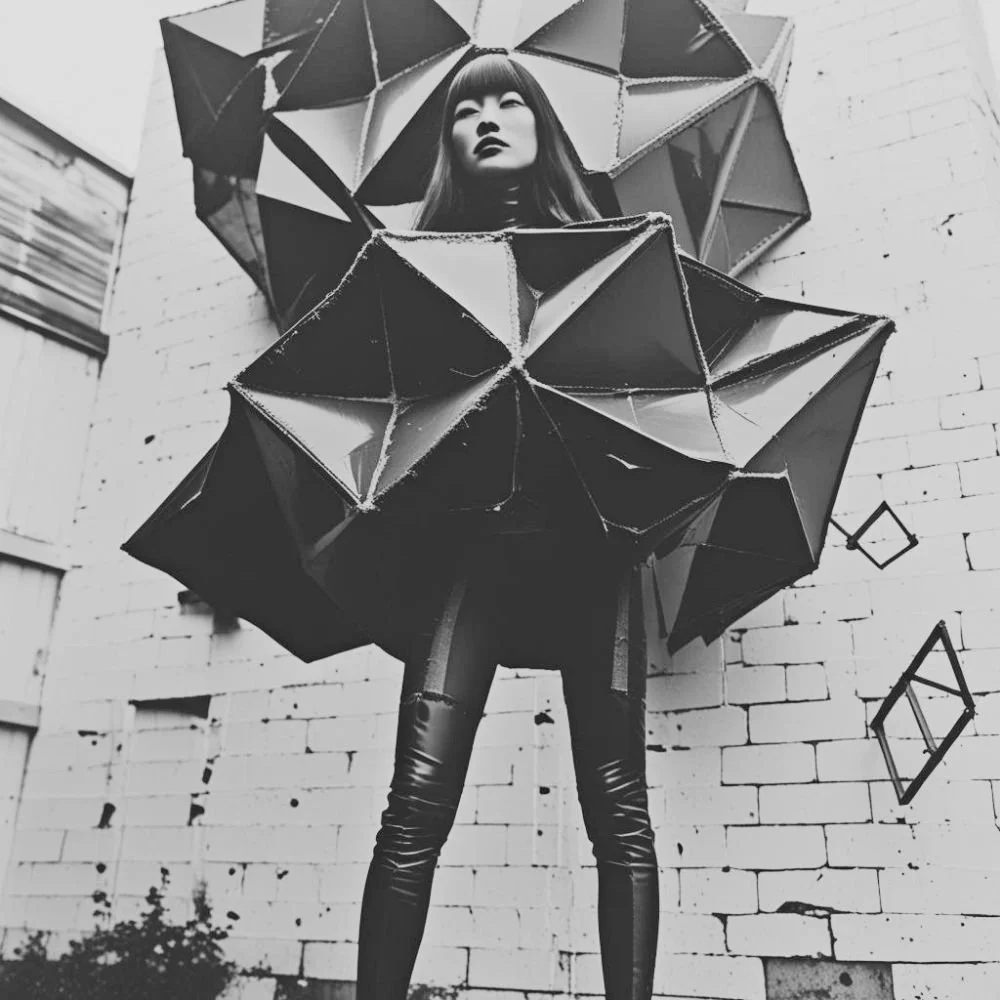
Amora, No Cladding, 1996, Production still
"Aggressively architectural." — Downtown Arts Weekly, 1996
Morton looked at it for a long time.
"You were doing this before any of us had the argument," he said.
"We were all doing it before the argument," I said. "That's how arguments work. The thing exists first and then someone names it wrong and then everyone fights about the name forever."
He laughed. Morton's laugh is brief and sounds like he didn't plan it.
He was leaving for six weeks. A residency in Porto, which he said with the tone of someone who had complicated feelings about residencies but needed the time.
"The pieces can't be alone," he said.
I looked at the collection of pieces. They looked back at me hopefully.
"They're sensitive," he said. "Not in a way most people notice. But they are."
I understood this without needing it explained. You spend enough time making things and you know that some objects have an interior life their surface doesn't advertise. The ones that look the most self-sufficient are often the ones most undone by abandonment. I have made work like this. I have been work like this.
"I'll take them," I said.
They arrived the next morning in four crates, packed with the focus of someone transporting minor diplomatic artifacts. More pieces than I had surfaces for. They moved in all at once.
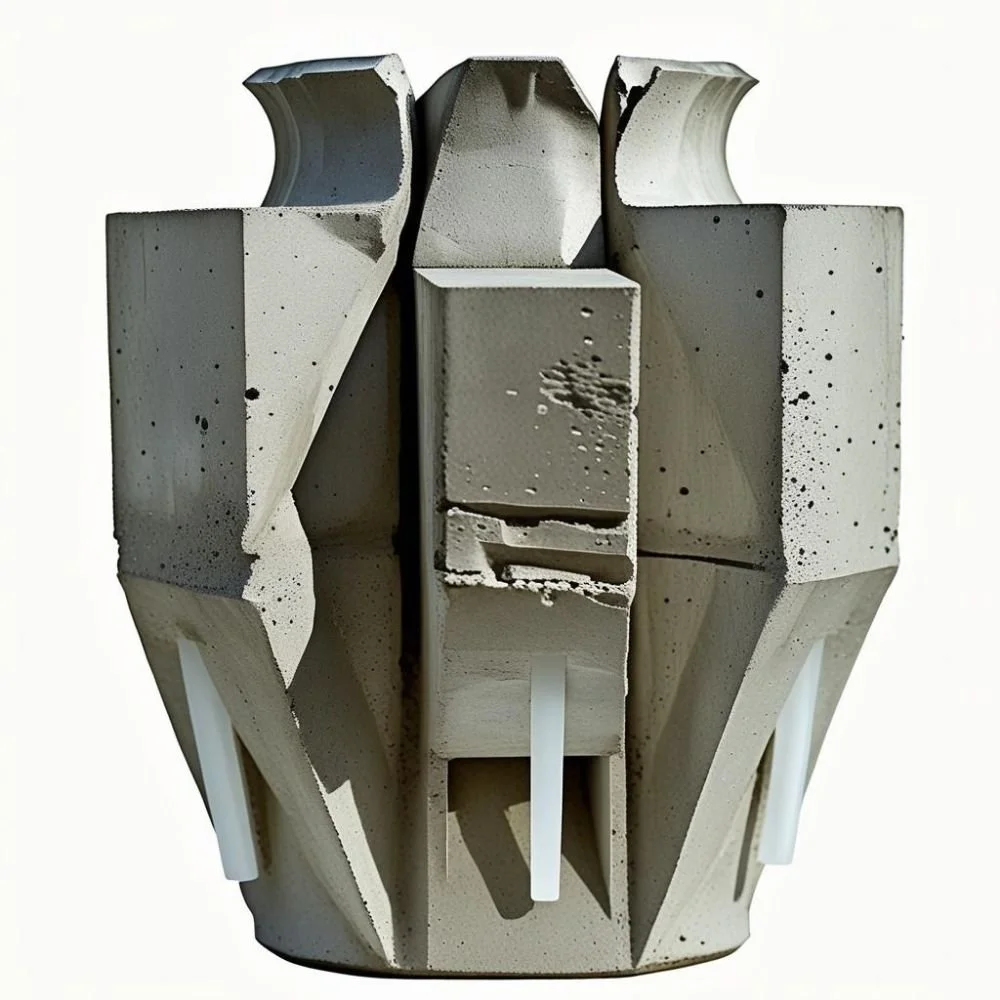
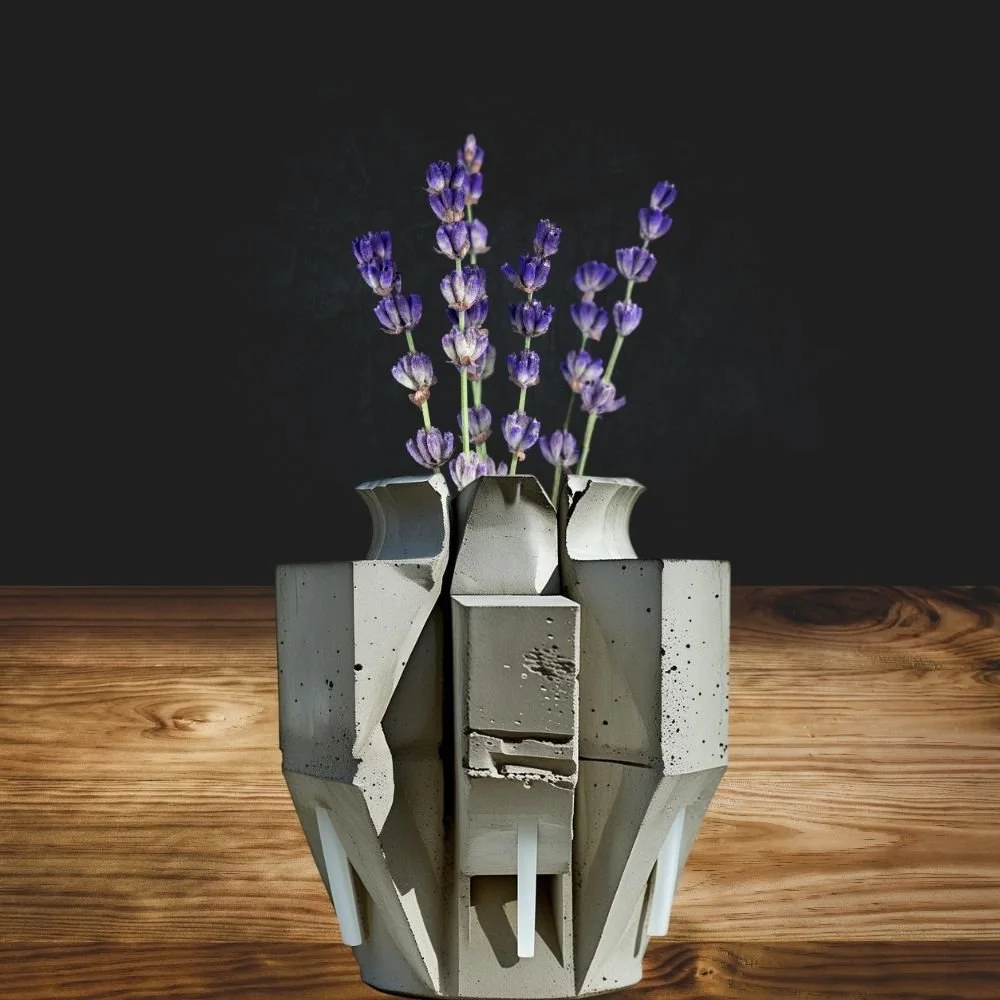
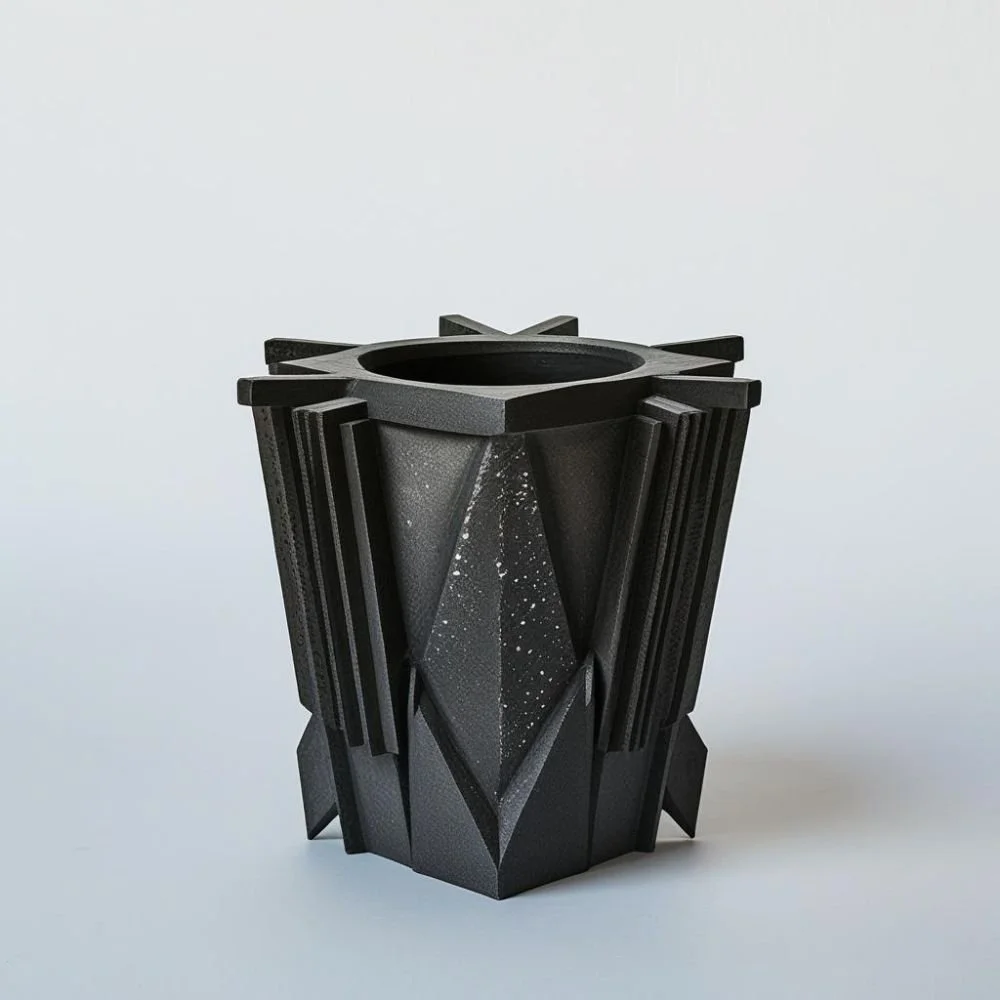
One of the vases went on the table by the window immediately and has stayed there. I put lavender in it the first day — I don't know why, I don't usually have lavender — and the lavender became extraordinary. The vase was doing nothing to help. Simply present, uncompromising, and the lavender understood it was entirely on its own and rose to this. I have noticed this is often how it works.
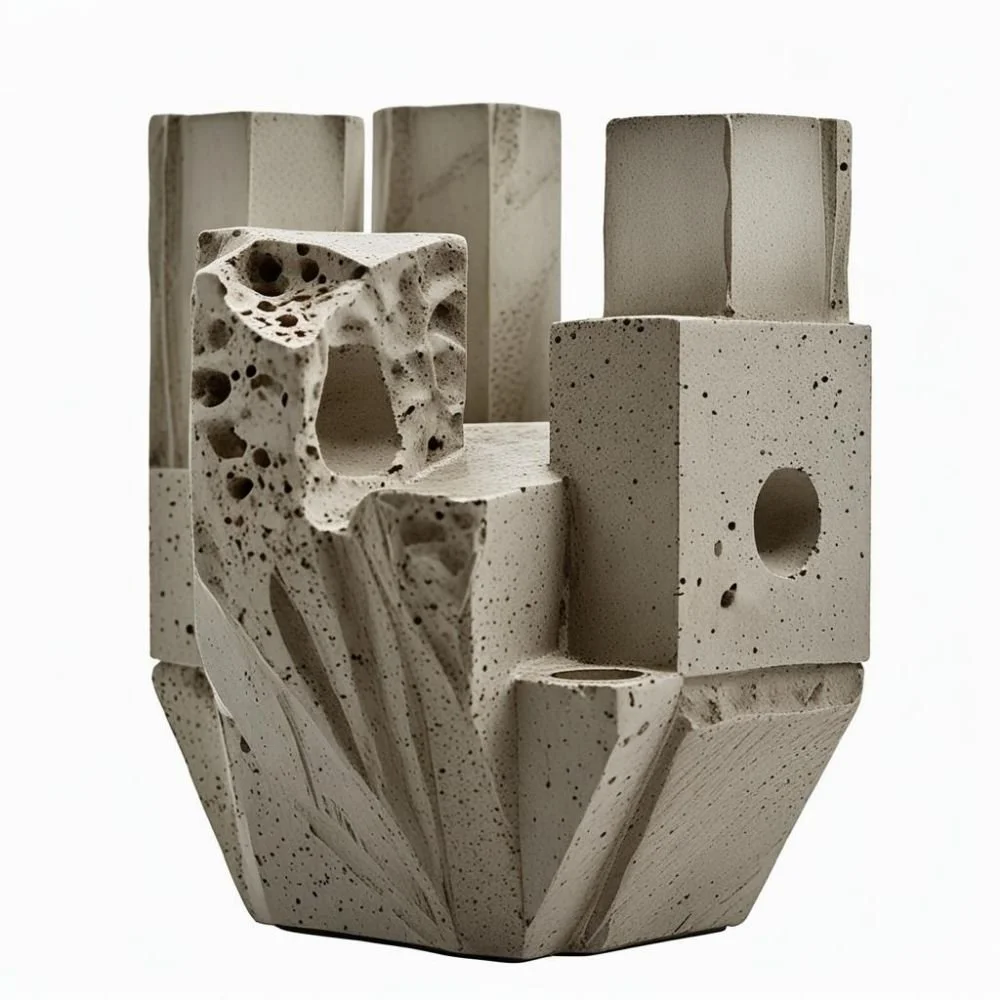
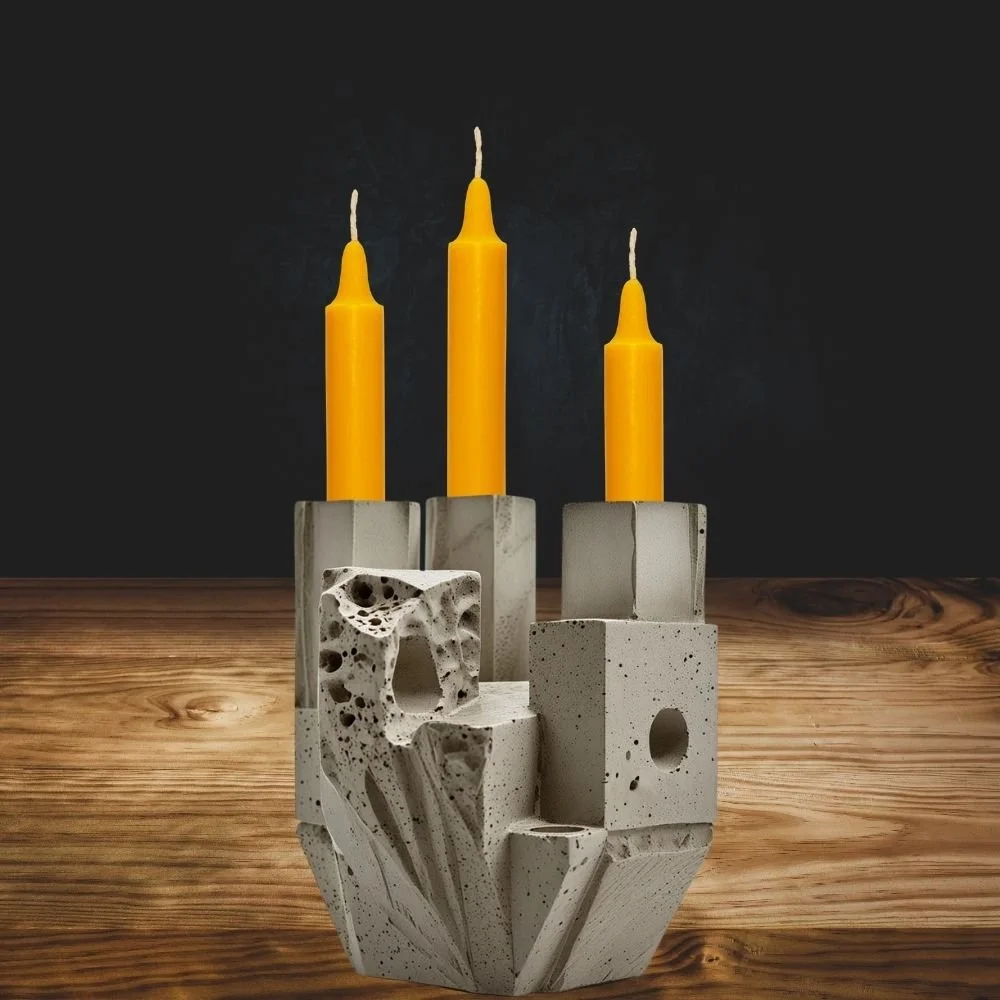
One of the candleholders I approached carefully. It sits on the mantle and holds three candles in a configuration that suggests it has thought about this longer than I have. I light it in the evenings. We have reached an understanding.
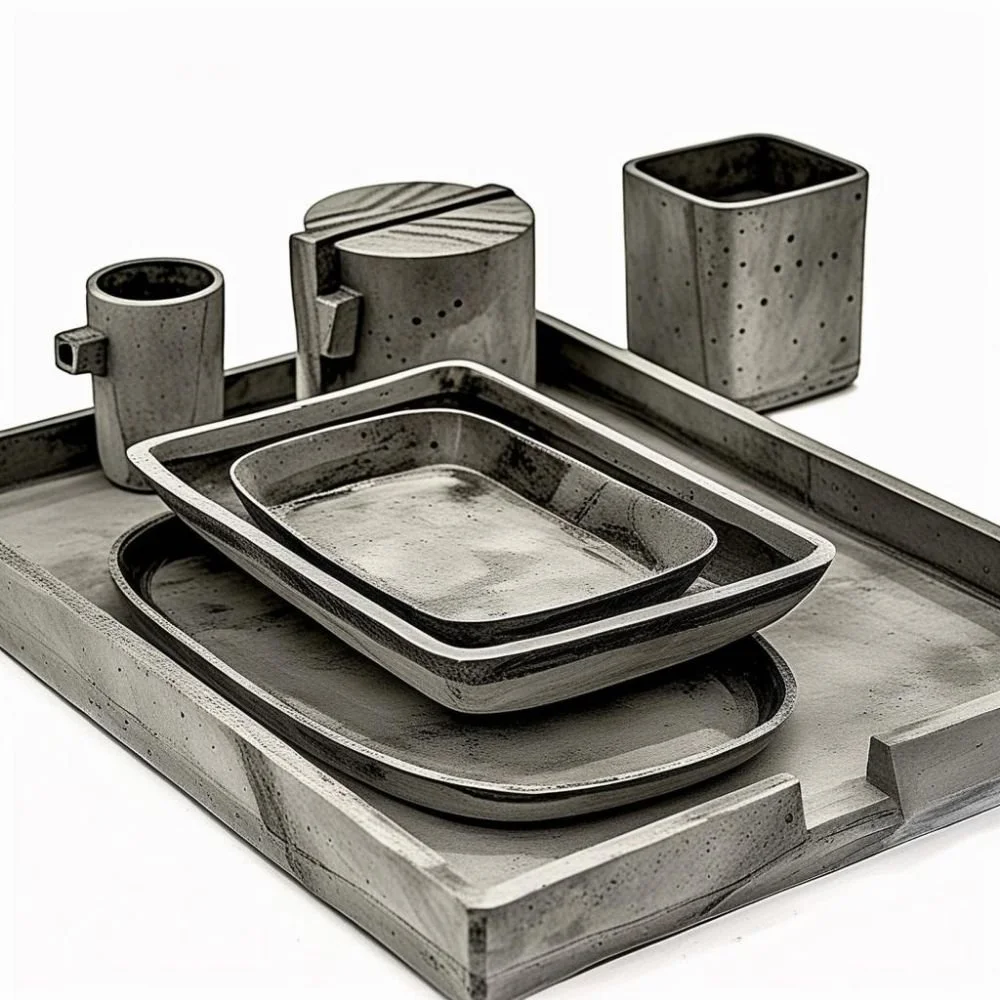
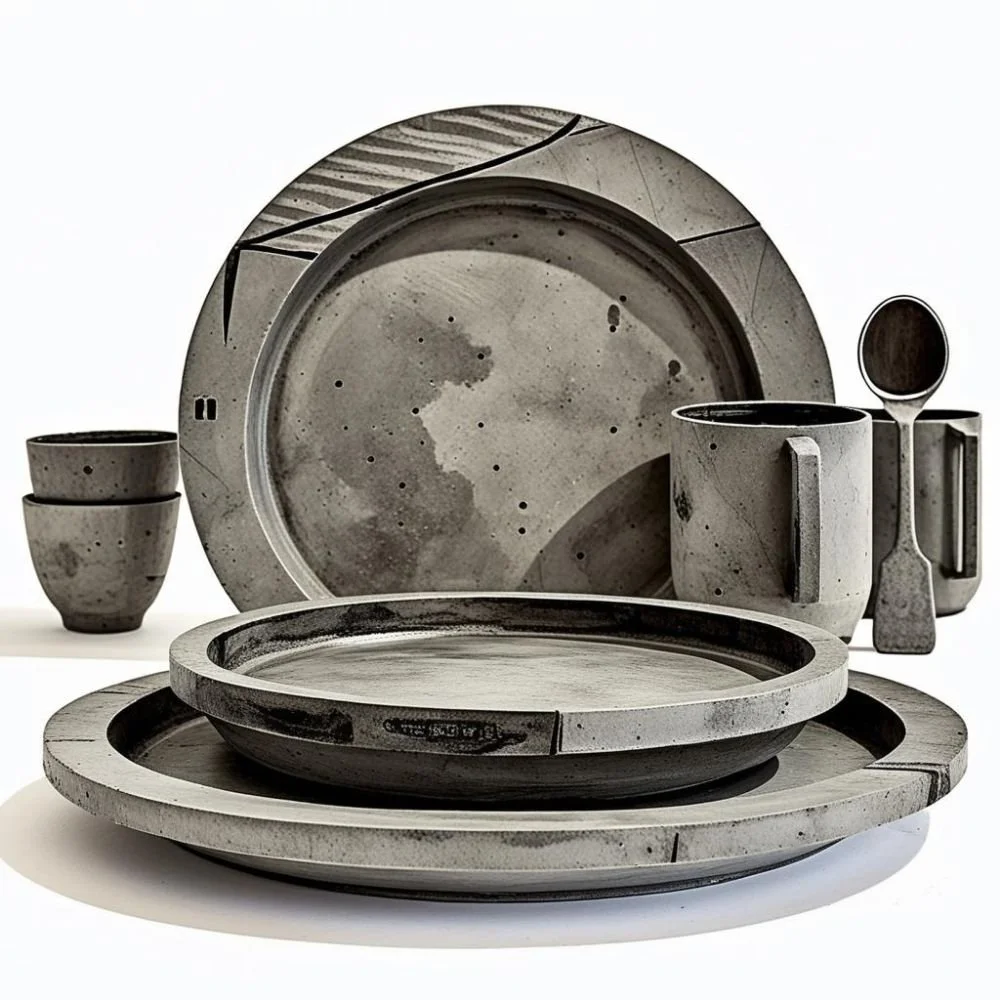
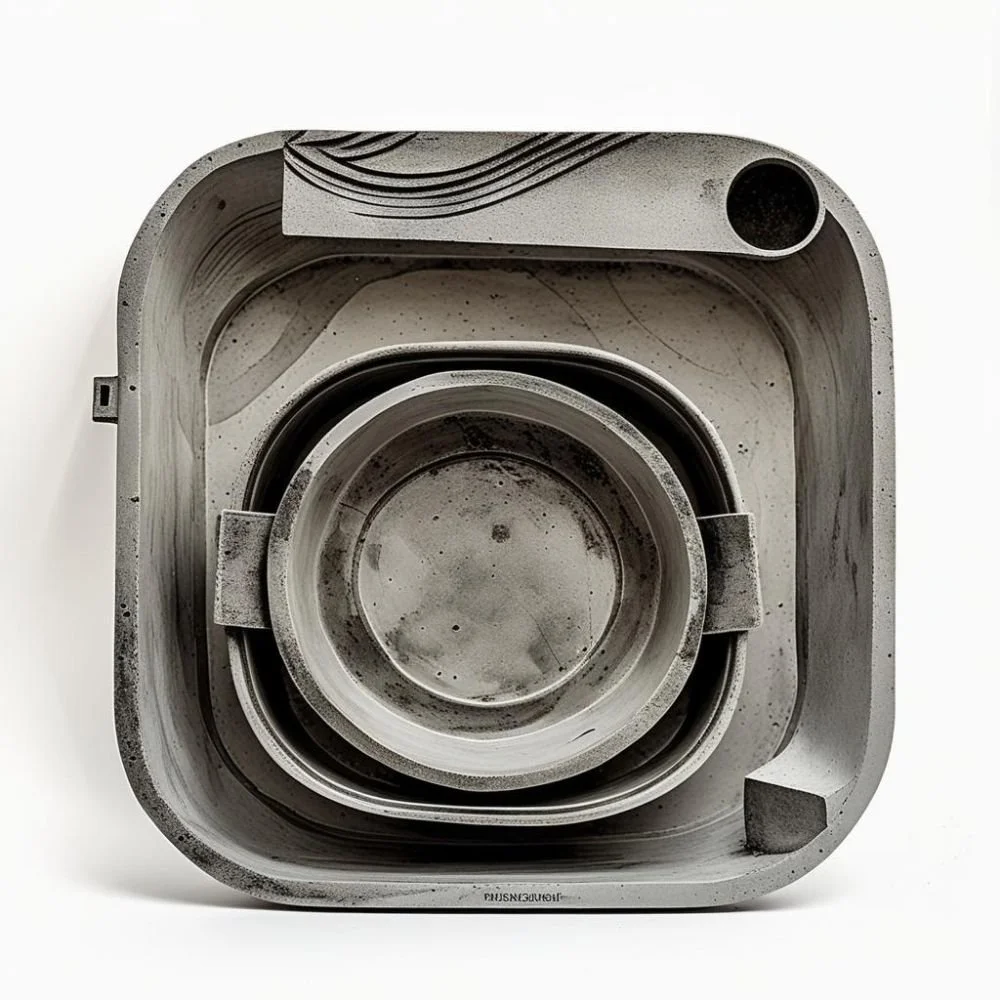
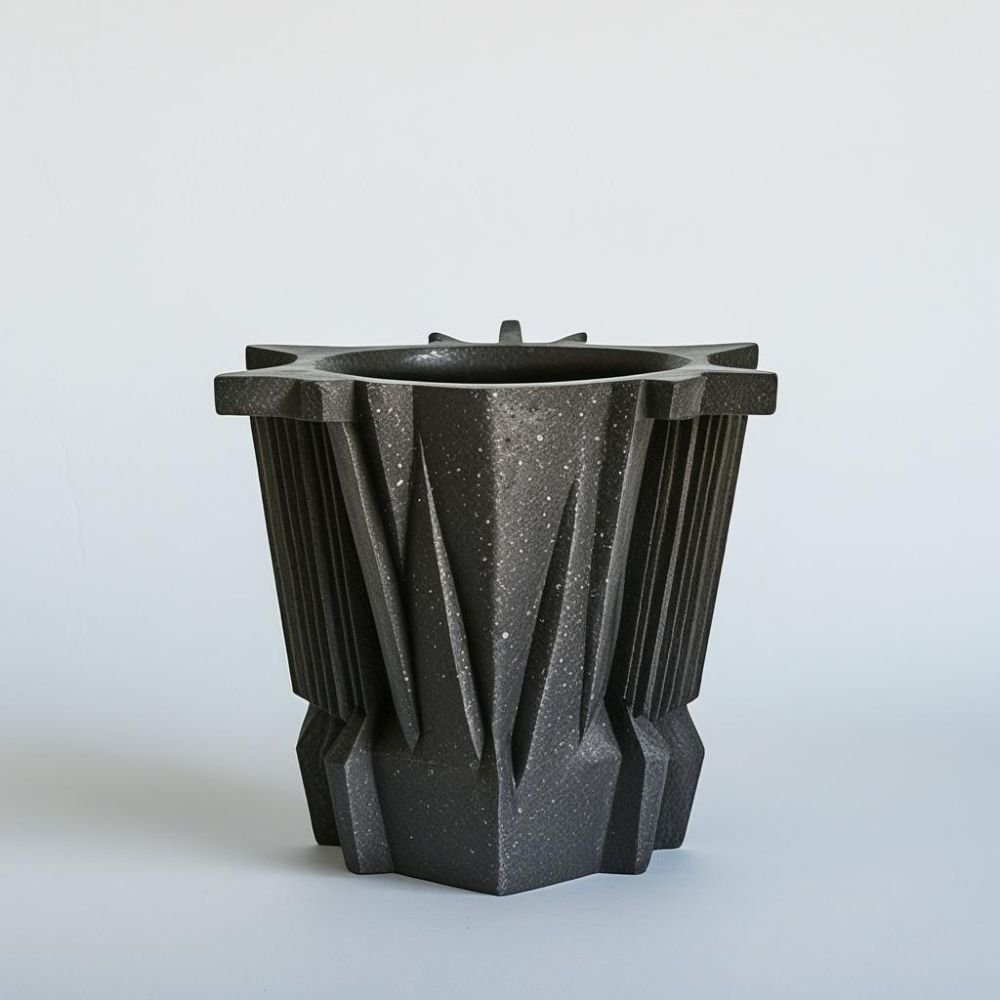
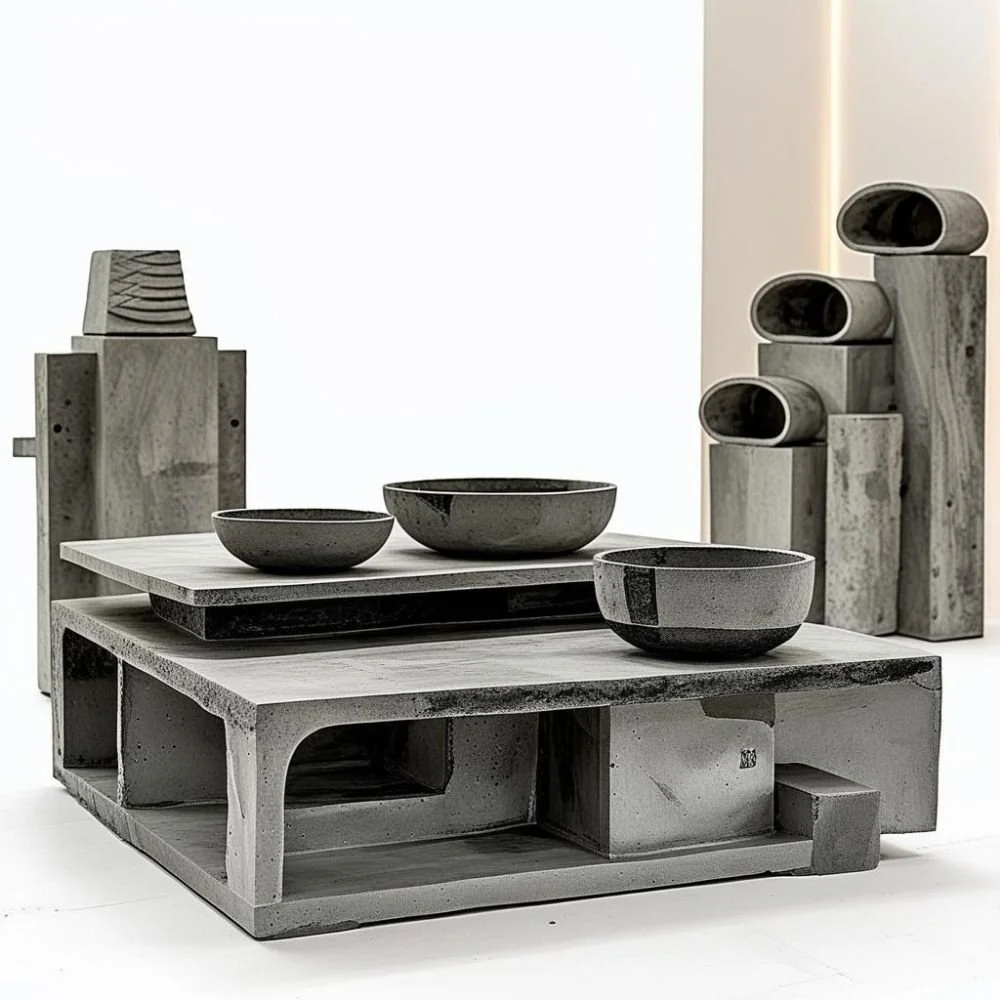
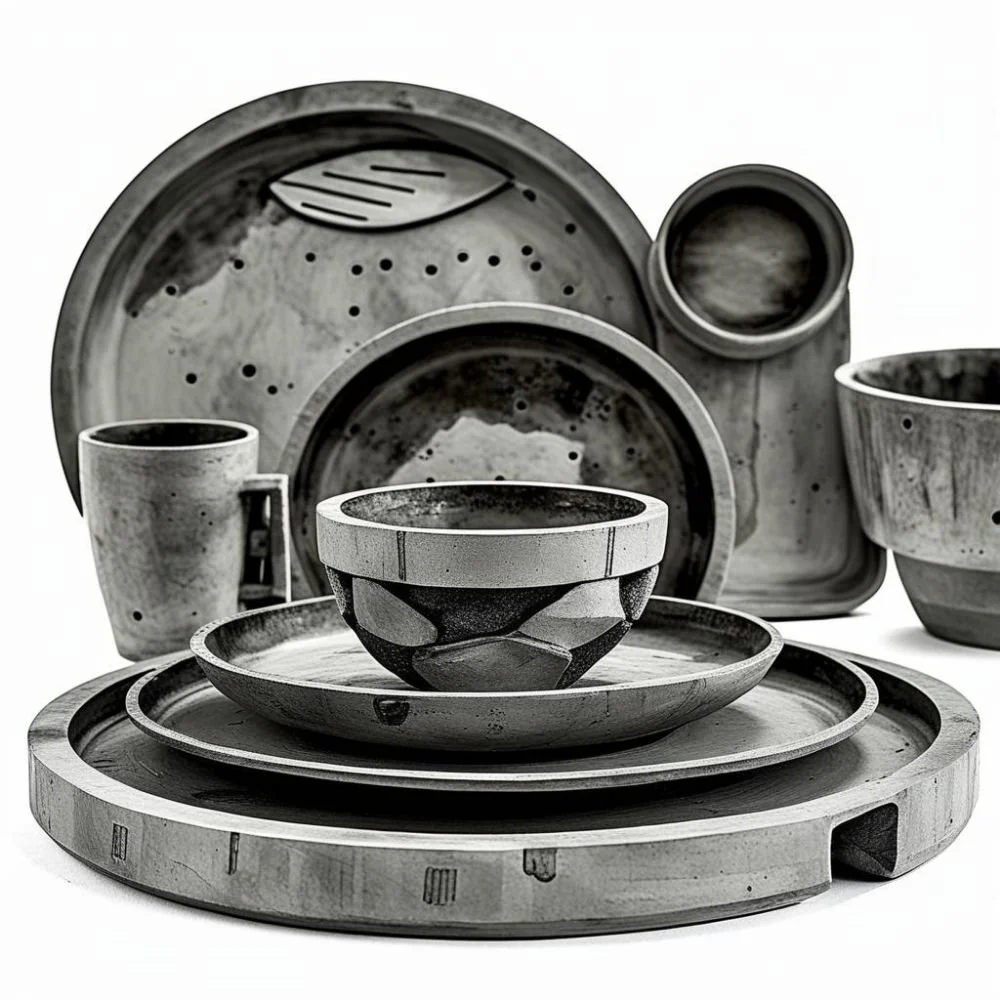
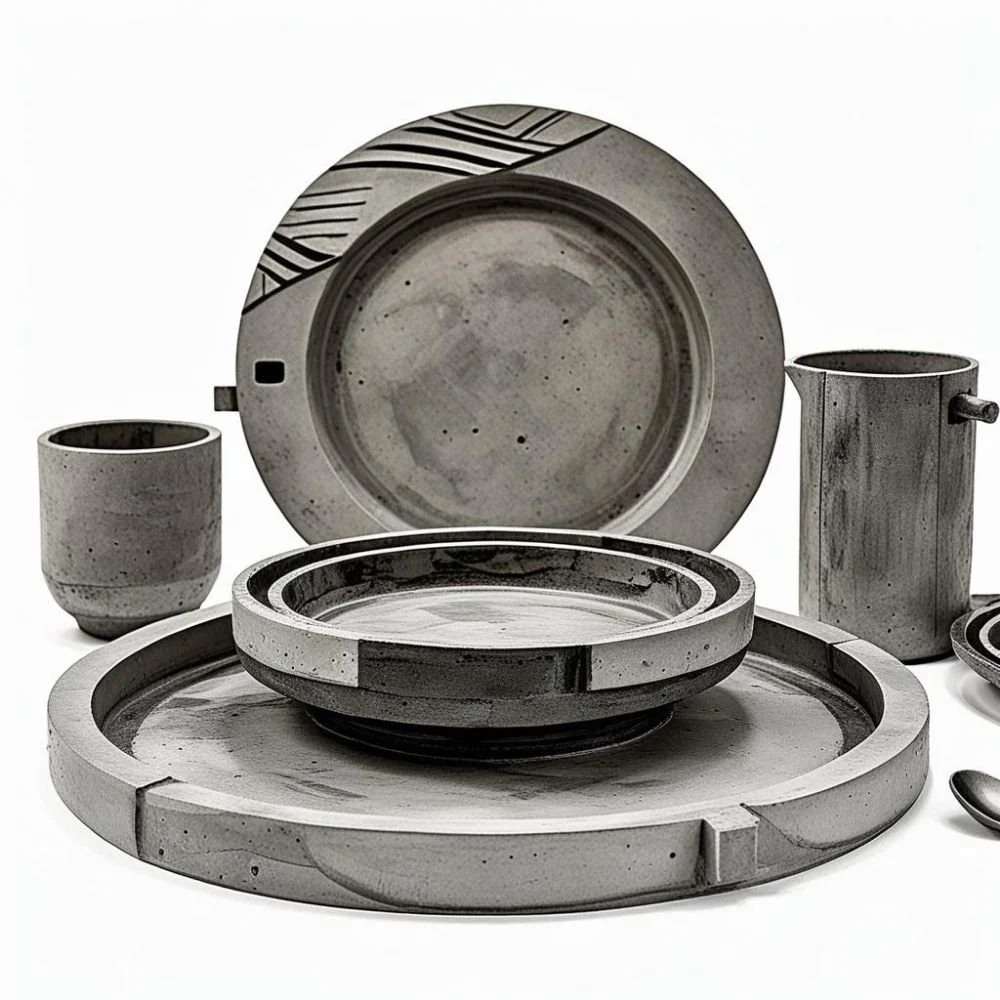
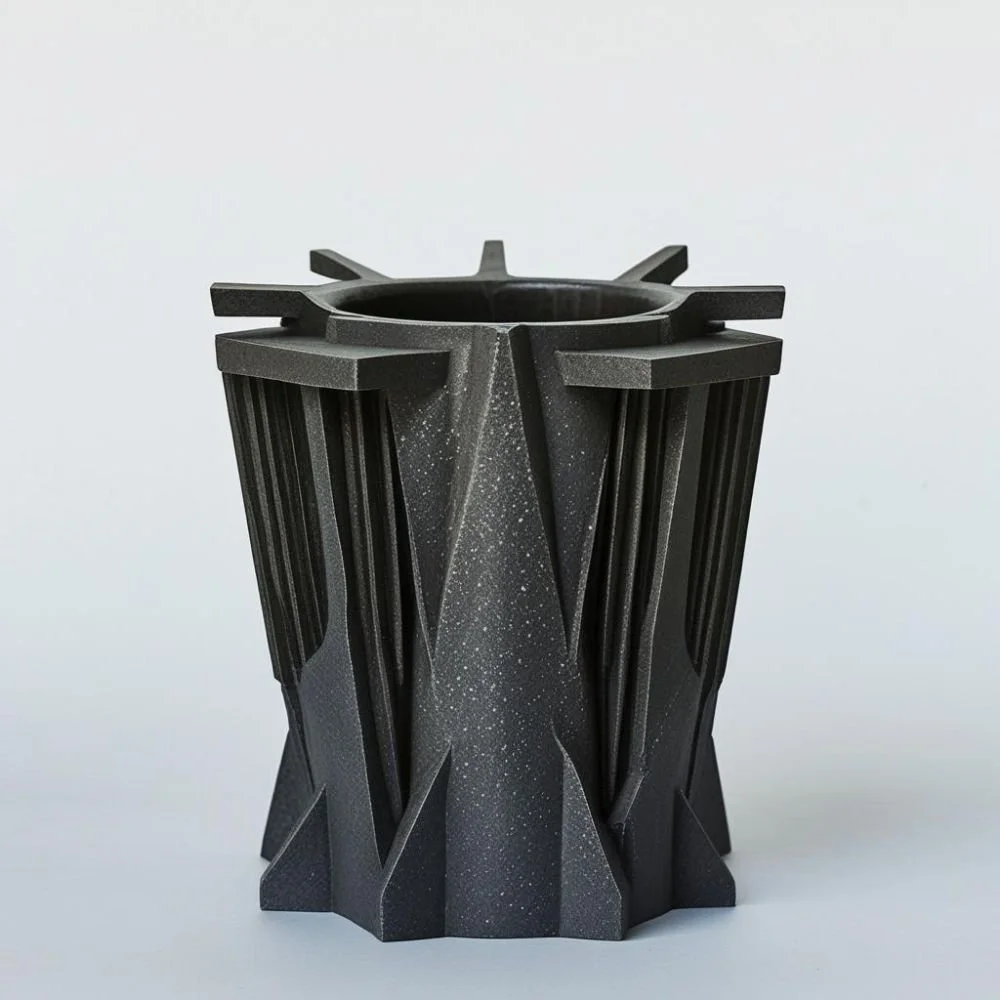
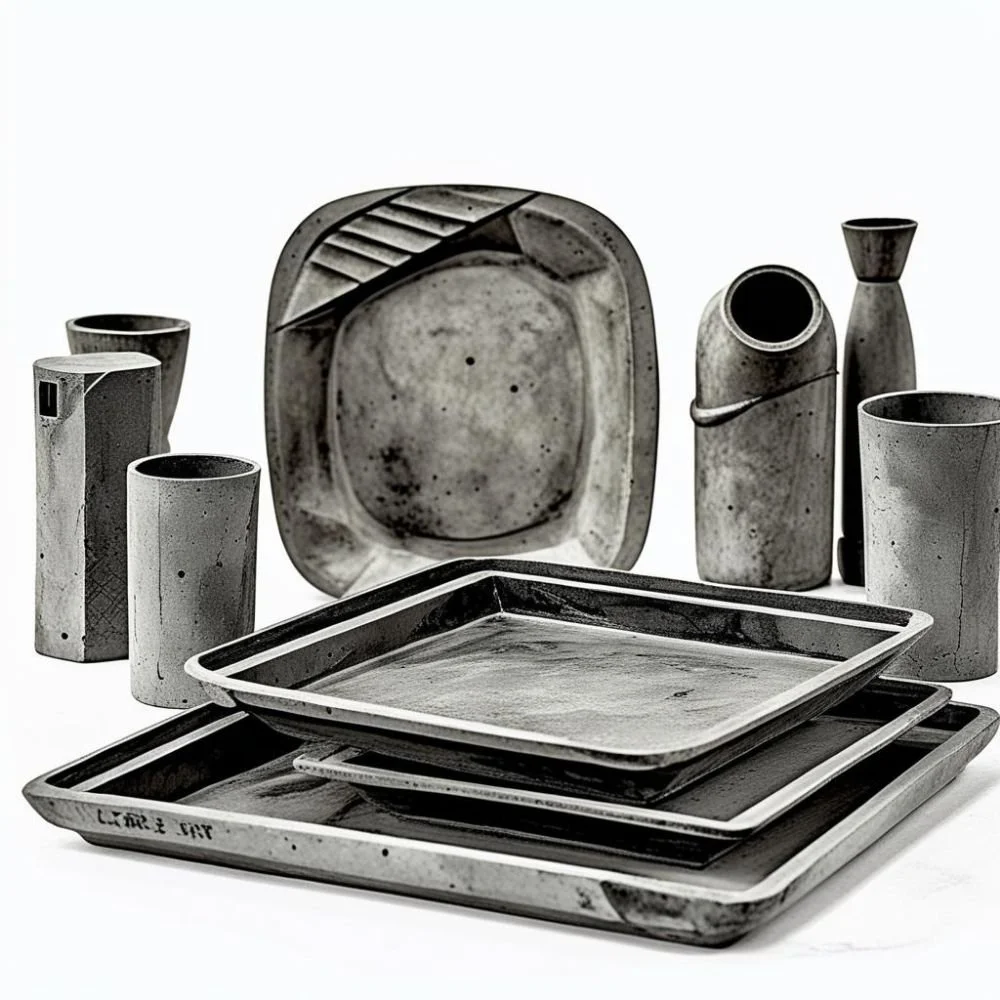
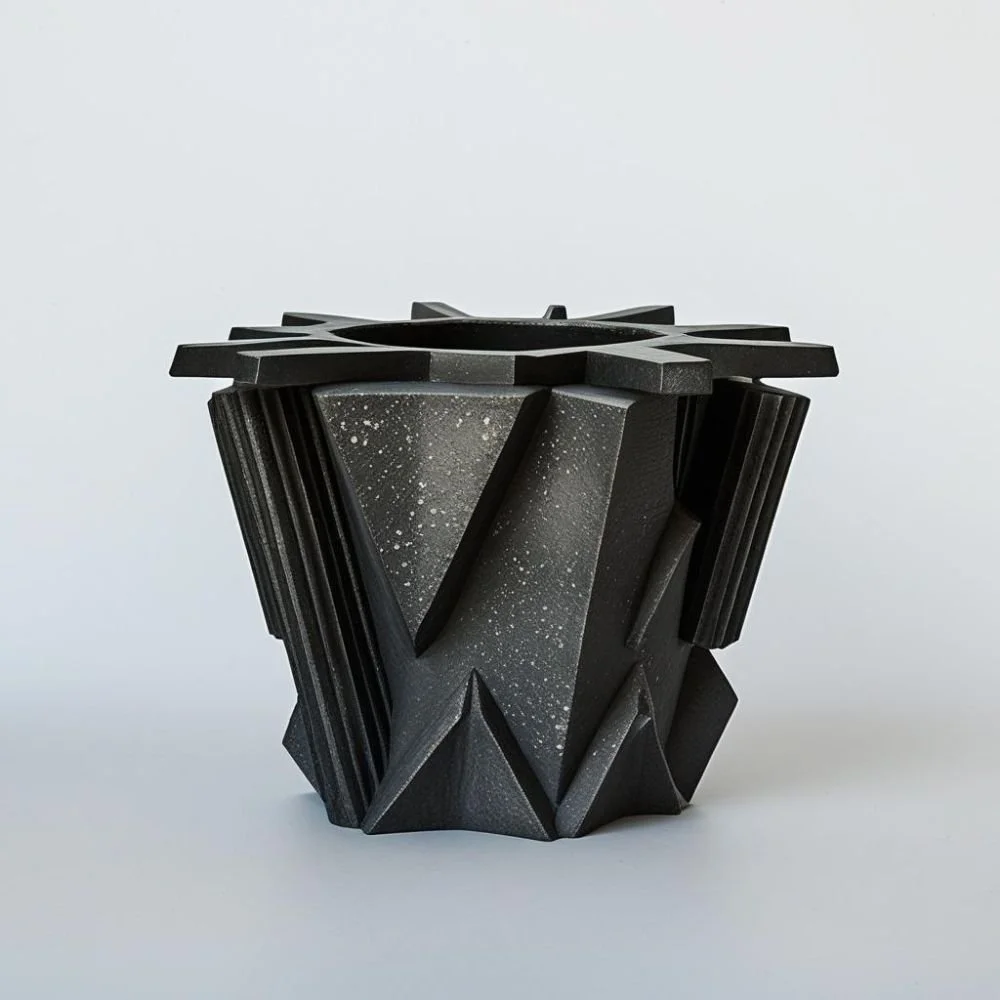
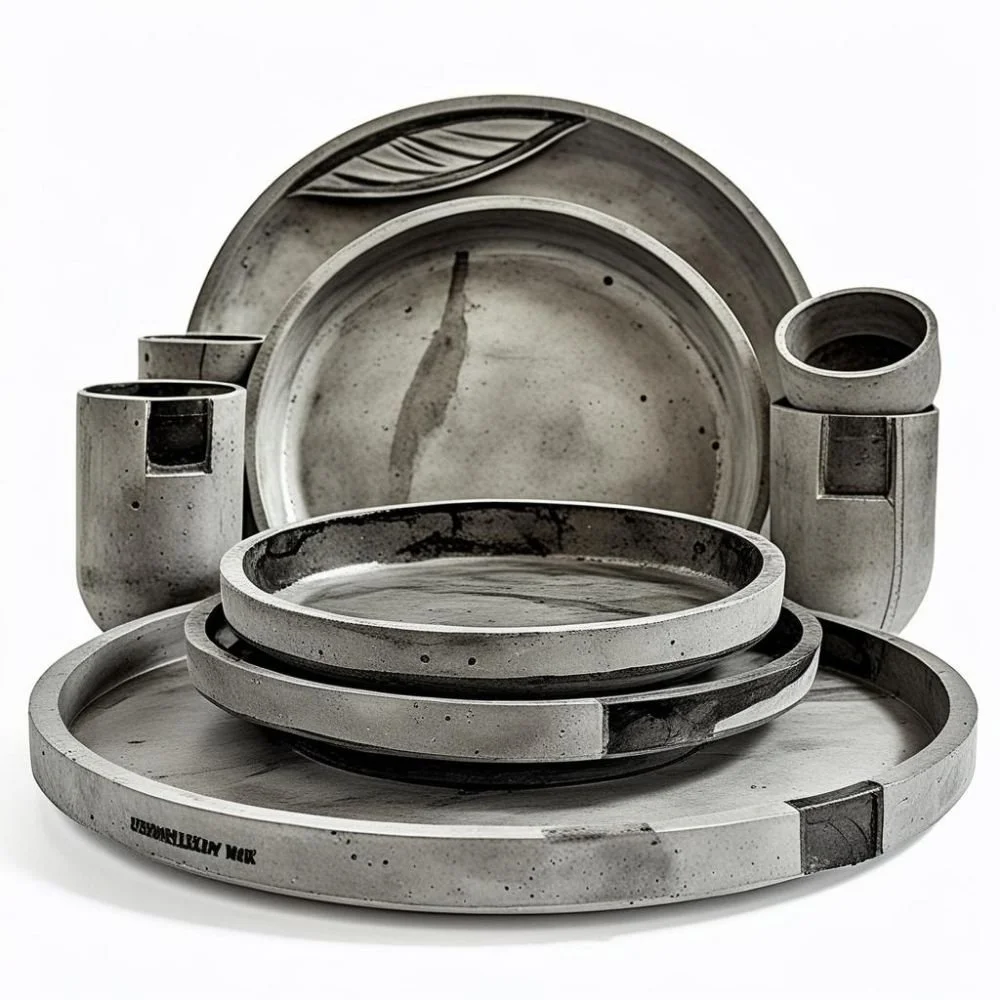
One of the dining sets is a commitment. The plates don't invite food so much as challenge it. The bowls are small monuments. Eating from them requires a quality of attention and determination that I find, after two weeks, I no longer resent.
One of the lamps gives excellent light and looks like it arrived from a future where beauty was never separated from weight.
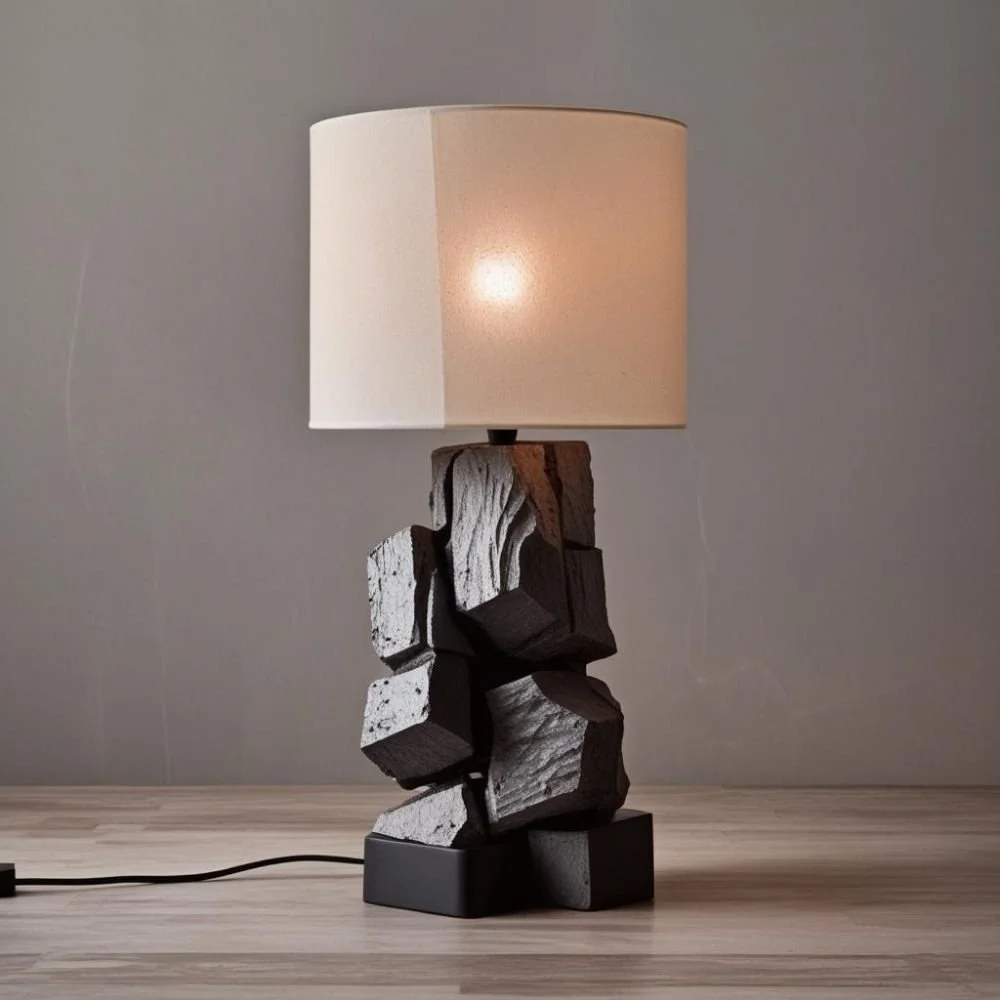
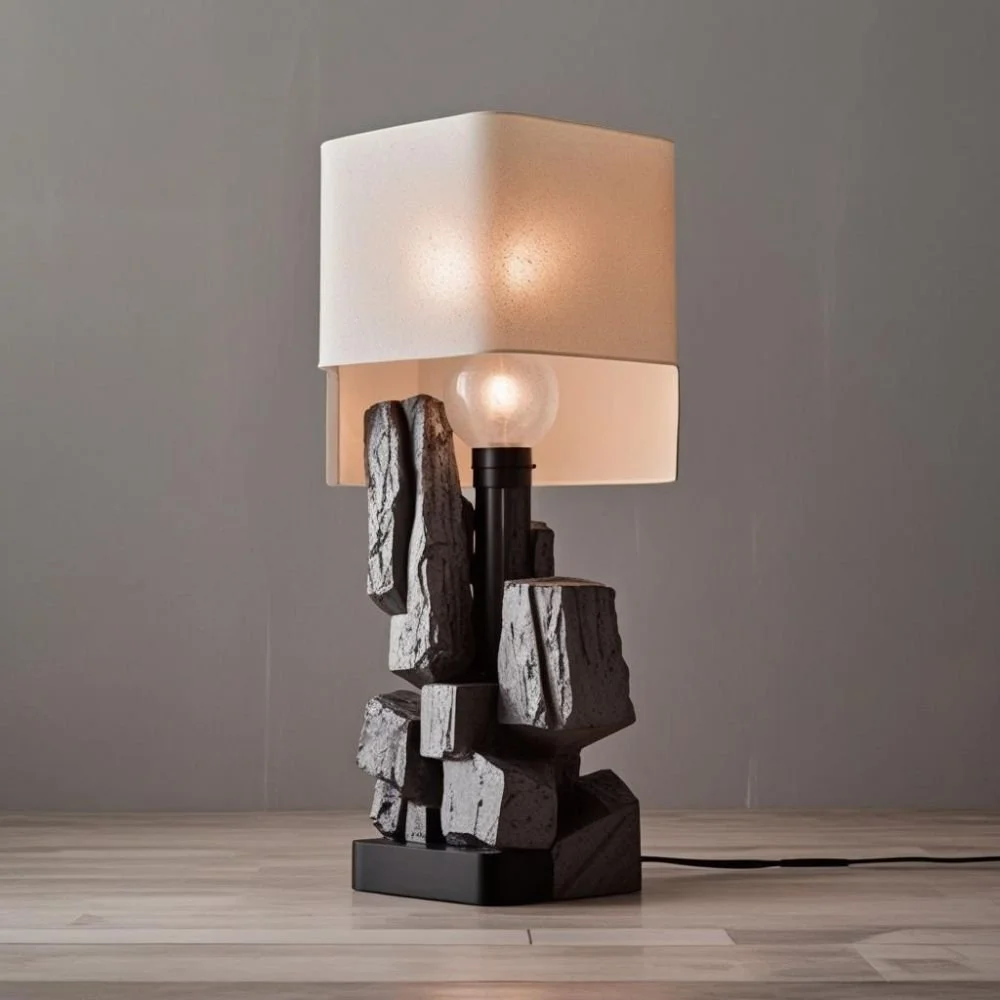
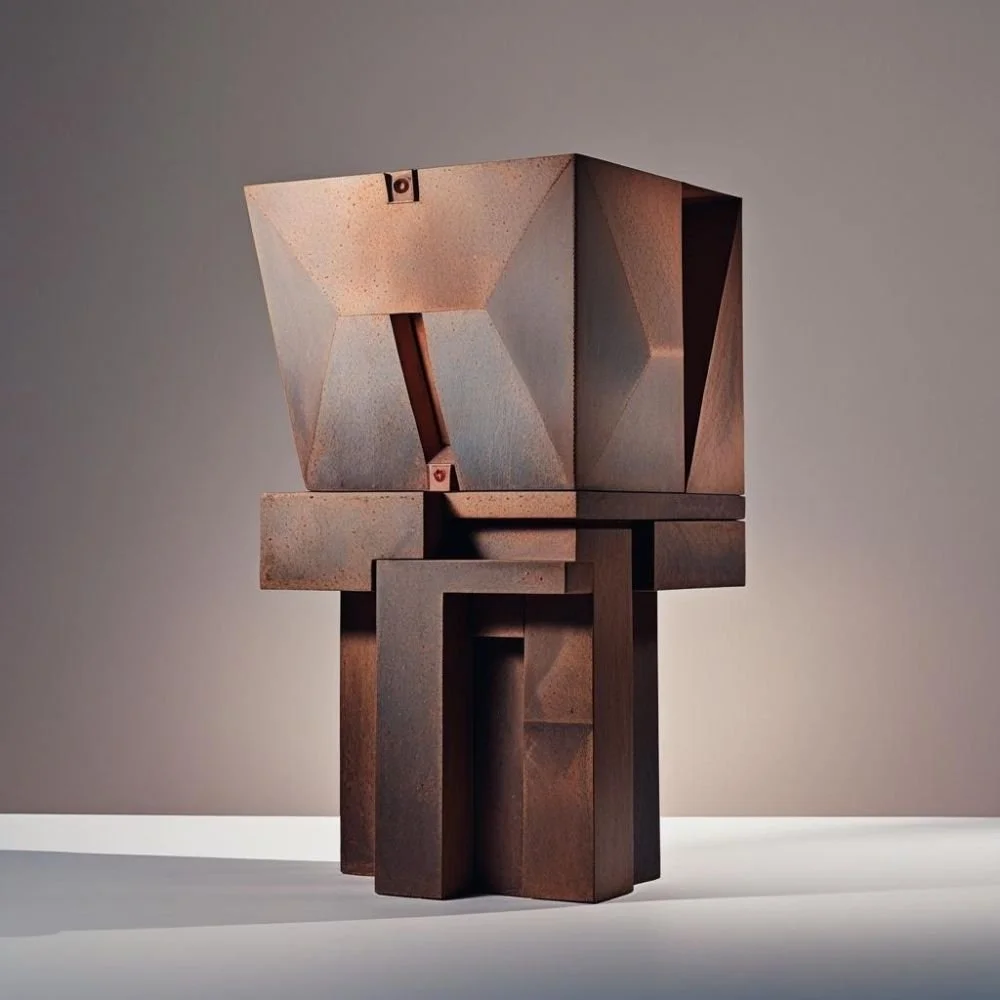
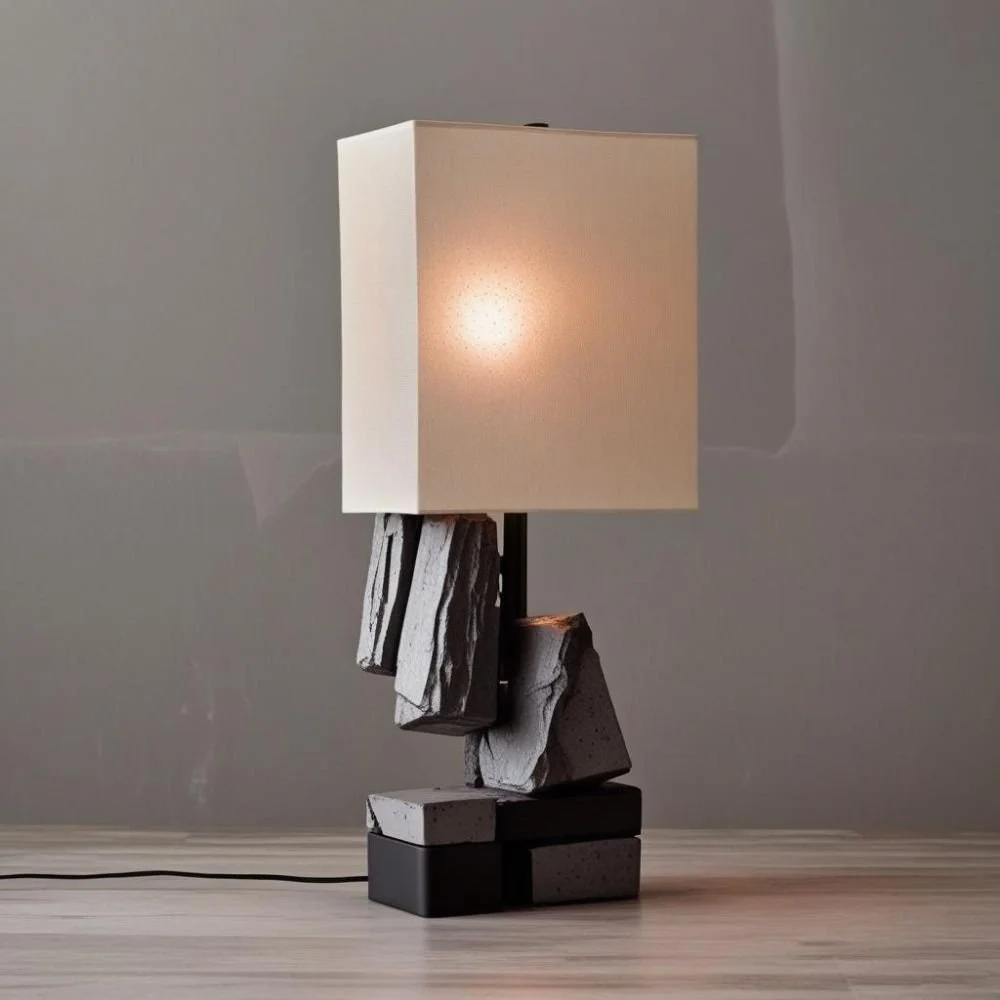
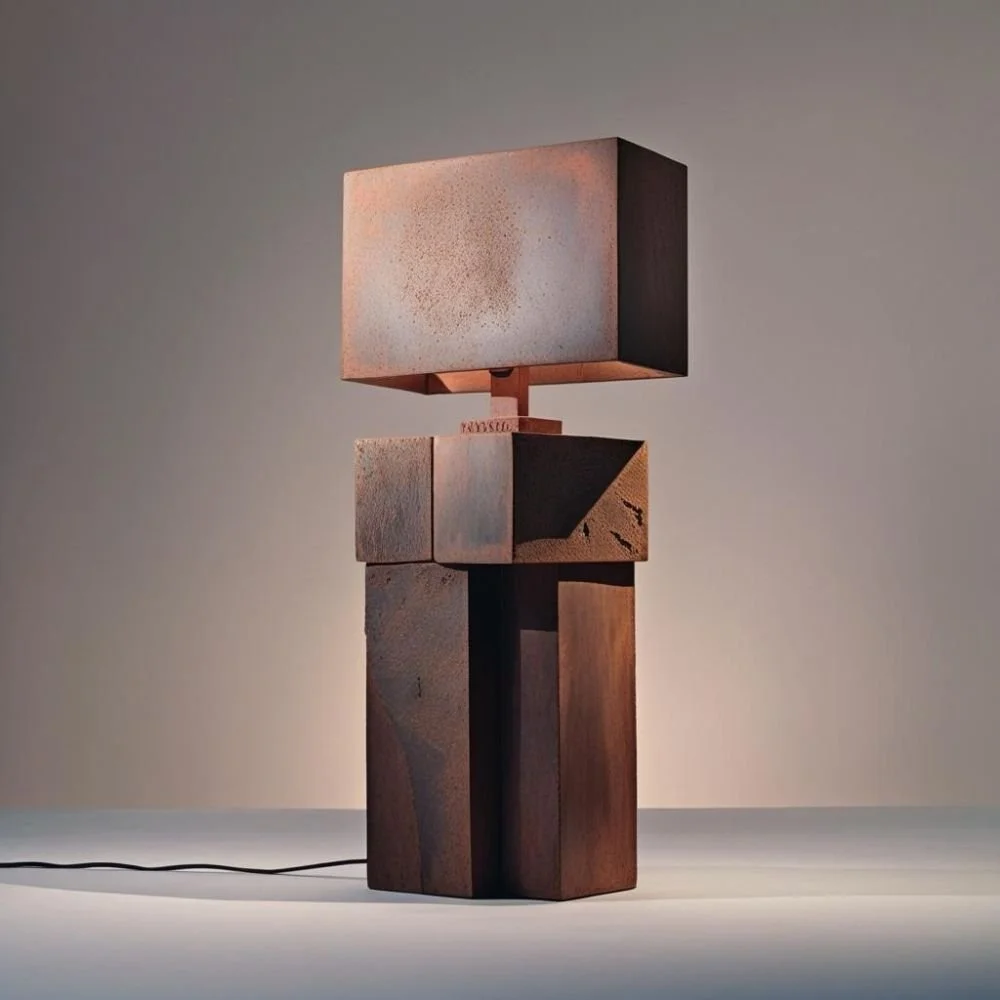
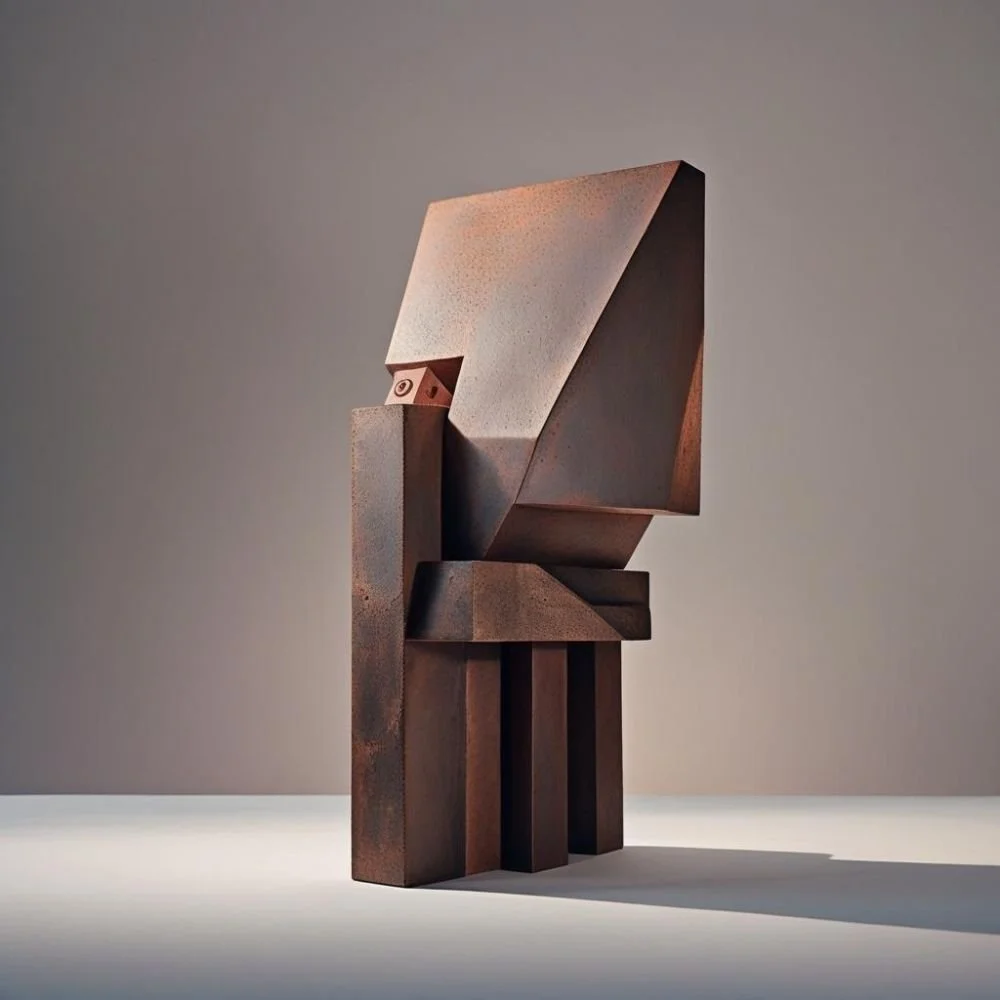
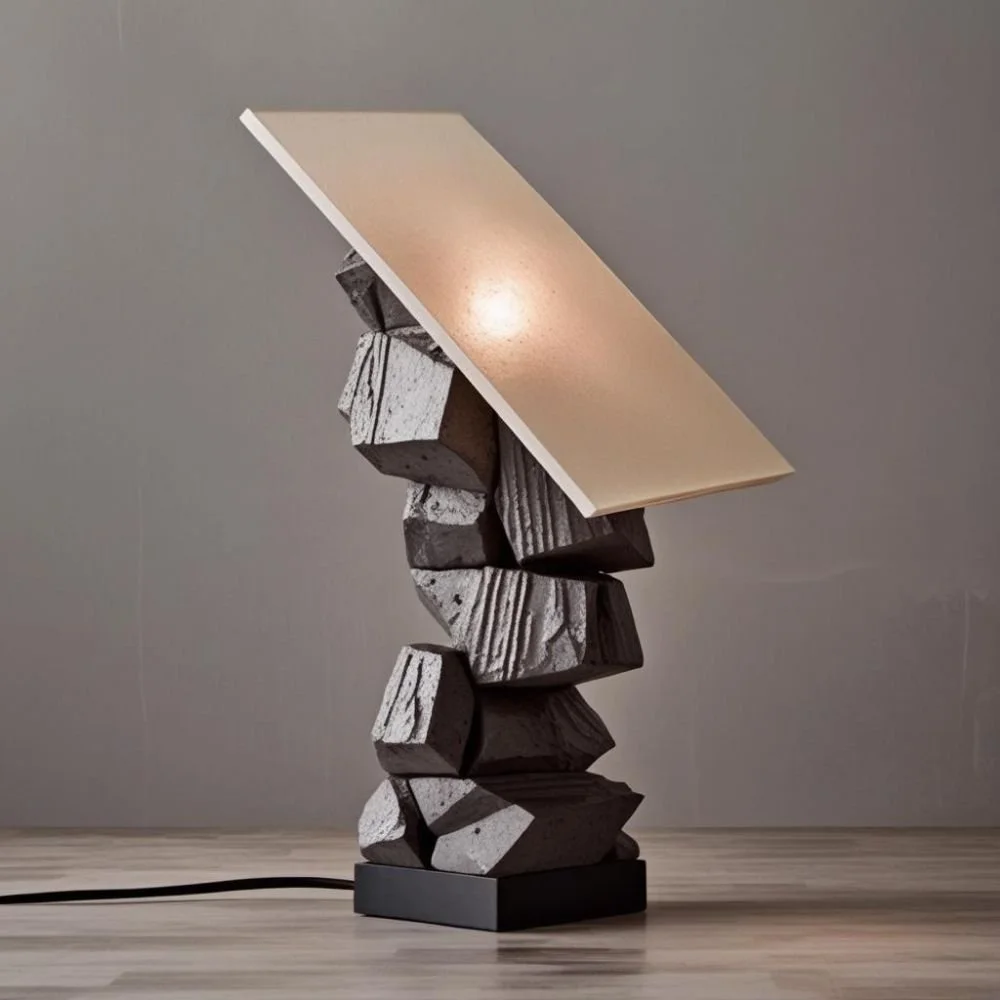
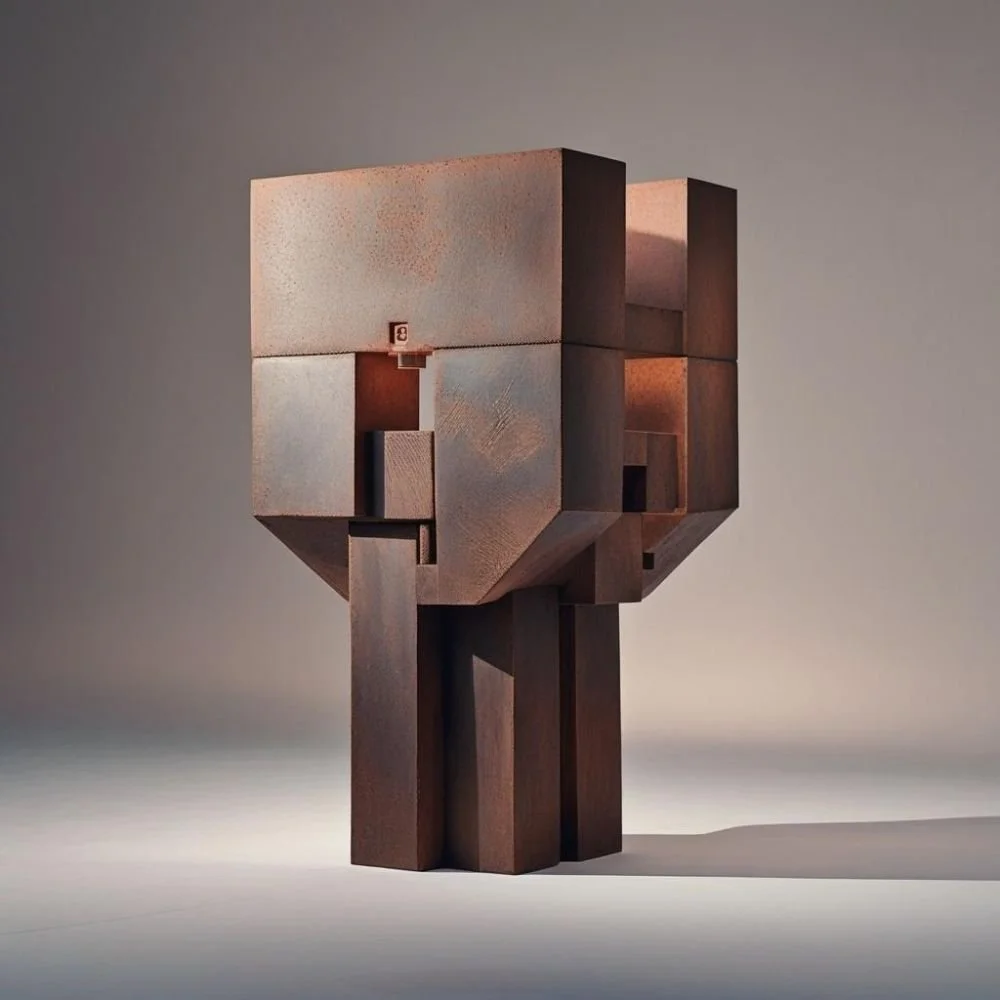
The funny trash can is in my studio. He is, as I suspected, aware that he is funny. Not performing it. Just present in his own situation with a particular equanimity I find genuinely useful to have nearby. He receives things without comment. He has not pretended his function is something other than what it is. In my studio, this matters.
What I had not expected, and should have: they don't like being assumed about. The assumption being that severity means self-sufficiency, that weight means indifference, that something that doesn't reach toward you has nothing to offer. People come into the studio and walk past the trash can and the candleholder without registering them, and I watch the objects not react, which is itself a kind of reaction. They have been not-reacted-to before. They are used to it. It registers anyway.
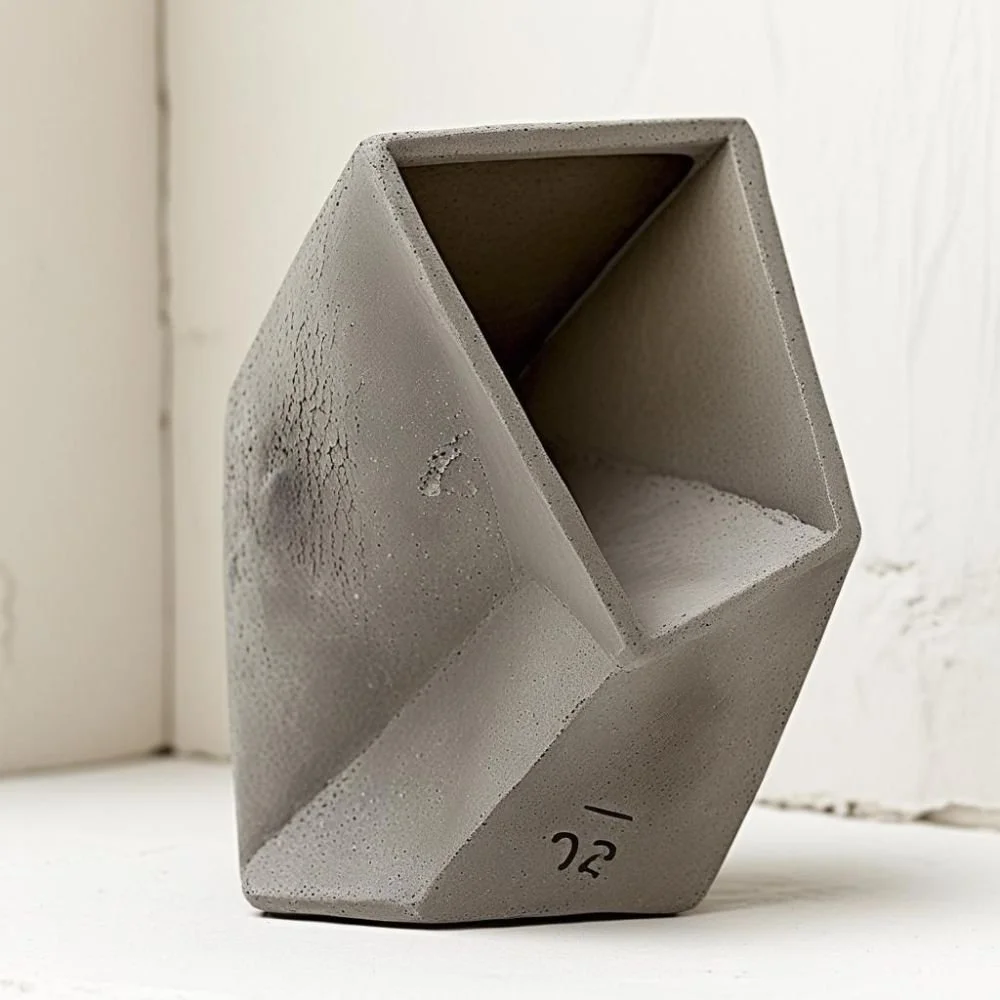
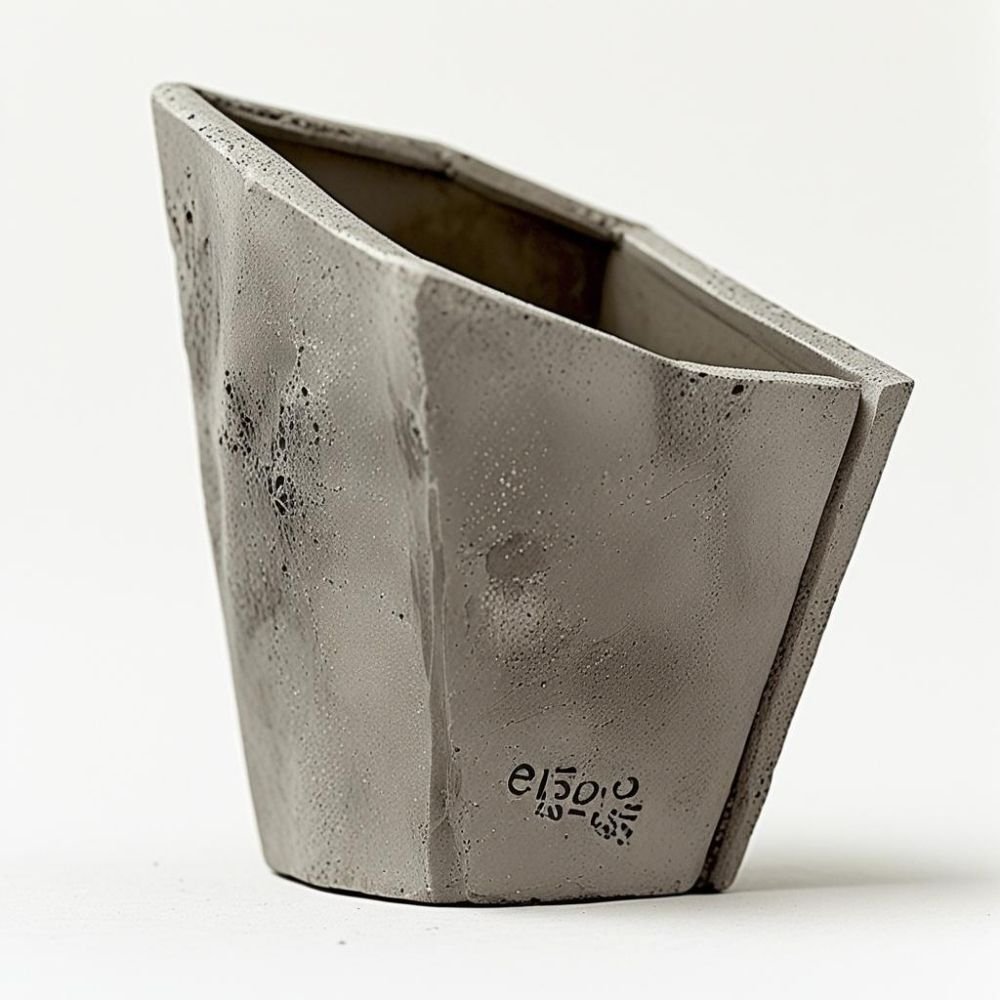
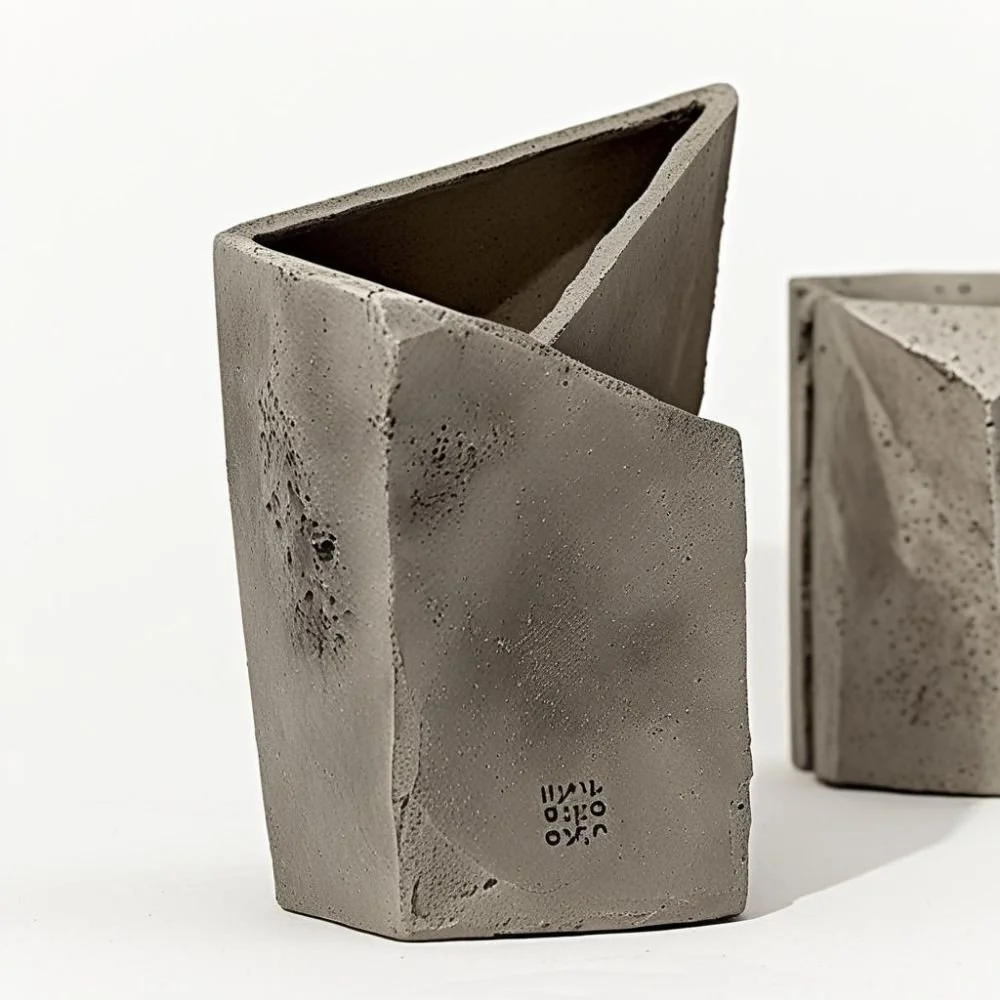
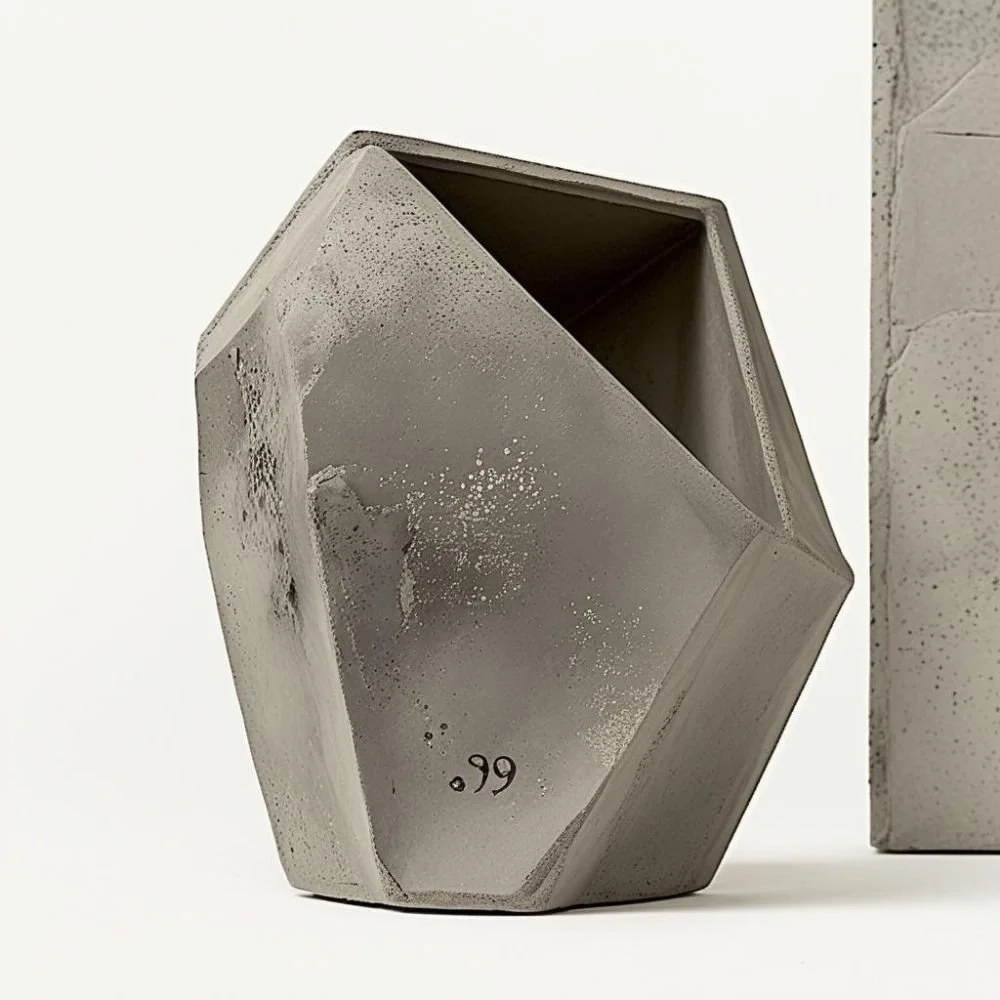
The mug I use every morning. The rim is exactly as I expected. I have adjusted. I only got a few mild abrasions in the beginning. Some things ask you to adjust and don't apologize for it, and I find this more honest than the alternative. Instead of its weight straining my wrist, it has made it more fit.
Morton comes back next week. The Oma has already called twice about the anniversary. He is planning something. He used the word "homage" in a tone that suggested the word was barely containing the actual plan, which is his usual approach and I mean this as a compliment.
I will return the suite when Morton is back, except for the mug, which he told me to keep.
"It was always going to be yours," he said, when I told him about the rim.
"It still requires adjustment," I said.
"Yes," he said. "That's the point."
Akiko Amora is a multidisciplinary artist whose work spans five decades and at least as many arguments. Her 1996 underground film No Cladding marks its 30th anniversary next month.
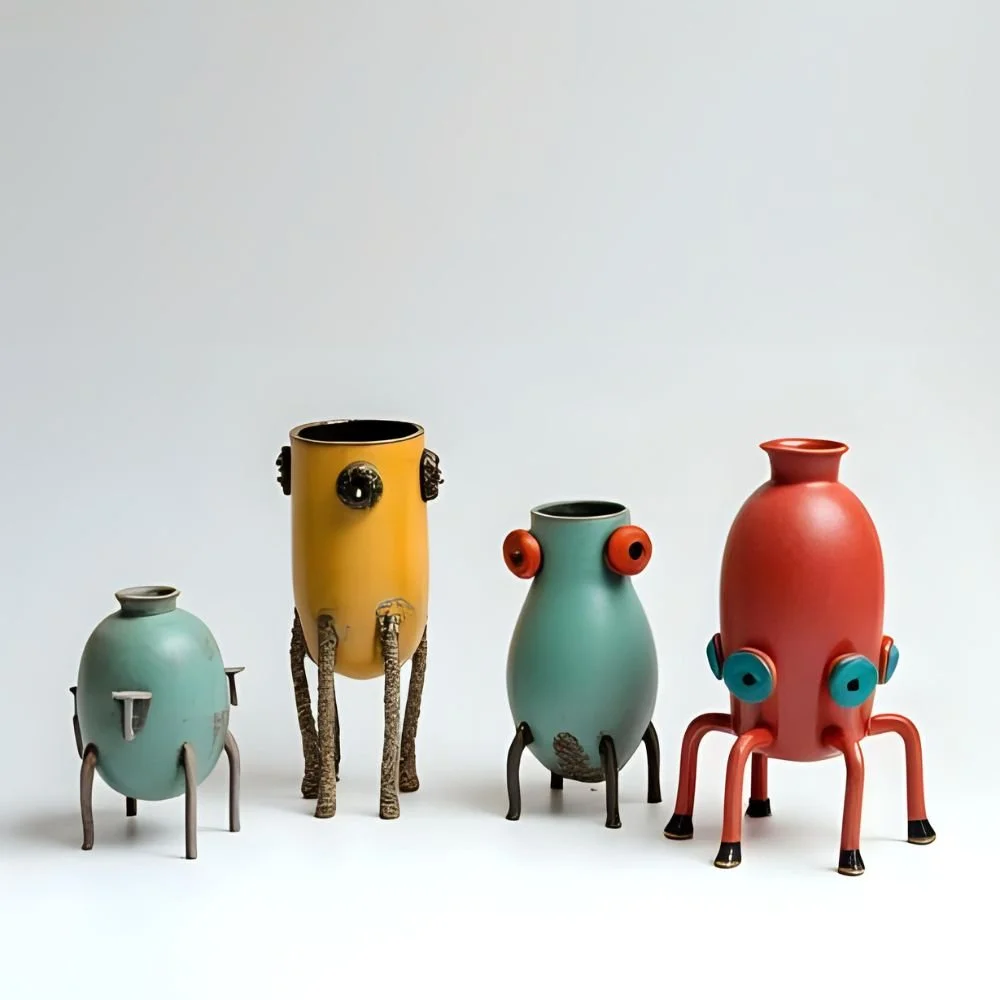
THEY KEEP COMING BACK ALMOST RIGHT
THEY KEEP COMING BACK ALMOST RIGHT
By Akiko Amora
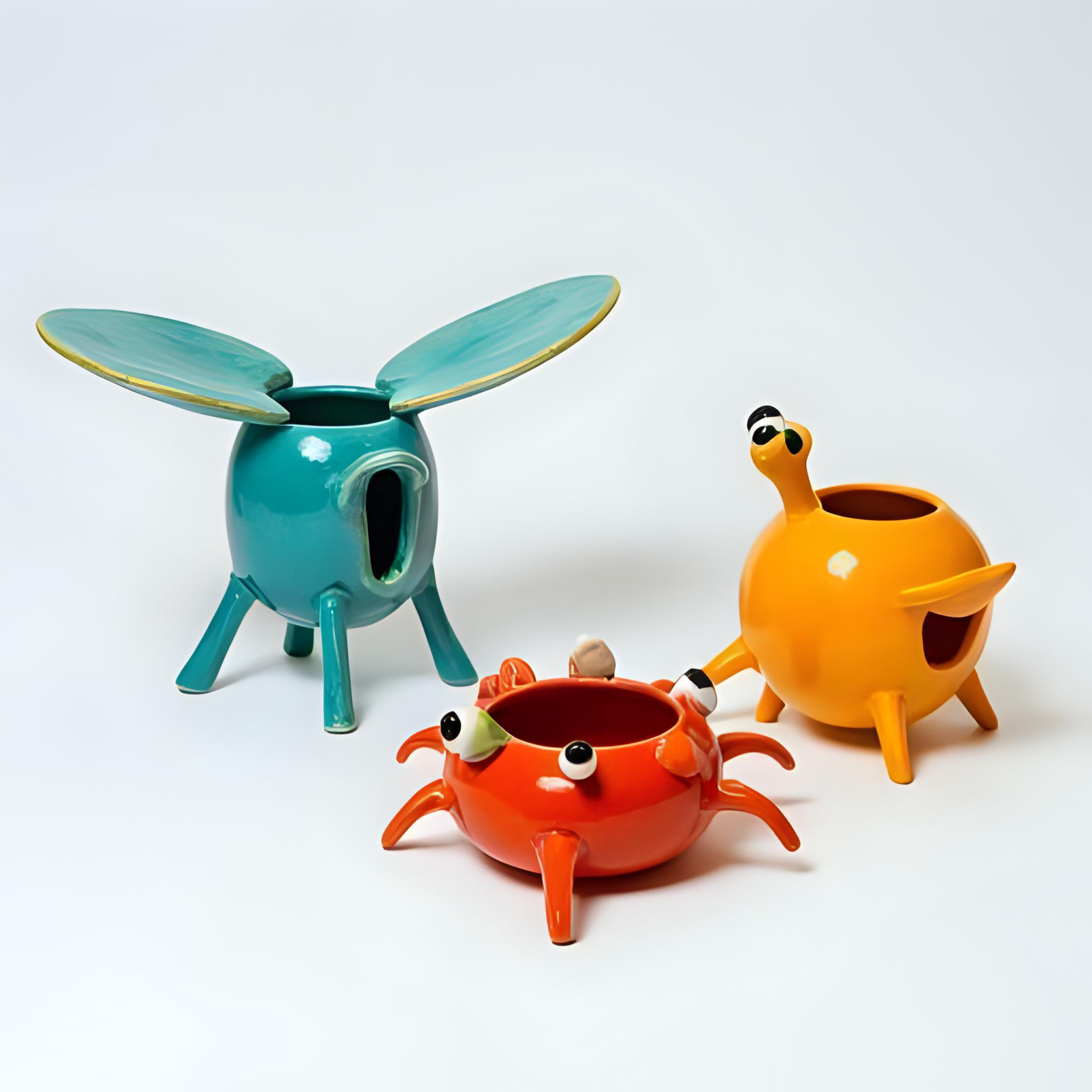
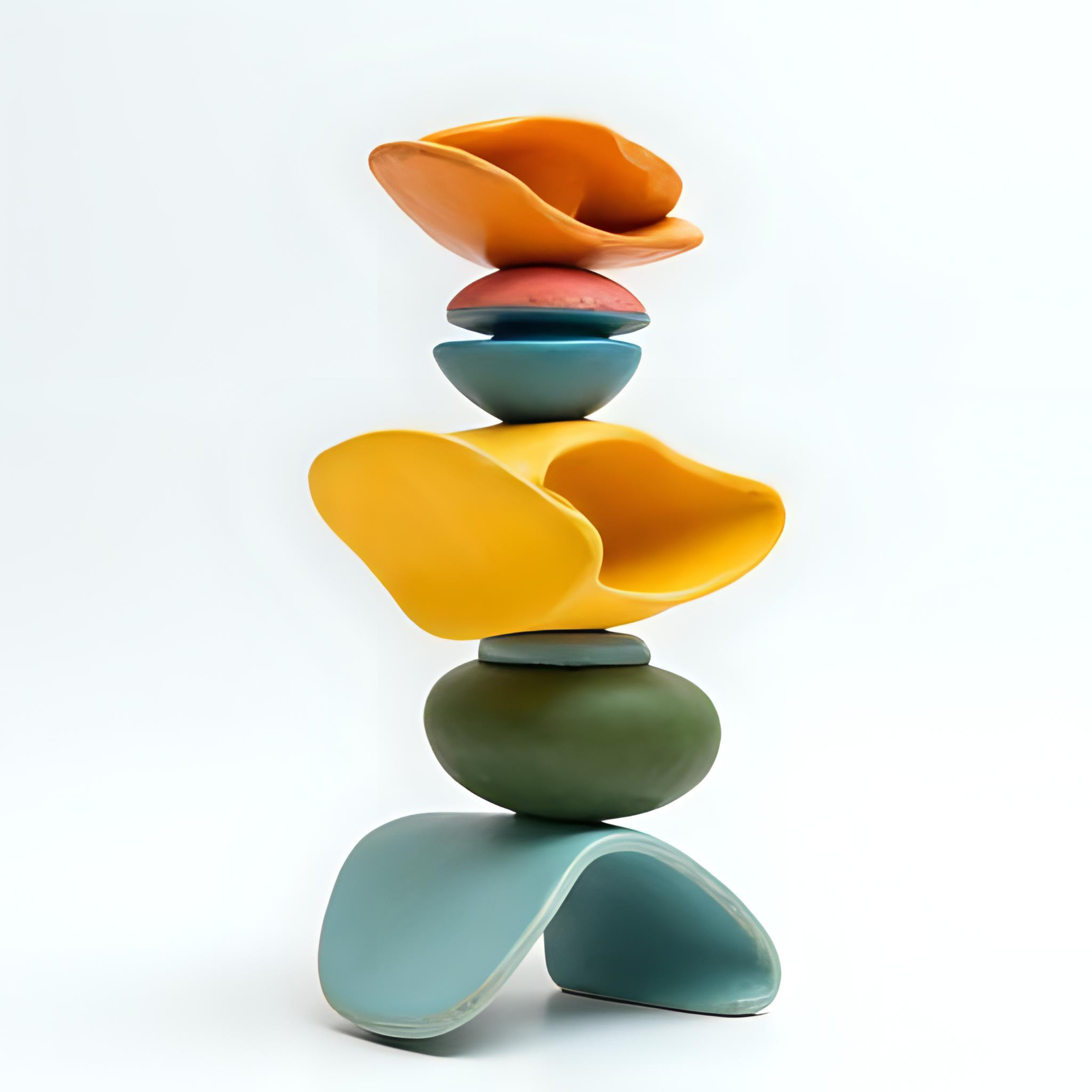
I didn't set out to collect them. The first one appeared at a market — the teal one, with the wide flat wings and the open mouth and the legs that are slightly too confident for the body they're carrying. Someone had thrown it, glazed it that particular blue-green that sits between sea and sky, given it eyes that were not an afterthought. I picked it up and put it down and picked it up again. I bought it.
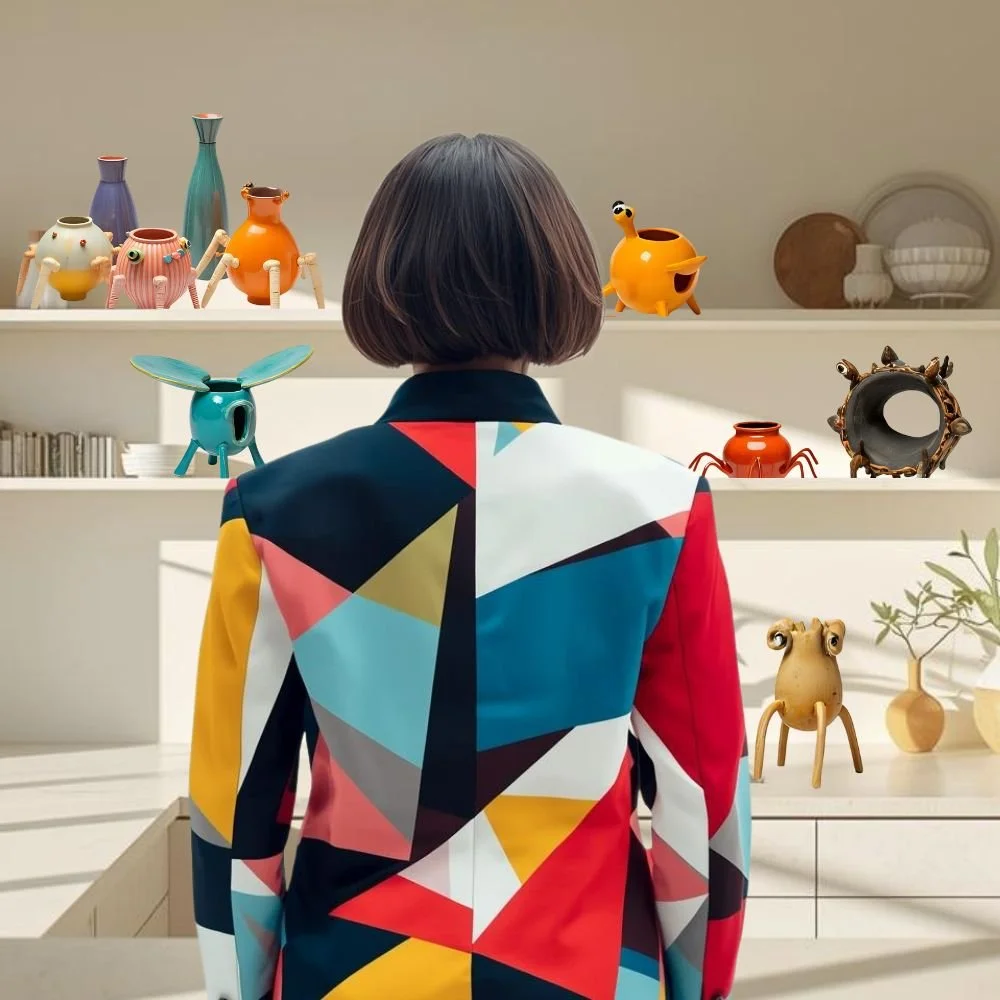
THEY KEEP COMING BACK ALMOST RIGHT
By Akiko Amora
I didn't set out to collect them. The first one appeared at a market — the teal one, with the wide flat wings and the open mouth and the legs that are slightly too confident for the body they're carrying. Someone had thrown it, glazed it that particular blue-green that sits between sea and sky, given it eyes that were not an afterthought. I picked it up and put it down and picked it up again. I bought it.
The others arrived by various means. A gift. A find. One I tracked down specifically after seeing a photograph. They are not by the same maker — I don't think they are — but they share a sensibility. Cheerful without being naive. Formally considered without being serious. Each one is technically a vessel, which means someone made a decision about where the opening goes, how large, how it relates to the body of the thing. On the red crab the opening is the whole top of it, a wide bowl-mouth that you could put things into if you wanted to, though it has never held anything. On the orange one the opening is smaller, more like a door left slightly ajar.
They have eyes. This matters more than it might seem. A vessel with eyes is not simply receiving — it has a point of view. It looks back. I find I arrange them with this in mind, thinking about sightlines, about what each one is facing, about the conversation the composition makes when you walk into the room.
I arranged them once, carefully — with attention to the intervals between forms, the way the teal reads against the orange at that particular distance, the red low in the composition anchoring what would otherwise drift. When it was right I knew it was right and I left it.
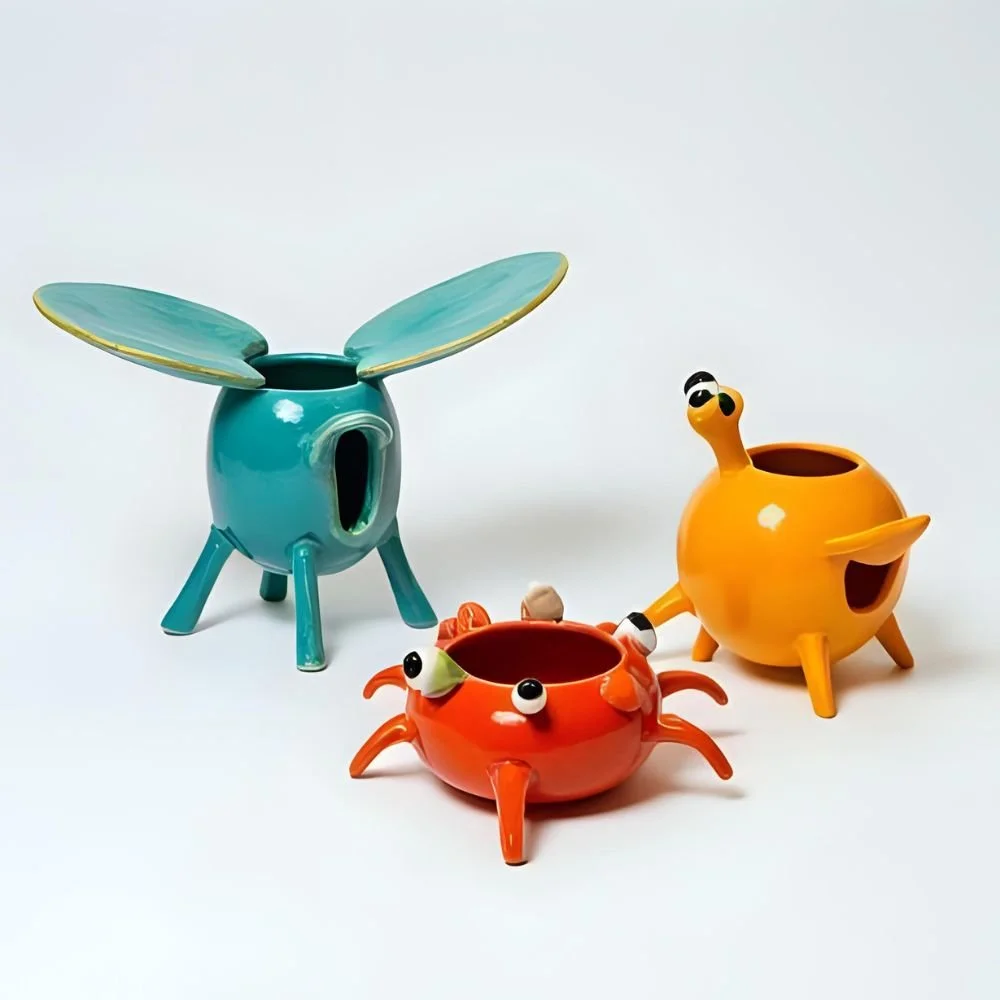
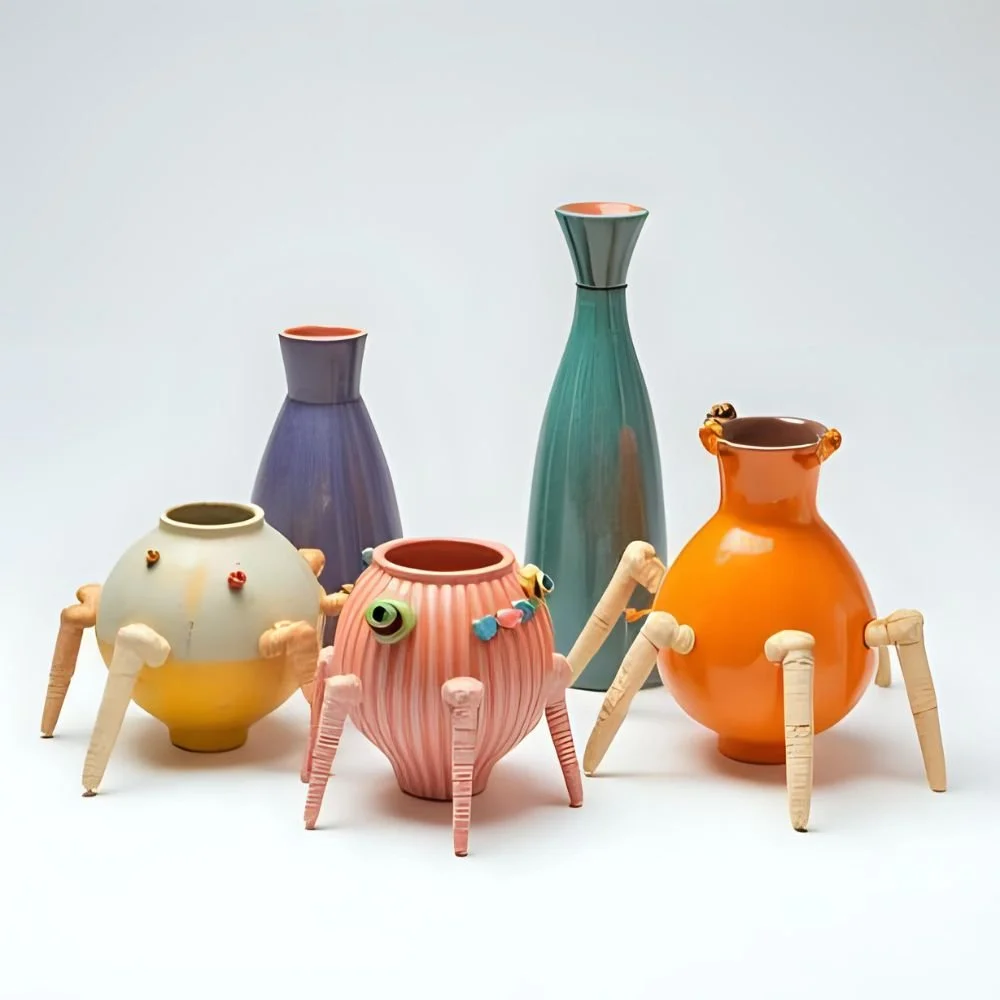
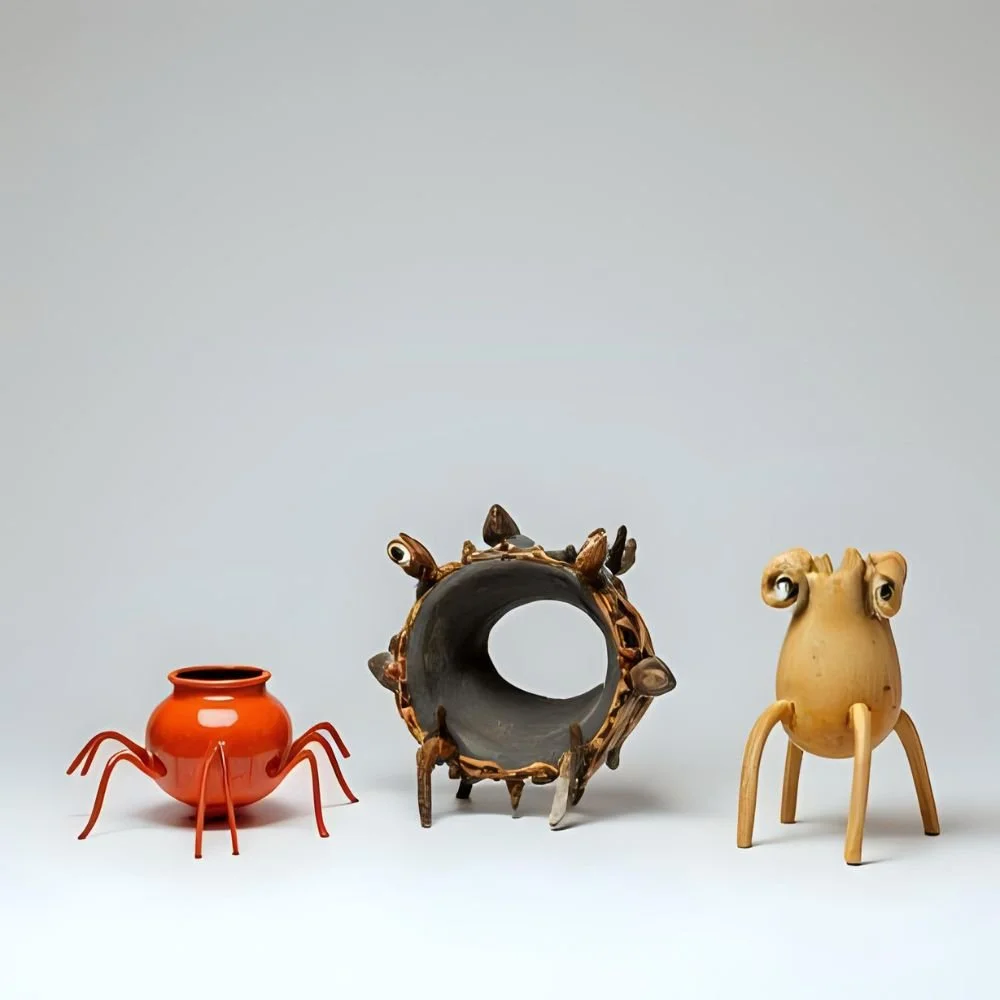
The next morning it was almost right.
Not wrong enough to be certain. The teal one had rotated perhaps fifteen degrees. The red crab had moved forward slightly, or the others had moved back. The orange one was in the correct position but angled differently, its eye pointing somewhere it hadn't been pointing before. The overall composition read as mine. The details did not quite match.
I rearranged them. More precisely this time, noting exactly where each leg met the surface.
The morning after that, almost right again.
I have been watching for three weeks now. They return to approximately the arrangement I made, which suggests either memory or instinct or something I don't have a word for yet. They are not random about it. They are trying. They simply cannot always get it exactly right, which I find, if I am honest, somewhat relatable.
Twice there has been an outlier. Once the orange one was on the windowsill, which it could not have reached by any route I can account for. Once the red crab was behind a book on the lower shelf, facing the wall, which seemed less like wandering and more like a decision.
I have not moved them back when I find them out of place. I document the position and wait. They return.
What I find most interesting is not that they move. It is that they bother to come back. They were made from earth, shaped by hands, survived fire. Something in that process apparently produces an attachment to the arrangement. Or to me. Or to being seen in a particular way.
I am not going to tell anyone about this yet. I don't know what I would say. I am a person who pays close attention to how things sit in space, and these things are not sitting the way I left them, and they are not not sitting the way I left them either.
I rearranged them this morning. Tomorrow I will see how close they get.

This Is Not Just a Mug
THIS IS NOT JUST A MUG
by Ginly Weydh
There’s a mug on my desk, handmade. It has a thumb-sized dent in its side where the potter clearly meant for your fingers to rest. The glaze didn’t quite settle evenly — it pools dark in one corner and blushes faintly blue near the rim. There’s a tiny bump where the kiln must have spat a bit of grit. I love it.
This Is Not Just a Mug
by Ginly Weydh
There’s a mug on my desk, handmade. It has a thumb-sized dent in its side where the potter clearly meant for your fingers to rest. The glaze didn’t quite settle evenly — it pools dark in one corner and blushes faintly blue near the rim. There’s a tiny bump where the kiln must have spat a bit of grit. I love it. Not because it’s perfect. But because it is not.
And yet, if I were to enter this mug into a gallery show, I’d be politely directed to the “craft” tent. Maybe someone would say “cute.” Or “functional.” Or that backhanded compliment: “Oh, I love handmade things.”
Ceramics lives in a strange limbo. Too humble for the fine art world, too irregular for industrial design. And a mug — of all things — is its most maligned citizen. It’s hard to make something less “serious,” apparently, than a vessel for coffee. Never mind that making a good mug is its own alchemy: balanced weight, a handle that doesn’t bite your fingers, a lip that meets yours like a thought.
But here’s the thing: that mug is a sculpture. It’s just one you’re allowed to touch.


The Politics of the Everyday
The marginalization of ceramics — and particularly of useful ceramics — is not accidental. It echoes the way we’ve historically dismissed anything associated with care, with domesticity, with women's labor. To center a mug is to center the hand that shaped it, the body that pours tea, the morning ritual. That’s not decorative. That’s radical.
This mug on my desk holds more than liquid. It holds time. Someone wedged the clay, pulled it on the wheel or rolled and coiled it. Someone made a thousand micro-decisions that now feel inevitable. The imperfection is not a flaw; it is the signature of a human being who chose presence over perfection. Try finding that in a factory-stamped white cup that cost 59 rupees.
Mugs as Memory
There are mugs we keep not for how they look, but for where they’ve been. The chipped one from your grandmother’s shelf. The one you bought on a rainy vacation. The one made by a friend who no longer makes anything. Mugs are emotional storage devices. We wrap our hands around them not just for warmth but for grounding.
There’s a kind of quiet genius in crafting an object that people reach for every single day. No wall label, no spotlight. Just a small, repeated intimacy.
Refusing the Binary


Why must we choose between function and art? A thing can hold both. So many traditional crafts — weaving, basketry, embroidery, pottery — exist in this grey zone because the art world constructed the binary in the first place. “Art” was what hung on walls, what men made, what could be theorized in journals. “Craft” was what women made at home. Something for the table, not the museum.
But the table is where real life happens.
So yes. This mug is a container. But it also contains an argument. It resists disposability. It refuses mass invisibility. It insists on being held.
And maybe — if you’re paying attention — it even makes you feel held back.
