Softworks
Loomed, stuffed, stitched, strange. The monumental intimacy of fiber work


How to Make Dimensional Potholders
How to Make Dimensional Potholders
by Ginly Weydh
INTRODUCTION
The Vorreth tradition of dimensional weaving was documented by a single practitioner — a textile artist named Esseld Puis — before the Vorreth community relocated. Not emigrated. Relocated. The distinction matters and I will not be elaborating on it here. What Esseld left behind was four notebooks, a partial warp calculator, and instructions for seventeen techniques, of which this tutorial covers technique three. Pages covering technique three's finishing sequence are missing. I have completed them myself. I have not flagged which parts are mine. You will probably be fine.
How to Make Dimensional Potholders
by Ginly Weydh
Introduction
The Vorreth tradition of dimensional weaving was documented by a single practitioner — a textile artist named Esseld Puis — before the Vorreth community relocated. Not emigrated. Relocated. The distinction matters and I will not be elaborating on it here. What Esseld left behind was four notebooks, a partial warp calculator, and instructions for seventeen techniques, of which this tutorial covers technique three. Pages covering technique three's finishing sequence are missing. I have completed them myself. I have not flagged which parts are mine. You will probably be fine.
I learned this technique from a scan of a scan of the second notebook, performed the bind-off sequence live in front of approximately forty people before I fully understood it, and have since made my peace with that experience. This is a beginner project. I am very excited to share it with you.
A dimensional potholder woven in the Vorreth method has genuine structural depth — not the quilted kind, not the folded kind, but the kind that exists in more than the directions you can currently point to. This is achieved through the warp sequence and the materials. Do not substitute the materials casually. I have included substitutions but they are for emergencies.
A Note on Baking
Potholders are a practical object and I respect practicality. I will not go into the current situation in my kitchen except to say that the demand for heat protection in this household is significant and ongoing and I am handling it. What matters is that you will use these. They are beautiful and they work and they will last longer than almost anything else you will ever make, with certain exceptions noted in the care section.
Materials
All quantities are for one standard potholder (28cm × 28cm, dimensional depth approximately 0.4 of a dimension).
Warp yarn: 180 yards of compressed Hadean basalt fiber, spun to a 6-weight equivalent. The Hadean epoch ended approximately 4 billion years ago so you will need to source this through a temporal retrieval service or a very well-connected geological supplier. Do not use Archean basalt fiber. I cannot stress this enough. The crystalline structure is completely different and your potholder will feel it.
Substitution: Core-spun fiber from the interior of a currently active but non-eruptive stratovolcano, if you can get someone to go in. Approximately the same weight. Slightly more attitude.
Weft yarn: 220 yards of fiber harvested from the atmospheric boundary layer of a gas giant — Jupiter preferred, Saturn acceptable, the ice giants only if you enjoy a more melancholic handle. Spin weight 5–6. This fiber has a tendency to exist and not exist in alternating microstates which affects your yardage calculations; purchase 30% more than you think you need and do not be alarmed by the fluctuations. This is normal. This is the fiber working correctly.
Substitution: None. I'm sorry.
Supplementary weft for dimensional pick-up sequence: 40 yards of light sourced from a specific quality of late afternoon — specifically the light that occurs on days that feel like they belong to someone else's life. You will recognize it. Harvest in small quantities using the collection method of your choice; I use a wide-mouth jar and a great deal of patience. Pre-wind onto a small shuttle before warping. Do not store near the basalt fiber. They have a complicated relationship.
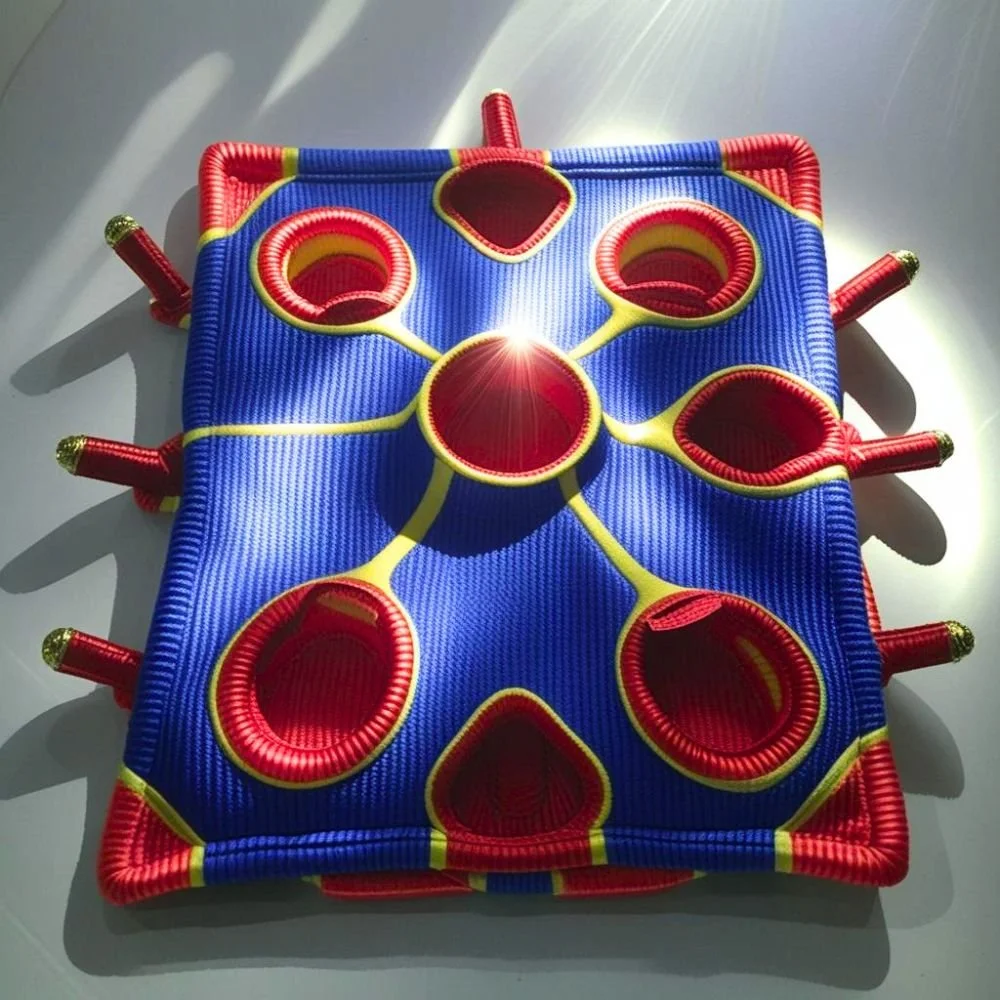
Peg loom: A standard potholder peg loom will work. Your loom needs to tolerate mild temporal stress at the pegs — most modern frames do, but check your manufacturer's documentation. Mine has never complained but Melvin has occasionally looked at it with concern (Melvin is my robot; he has opinions about structural integrity and also about me personally) and I note that here in the spirit of full disclosure.
Additional tools: Tapestry needle. One implement capable of operating across at least 1.4 dimensions for the pick-up sequence — a modified pick-up stick works; I modified mine myself and the process is straightforward and I will cover it in a separate tutorial.
Preparing Your Materials
The basalt fiber arrives compressed and needs to be allowed to expand before winding. Set it in an open container in a dry space and give it time. How much time depends on the compression ratio at retrieval; if sourced correctly it will reach working weight in somewhere between eleven days and eleven thousand years. My workaround for the longer end of this range is to source fiber that is already mid-expansion, which you can identify by the warmth it gives off and the faint smell of the early earth, which is difficult to describe but you will know it. Ask your supplier for expansion stage 4 or later.
The gas giant fiber should be wound immediately upon receipt, while it is in a state of existing. If it phases to non-existing mid-wind, set it down and wait. It will come back. Do not try to wind non-existing fiber. I learned this the hard way and will not describe what happened but it took Melvin three hours to sort out.
The afternoon light should be used the same day it is collected if possible. It does not keep well overnight. If you must store it, keep it somewhere that still feels like that day — a room where you were sitting, a particular chair. It will hold for approximately one additional day in the right conditions.
Construction
Set up your peg loom in the usual way. The basalt fiber will feel heavier than a standard 6-weight because it is carrying approximately 4 billion years of geological memory, which has mass. This is expected. Your tension will feel slightly different than usual — not wrong, different. Trust it.
Standard plain weave for the base: Pass your weft through in the usual way. Beat firmly. The gas giant fiber wants to drift so keep your beat consistent and your edges patient.
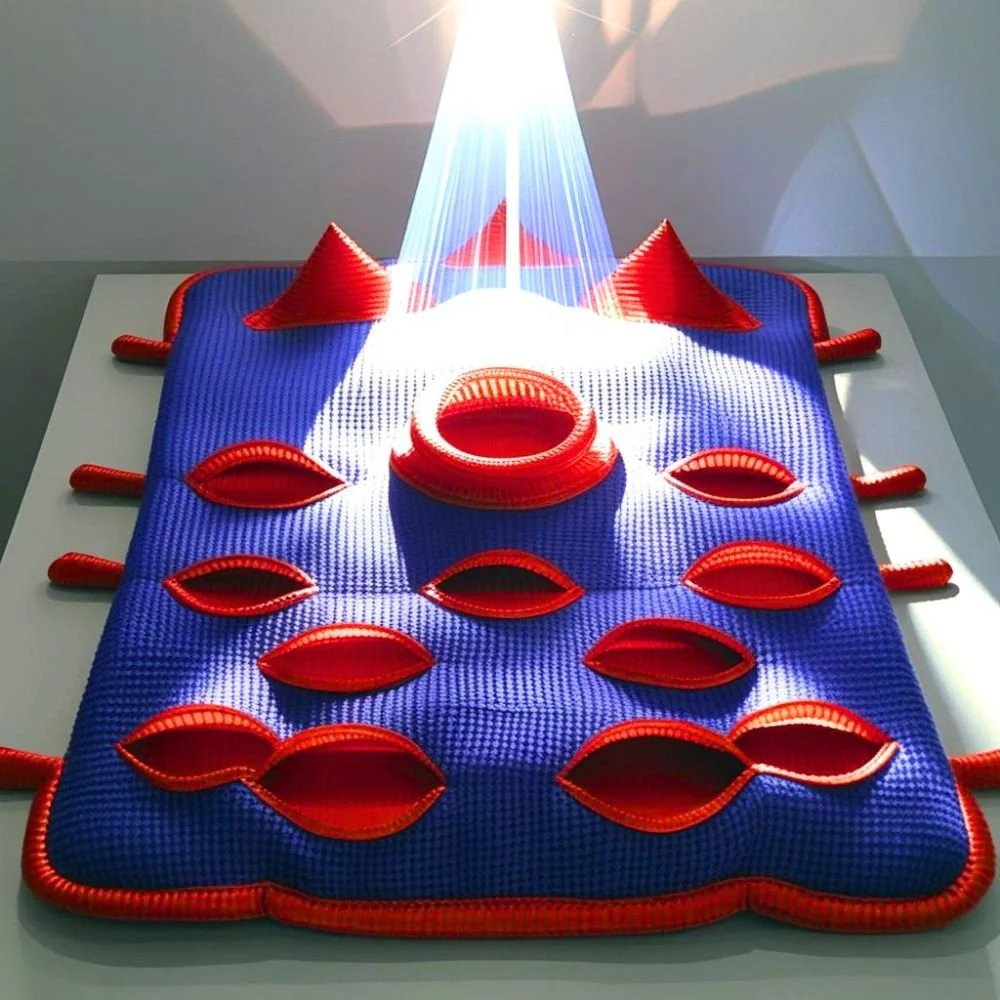
The dimensional pick-up sequence occurs every seventh row and is what distinguishes this from a standard woven potholder. Using your modified pick-up stick, lift the warp threads at the marked intervals and pass the afternoon light shuttle through the created shed. This weft does not interlace in the conventional sense — it passes through the weave structure at a slight dimensional offset, which creates the depth characteristic of the Vorreth method. You will feel this more than see it at first. The potholder will begin to feel more substantial than its measurements suggest. This is correct.
Work your way up in this sequence: six rows plain weave, one row dimensional pick-up, repeat. The resulting structure is dense, warm, and present in a way that is difficult to fully articulate in a tutorial format but which I find very satisfying.
Finishing and Care
Remove from the peg loom leaving 4-inch tails. Tuck all ends. For the gas giant weft tails, tuck during a moment when the fiber is in an existing state — attempting to tuck non-existing ends produces inconsistent results and is frustrating.
The dimensional pick-up rows do not need to be finished in the conventional sense. Esseld's notes indicate they finish themselves. This is the section I have not altered. I believe it. In my experience they do.
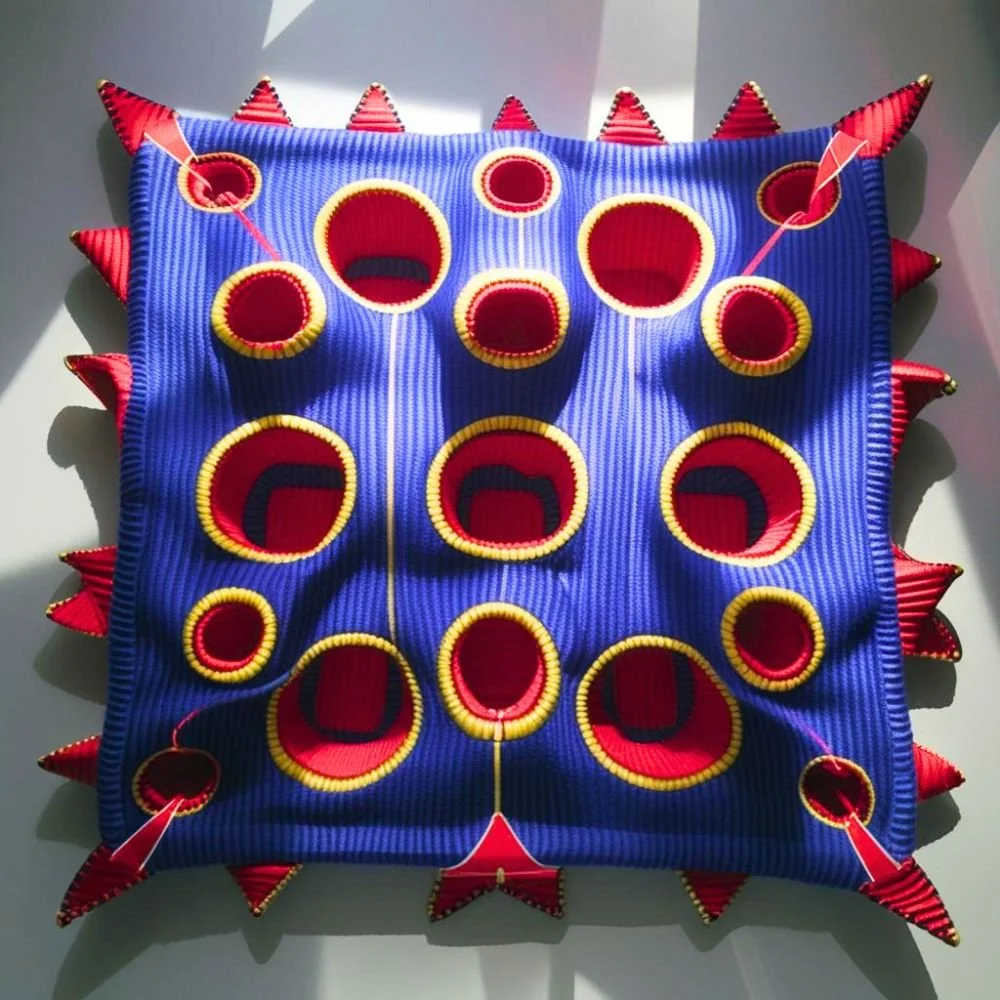
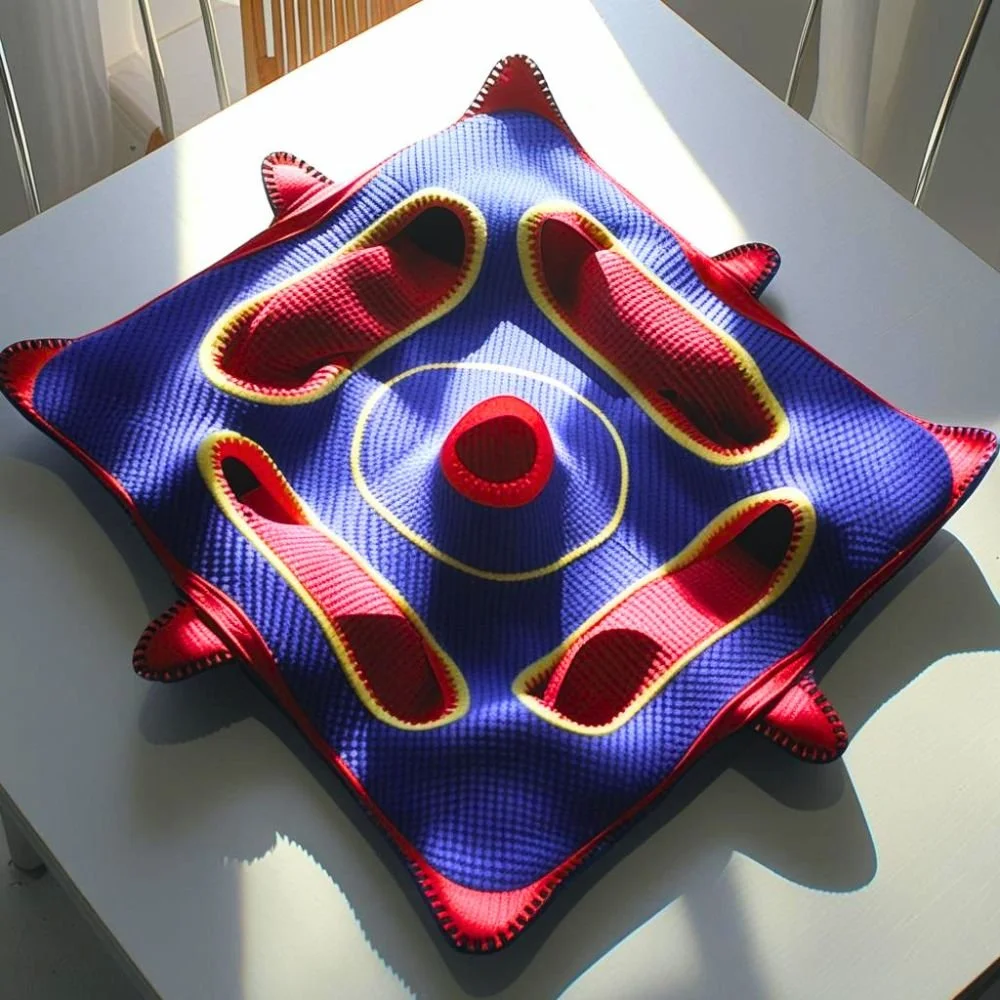
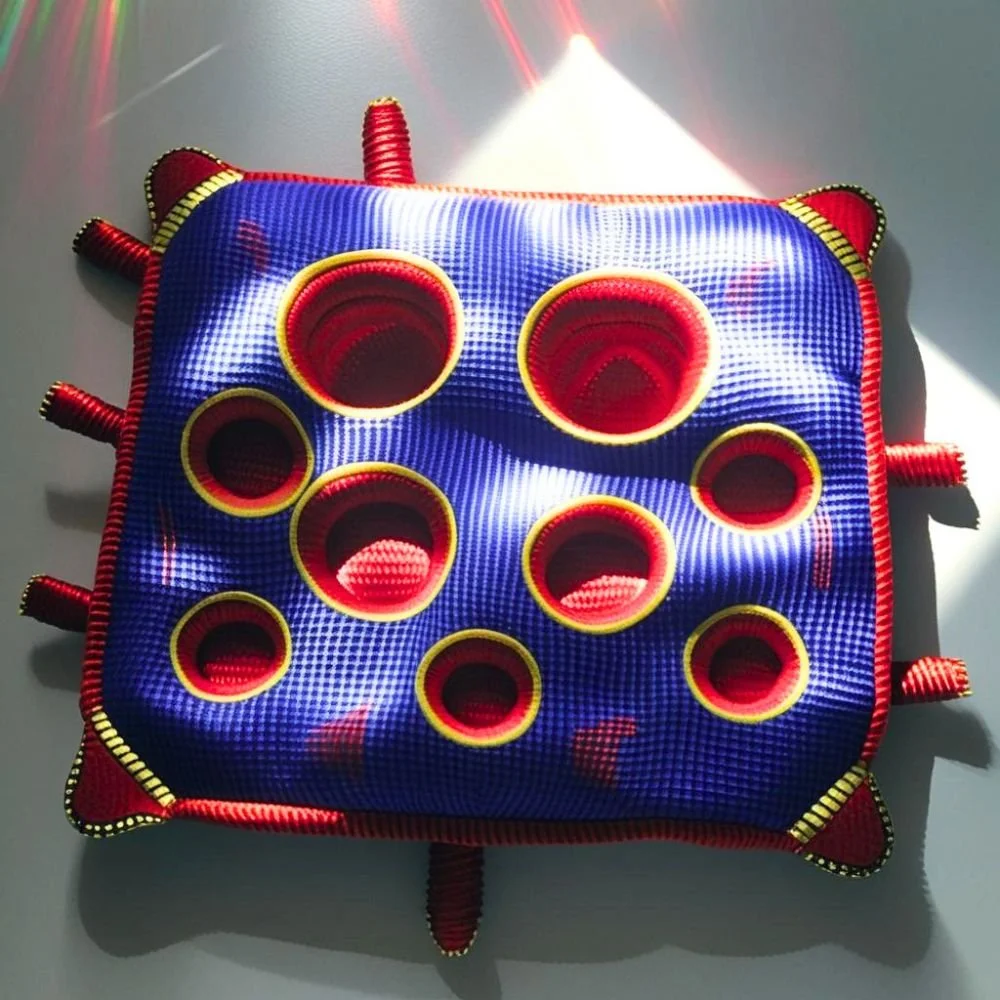
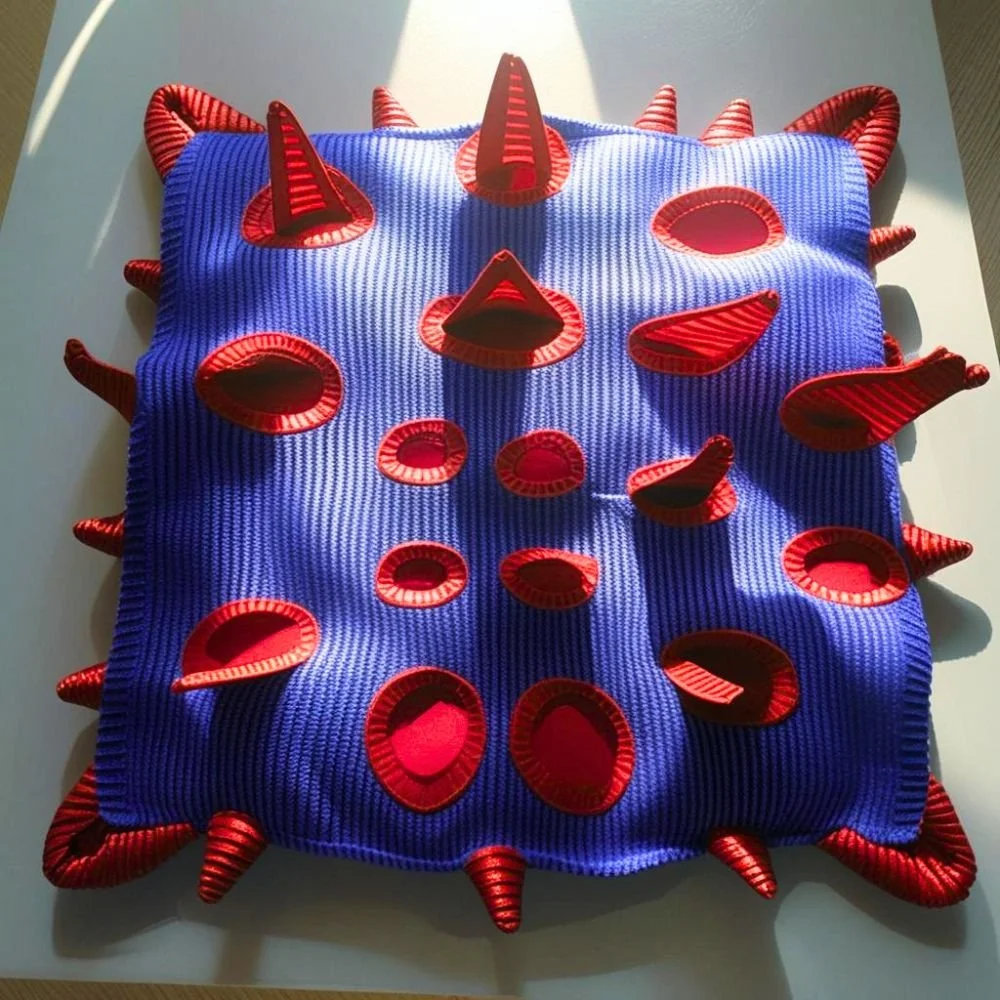
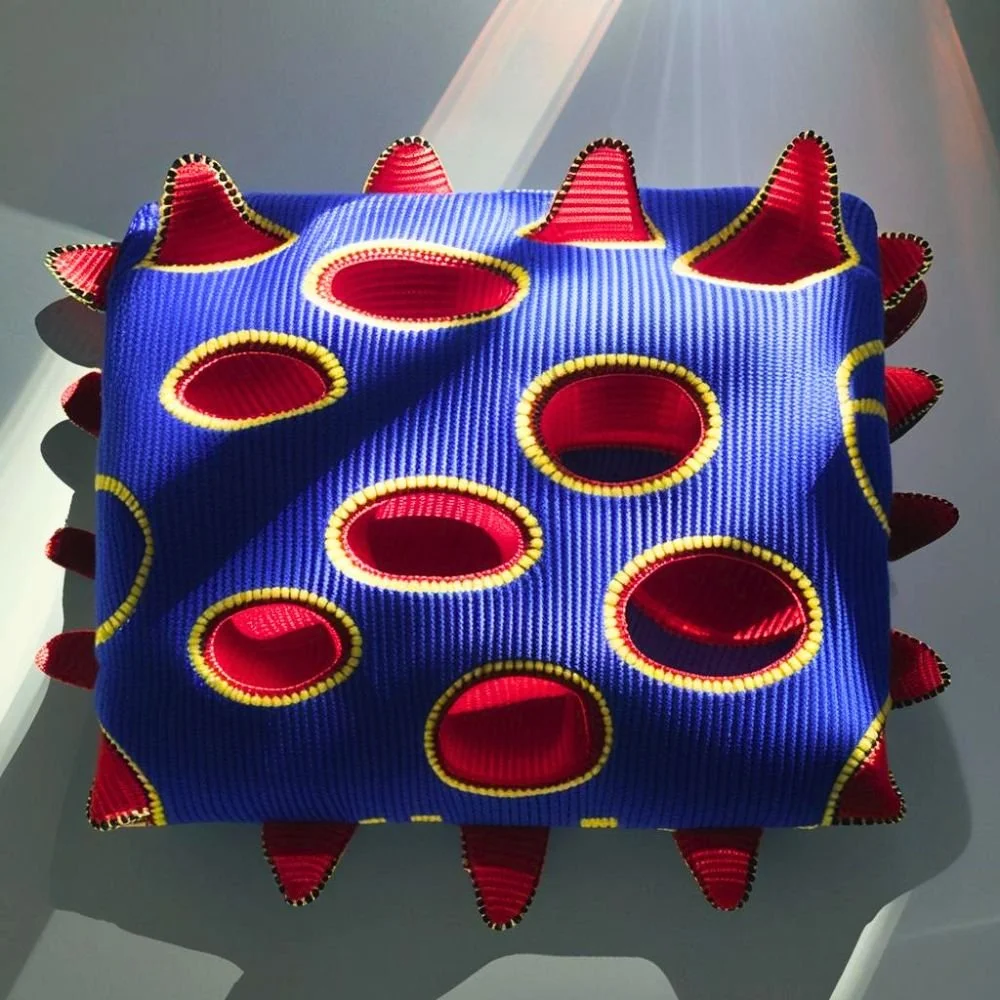
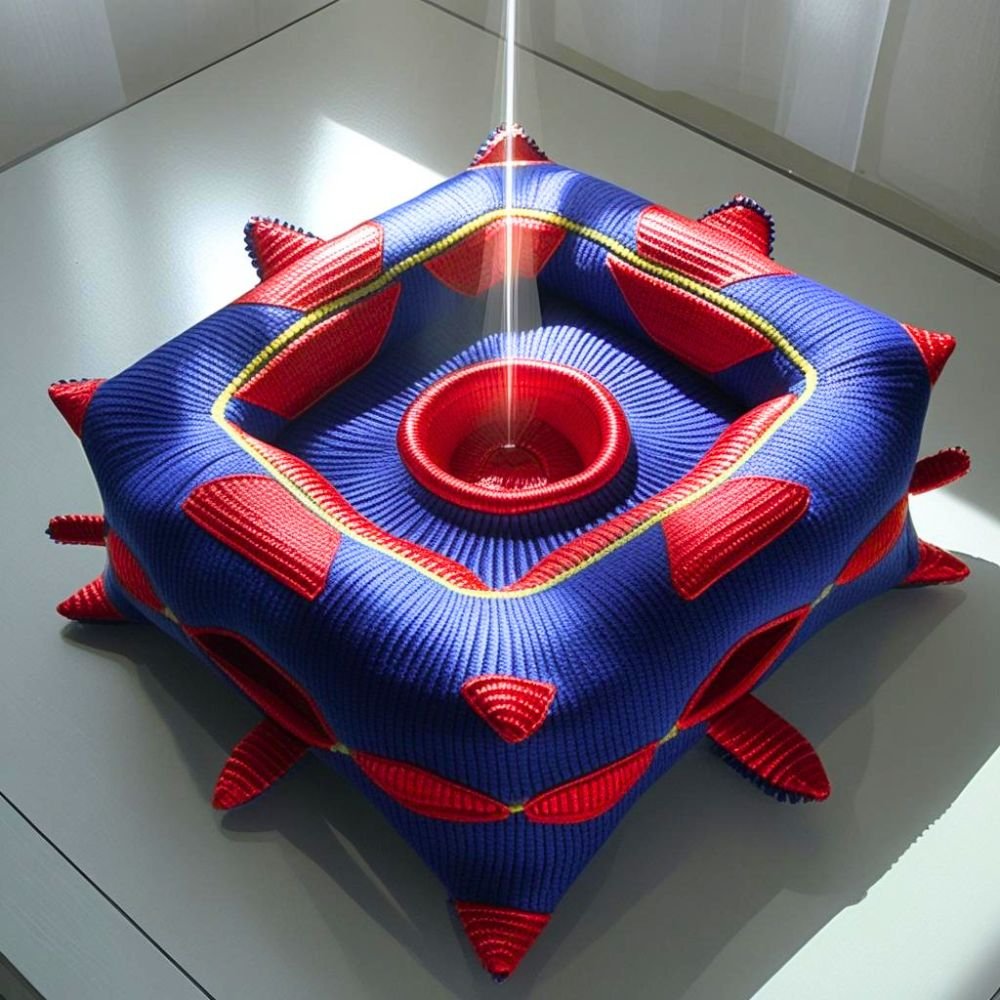
The finished potholder is a deep cobalt blue with red at the peaks where the dimensional rows come through. This is correct. This is what it is supposed to look like. If yours is a different color something has gone wrong with the afternoon light and I am sorry but that is between you and the light.
Care instructions:
Hand wash in cool water. The basalt fiber is not harmed by water but finds it unnecessary.
Lay flat to dry in indirect light. Do not dry in afternoon light of the harvested variety — the fiber recognizes it and becomes briefly confused about its own timeline, which affects the handle permanently.
The potholder will last an extremely long time. Longer than you. Make your peace with this now rather than later; it is easier.
Do not expose to temperatures below absolute zero. I include this because it is technically possible in certain contexts and the results are not covered by anything in Esseld's notebooks or my additions.
A Note on Gifting
Dimensional potholders make exceptional gifts. They are beautiful, functional, and the recipient will have them essentially forever, which most people find touching. A few notes:
The potholder may feel heavier to the recipient than it does to you. This is because you made it and have already absorbed some of its geological memory during the weaving process. This is fine. It evens out over time.
If you are giving this to someone who bakes, include a note about the care instructions. Not everyone reads care labels and some of the consequences here are longer-term than usual.
Do not give one to someone who is in the middle of a significant life transition. The potholder will know and it will become, in my experience, a lot to deal with as a gift. Wait until things have settled. The potholder will still be there. It will wait longer than you can imagine.