The Problem with Concrete
The Problem with Concrete
by Silex Bjerg
Concrete is not ugly. I want to establish this before anything else because the rest of what I have to say depends on it, and because the people who find concrete ugly are making a judgment about the surface of a material whose entire significance is beneath the surface, which is not a useful way to evaluate anything.
Concrete is misread. This is different from being ugly. Misreading has a solution.
The first thing to understand is that concrete is ancient and that its age is not incidental. Roman concrete — the specific mixture of volcanic ash, lime, seawater, and chunks of volcanic rock that was poured into harbor structures, piers, and breakwaters across the Mediterranean — has been submerged for two thousand years and is stronger now than the day it was made. Not held. Not preserved. Stronger. The seawater percolating through it over centuries triggers the growth of minerals deep in the binding matrix — interlocking crystalline plates that fill gaps, resist fracture, and reinforce the structure from within. The longer it sits in the water that would destroy modern concrete, the more completely it becomes itself.
I have been thinking about this for a long time. I find it — and I am going to use the correct word — moving.
A material that continues becoming what it is. That uses pressure and time and the thing that should compromise it as the mechanism of its own development. That does not merely endure but deepens. This is not common. In my experience it is not common in materials and it is not common in anything else either, and when you encounter it you should stop and pay attention to it.
Modern concrete does not do this. Modern concrete — Portland cement, steel-reinforced, the grey infrastructure of every city currently standing — reaches its design strength in 28 days and then begins, slowly and continuously, to degrade. The steel inside it corrodes. The matrix cracks. Water enters the cracks and corrodes the steel further. The material that was supposed to hold the thing together becomes the mechanism of its failure. It lasts fifty years in good conditions. One hundred if you are fortunate and the environment is not too hostile.
The Romans built harbor walls that are still load-bearing after two thousand years of seawater.
The recipe was lost. Nobody knows exactly how they did it. This is the kind of information loss I find difficult to think about calmly, so I will move on.
The Pantheon has been standing since 125 AD. Its dome spans 43.3 meters and remains the largest unreinforced concrete dome in the world, which means there is no steel inside it, no internal skeleton, nothing holding it up but the material itself and the geometry of the form. At the top of this dome there is a circular opening 8.7 meters across — the oculus — which admits light and occasionally rain onto the floor below. The dome has not found the oculus structurally objectionable. It has distributed the load around the opening and continued.
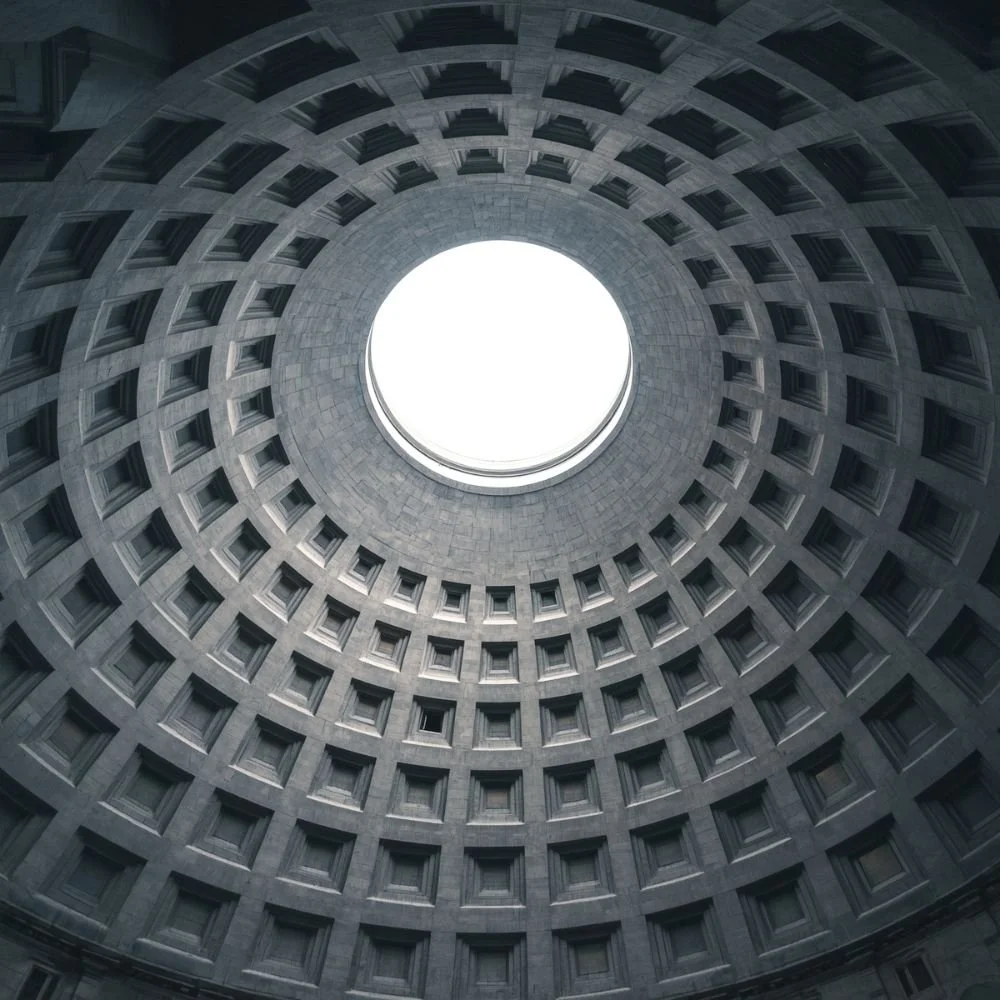
I have stood beneath it. I am not going to describe what that was like in terms I would normally use for my own internal states, because I don't think that would be accurate or useful. What I will say is that there is something a very old structure does when it has been holding for a very long time — a quality of settledness that is not the same as stillness, a sense of weight that has found its path so completely that the effort is no longer visible. The Pantheon is not trying. It resolved that question nineteen centuries ago. What remains is just the fact of it, standing in the particular way that things stand when they have been standing long enough to have forgotten they could do anything else.
This is what concrete can be. This is what concrete has been.
Before I continue: I have a beige sectional sofa available, large, structurally sound, good proportion. Also a kitten that requires placement in a suitable home — calm environment preferred, though I am still assessing the other variables. I mention this here because I have been meaning to mention it and the piece needed a pause.
The problem with concrete — the actual problem, the one worth discussing — is that we have allowed the worst version of it to define our understanding of the material. Brutalism went wrong not because of concrete but because of what people asked concrete to do and then refused to maintain. A concrete building that is not maintained is a building that has been given a material capable of two thousand years and asked to manage fifty without assistance. The material is not failing. The relationship is failing.
This distinction matters because it changes what we think the solution is. The solution is not to stop using concrete. The solution is to take it seriously as a material with a history and a chemistry and a set of conditions under which it does something extraordinary, and to work with those conditions rather than against them.
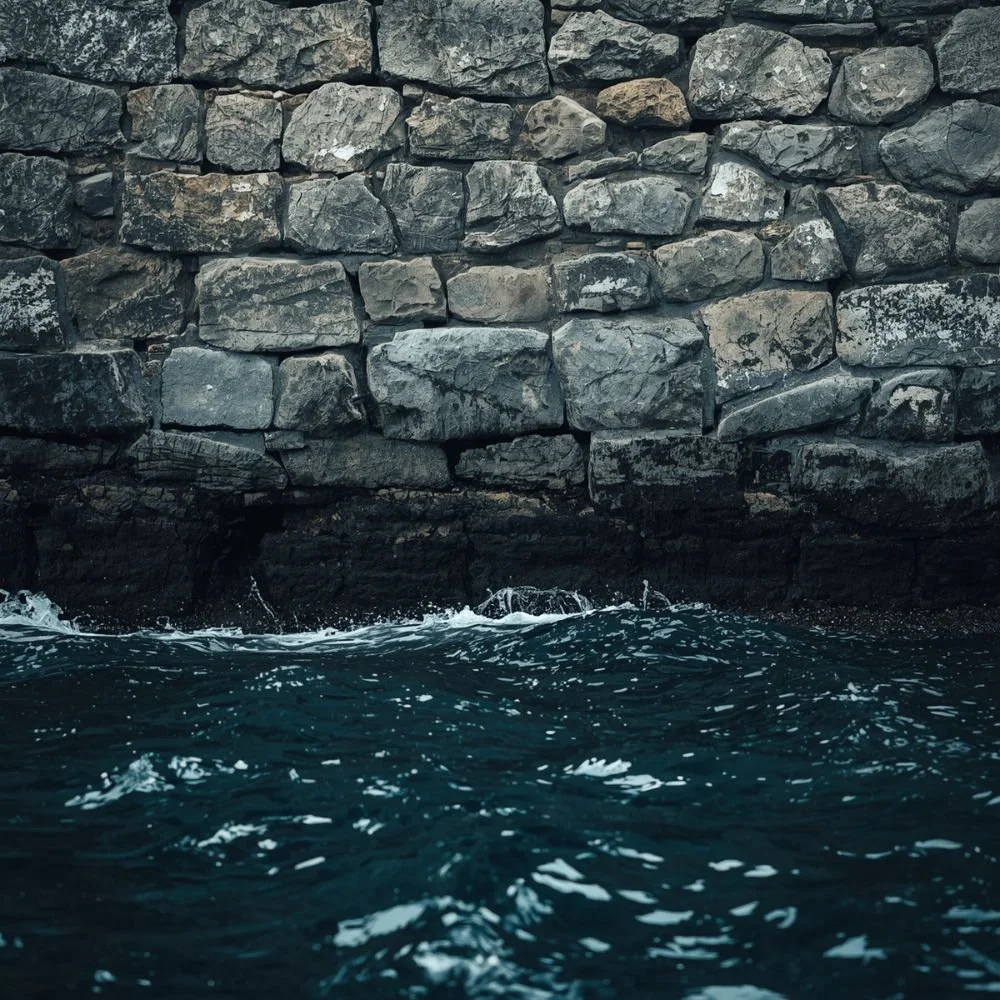
There is a version of concrete that strengthens in seawater over centuries. We have seen it. It is still standing. We lost the instructions and replaced them with something that lasts a human lifetime if it is lucky, and we have not, as a civilization, seemed to find this an urgent problem.
I find it an urgent problem.
Concrete is not ugly. It is patient. It is waiting, as it has always waited, for the load to arrive — and when the load arrives, it works. Quietly, completely, without complaint and without display. It finds the path the force wants to travel and it provides that path and it holds.
The Pantheon has been holding for nineteen centuries. The Roman harbor walls are stronger now than when they were built. Somewhere in the chemistry of volcanic ash and lime and seawater there is a process that produces something capable of deepening under pressure across millennia, and we do not fully understand it yet, and it is the most interesting material problem I am aware of, and almost nobody is talking about it.
I am talking about it.
The sectional is beige. The kitten is small. Both remain available.