The Sound You Have Always Been Inside
The Sound You Have Always Been Inside
by Leonid Tchah
I should say at the outset that I am still not entirely certain how to categorize what happened when I first encountered this information, which is part of why I am writing about it.
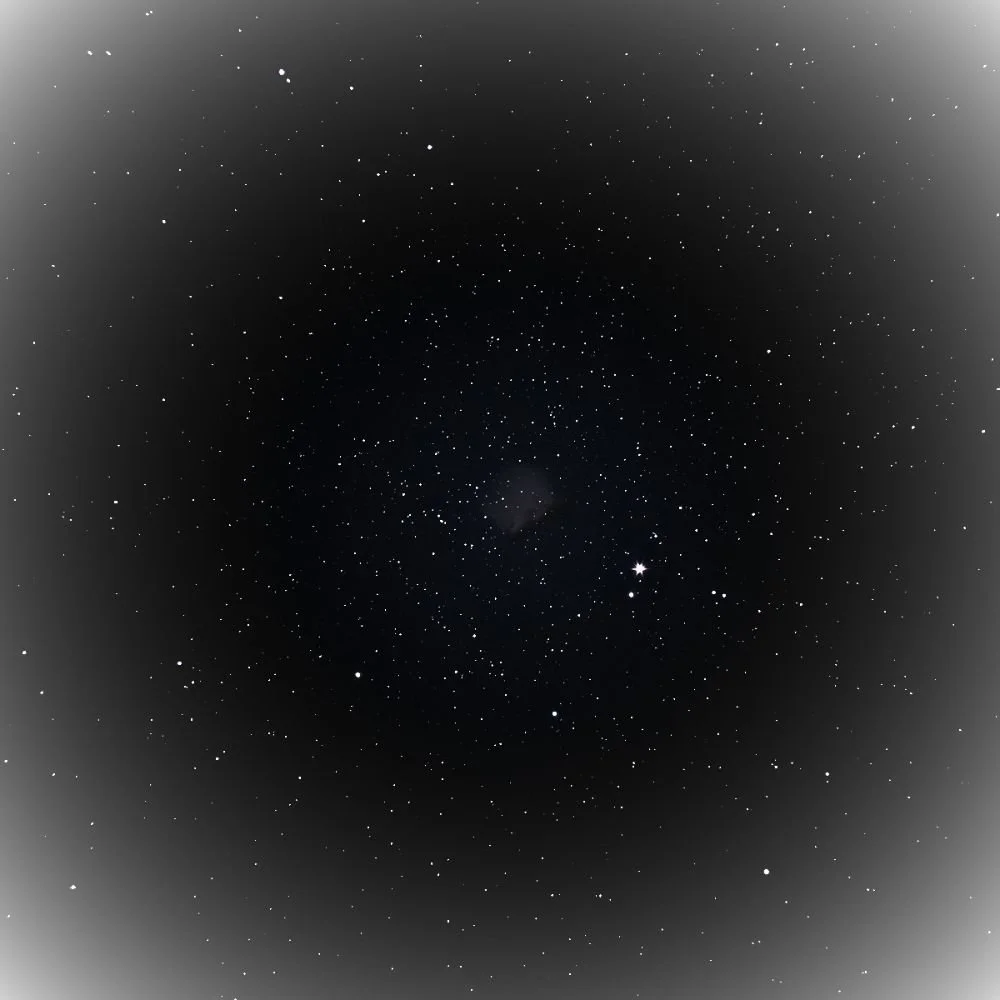
The cosmic microwave background radiation is the oldest light in the universe. It is not metaphorically old in the way we sometimes say something is ancient when we mean merely historical. It is the afterglow of the early universe itself — photons released approximately 380,000 years after the Big Bang, when the plasma that constituted all matter cooled enough to become transparent, and light was finally permitted to travel freely. That was 13.8 billion years ago. The radiation is still here. It is still detectable. It fills all of space, including this space, including the space currently occupied by you reading this, and by me writing it.
Physicists have converted its fluctuations into audible sound — an extreme act of translation, requiring the frequencies to be shifted upward by a factor of approximately 10²⁶ before human hearing can register them at all, which is itself a fact I find worth pausing on. What emerges is not a simple hum but something denser: a chord with harmonics, a layered acoustic presence, the kind of sound that seems to have been going on for some time before you noticed it. Which, of course, it has.
We have been inside it our entire existence and did not know.
I want to be precise about what kind of problem this is.
It is not primarily a scientific problem. The physics is documented, reproducible, and well understood. What interests me — what I cannot entirely stop following — is the structural peculiarity of being surrounded by something for the entirety of one's existence without being in any position to detect it. Not because the information was withheld. Not because we lacked the perceptual apparatus in any individual sense. But because detecting it required a set of technologies, a theoretical framework, and a particular moment in the history of scientific development that simply had not yet arrived. The hum was present. We were absent to it. We were absent to it while sitting directly inside it.
This is a different kind of not-knowing than we usually encounter.
We are accustomed to the experience of not knowing something because we have not yet looked it up, or because no one has told us, or because it is far away and difficult to observe. What the CMB represents is something more vertiginous: a case in which the information was maximally present — literally surrounding us at every moment, penetrating every structure we have ever built, washing through every room in which any thought has ever been thought — and we nonetheless could not receive it. The channel was open. We did not have the receiver.
There is a philosophical tradition that concerns itself with the limits of perception and the relationship between what exists and what can be known to exist. It tends to produce careful, rigorous arguments about epistemological access and the structure of human cognition. All of that work is correct and important. But it is also, if I am being candid, somewhat bloodless in comparison to what it actually feels like to sit with the knowledge that an ancient sound has been moving through you since before you were born, and you did not hear it.

The detection happened in 1965. Arno Penzias and Robert Wilson, working at Bell Labs in Holmdel, New Jersey, noticed an unaccountable noise in their radio antenna — a persistent, isotropic signal that remained constant regardless of where they pointed the instrument. They initially suspected a less cosmically significant explanation. They checked the equipment. They cooled the receiver to within a few degrees of absolute zero to eliminate internal thermal noise. They pointed the antenna directly at New York City to rule out urban interference. They removed the pigeons that had nested in the antenna horn and cleaned up what the pigeons had left behind, which is the part of this story I find inexplicably moving, though I am not entirely sure why. The pigeons did not seem aware of what they had nested inside either.
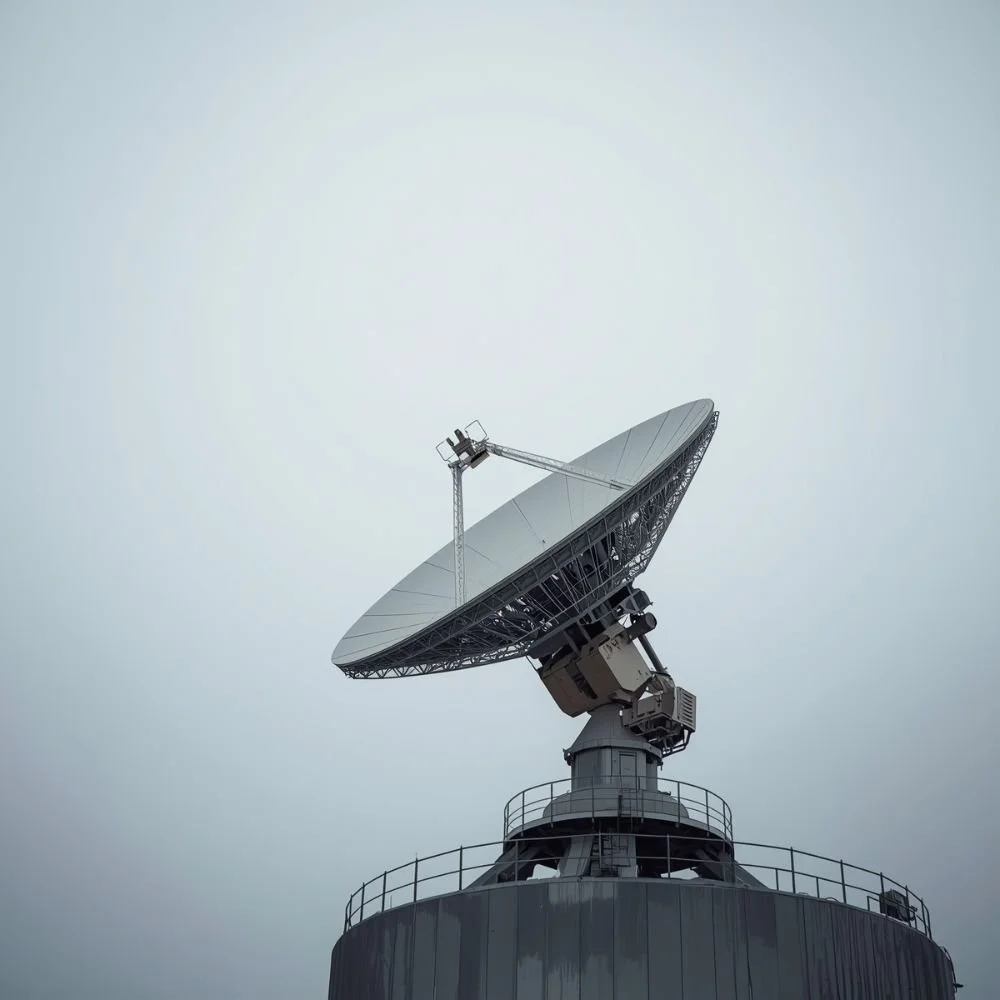
The noise persisted. And here is the detail that strikes me as structurally important: at nearly the same moment, a team at Princeton University led by Robert Dicke was actively searching for exactly this signal. Dicke's group had predicted that the explosive birth of the universe would have left behind thermal relic radiation, and they were building equipment to find it. The two teams had been working in parallel, in the same direction, toward the same sound, without knowing the other existed. When they finally connected, they realized they had each arrived at the same conclusion from different positions: the static was not interference. It was the universe.
I find this nearly as interesting as the discovery itself. The signal did not reveal itself to a single mind in a single moment of insight. It revealed itself in the gap between two groups who had been separately listening — one without knowing what it was listening for, one knowing exactly what it was listening for but not yet having found it. Between them, between the accidental and the deliberate, the universe's oldest signal came into legibility.
What strikes me about the shape of the discovery — about all of it — is that it was not found by looking outward with a large telescope. It was found by noticing an interference in something they were already doing. The universe's oldest signal revealed itself as interruption. As inconvenient static. As the thing that would not go away no matter how carefully they eliminated every other explanation.
There is something I recognize in this. The things that have most altered my thinking have rarely arrived as clean discoveries I went looking for. They arrive as disturbances in the existing structure of what I believe I understand. Something persists that should not be there. Eventually I have to conclude that the problem is not with the signal.
What does it mean to have been inside a sound?
I don't mean this rhetorically. I mean it as a genuine question about the relationship between presence and experience — about whether presence alone constitutes a form of contact, or whether contact requires some kind of reception, some active registering on the part of the receiving system.
We were not passive to the CMB in any mechanical sense. The photons interacted with us. The radiation passed through every body that has ever lived on this planet, every brain in which consciousness has ever occurred, every hand that has held another hand. If contact means physical interaction, then we have been in continuous contact with the oldest thing that exists since before there were creatures capable of anything. But if contact requires something more — requires that the signal be received, interpreted, registered as what it is — then we spent the overwhelming majority of our existence failing to make contact with a thing that was everywhere.
I find I cannot decide which framing is more disquieting.
The first version suggests that experience is not the most important criterion for what is real and present. We were inside the sound whether we knew it or not. Our not-knowing was perhaps the least important fact about the situation. This is humbling in a way that I think is actually useful — a check against the assumption that reality organizes itself around the perimeter of what we happen to be able to perceive.

The second version suggests something about the nature of presence itself: that proximity is not enough, that being surrounded does not constitute being reached, and that the universe spent 13.8 billion years in the vicinity of its own most ancient signal before developing a structure capable of registering it as such. The universe, on this reading, was also waiting. Also absent, in some sense, to itself.
I realize this is the kind of sentence that causes certain colleagues to become mildly hostile. I want to be clear that I am not attributing consciousness to the universe or making any strong metaphysical claim about cosmic self-awareness. I am trying to say something more modest: that the relationship between a signal and a receiver is bidirectional in a sense we do not always acknowledge — that the signal, in some sense, requires completion from the side of the receiver, and that this completion took a very long time.
When I think about what Thrum is — about what it is trying to name — this seems to me like the most literal possible example.
A pulse beneath feeling. Something that was moving through the body before the body had the equipment to feel it. Before feeling was a category. Before bodies were a category. A frequency that preceded every other frequency and that remains, still, when everything else has shifted.
Awe, as I understand it, is what happens when the scale of something exceeds the apparatus that has been waiting to receive it. It is not a comfortable feeling. It does not resolve into understanding. It sits with you as a kind of persistent pressure — a knowing that something important is happening to your sense of things, without the knowing being able to do very much about it.
The cosmic microwave background did not produce this feeling for me when I first encountered it at a distance, as an interesting fact. It produced it when I understood — at some depth that I cannot quite locate — that it was here. That it had always been here. That here included, specifically, whatever location I occupy at any given moment, which is not a location I usually think of as having cosmological significance.
I am still working out what to do with this. I suspect that is part of the point.
The hum has a temperature now, if you want to know: 2.725 Kelvin, nearly three degrees above absolute zero, cooling slowly as the universe expands. It will not persist forever. Eventually — across timescales so large they cease to function as quantities in any intuitive sense — it will cool toward nothing. But for now it is here. For now, whatever here means, it continues.
The pigeons knew nothing. I know something. I am not certain the difference is as large as I would like it to be, but it seems worth continuing to sit with.