Presence
Gesture, time, and concept in collision—embodied acts that resist stillness, often strange, always alive.


The Gazebo
The Gazebo
by Akiko Amora
I have known Velocity for eleven years. In that time he has performed inside a running cement mixer, curated a show entirely underwater, and once spent three weeks as a documented rumor. He is not a man who sits still.
Which is why, when the press release arrived, I read it four times.
Velocity announces his most ambitious work to date: an open-ended durational performance, location fixed, duration indeterminate, subject: the question. Press inquiries welcome. Photography permitted. Refreshments not provided.
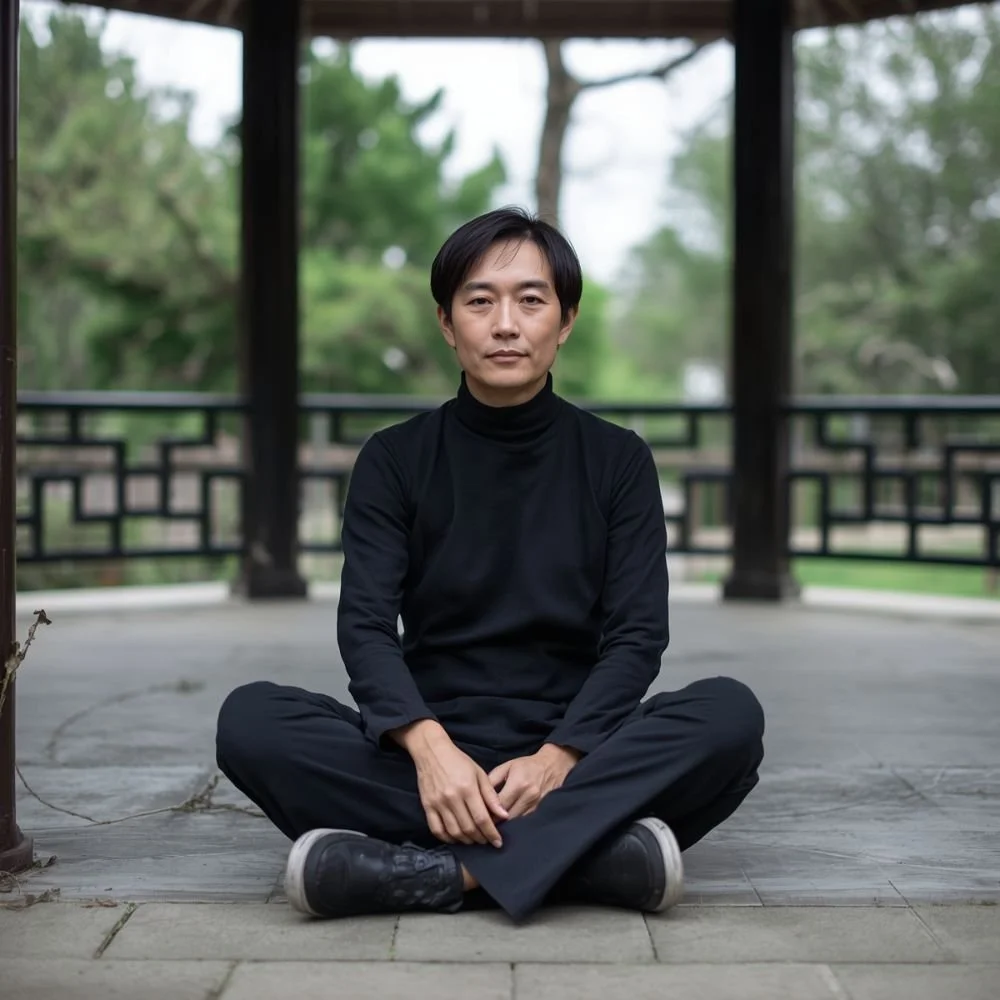
Velocity at the opening of his performance piece
The Gazebo
by Akiko Amora
I have known Velocity for eleven years. In that time he has performed inside a running cement mixer, curated a show entirely underwater, and once spent three weeks as a documented rumor. He is not a man who sits still.
Which is why, when the press release arrived, I read it four times.
Velocity announces his most ambitious work to date: an open-ended durational performance, location fixed, duration indeterminate, subject: the question. Press inquiries welcome. Photography permitted. Refreshments not provided.
The gazebo belongs to his family. It sits at the edge of a property in the hills, ringed by old garden beds that nobody tends anymore. When I arrived for what the press release called "the opening," Velocity was already there, cross-legged on the floor in black — high neck, long sleeves, shoes — as if he had dressed for a meeting that turned out to be with himself. Small vines were beginning to make their way up the lattice at the edges. I assumed this was intentional. With Velocity it is always safer to assume intention.
I asked him how long he planned to be there.
He said he didn't know.
I asked if he needed anything.
He said he had what he needed.
I stood there for a while. A photographer from a small arts journal arrived and took several pictures. A collector I recognized hovered at the perimeter, nodded seriously, and left. There was a release form. I am not certain what I was releasing — the document cited, in precise and unironic language, effects including but not limited to: reassessment of current commitments, unwanted clarity, and the sensation of having wasted something. I signed it. There was also a guest book. I wrote came, witnessed, had questions, kept them. Velocity did not look at the guest book. Velocity was not looking at anything in particular, which is its own kind of looking.
I left after an hour. I told myself I would come back.
The press coverage was, briefly, real. A performance blog called it "a meditation on voluntary stasis in an age of compulsory momentum." A regional arts paper called it "brave." His former gallerist called me to ask if he was alright and I said I thought so and she said are you sure and I said I am not sure of anything, Renata, that is the nature of this piece.
Velocity had, by all accounts, thought of everything. A small structure adjacent to the gazebo contained what was described in the press materials as "logistical support." His phone remained active. He was not unreachable. He had simply stopped.
There is a photograph taken approximately one year after the opening.
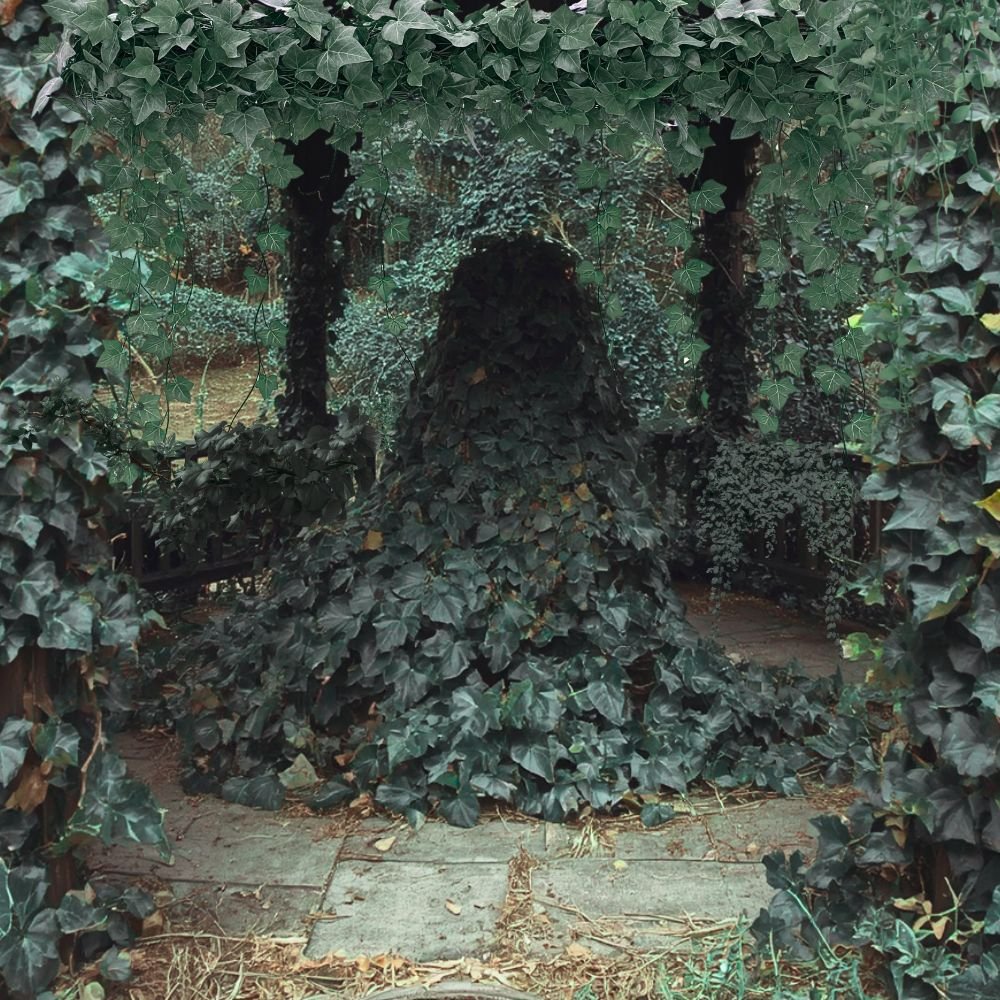
Velocity approximately one year later
In it, the gazebo is no longer quite visible. The vines — those small, well-intentioned tendrils from the opening — have expanded their ambitions considerably. They cover the lattice, the roof, the posts. They have covered the figure inside with the patient, thorough attention of something that has nowhere else to be.
You can still see it is a person. Just barely. The shape of a person who has not yet figured it out, or who has, and is a consummate professional.
I have not gone back. I keep meaning to.
The press release, I notice, is still on his website. No update. No closing statement.
Duration indeterminate, it says.
It was not wrong.
NEXT CANDIDATE
NEXT CANDIDATE A review by Suchu Tanyetz
I arrived not knowing exactly what I was walking into. That, I later understood, was the point.
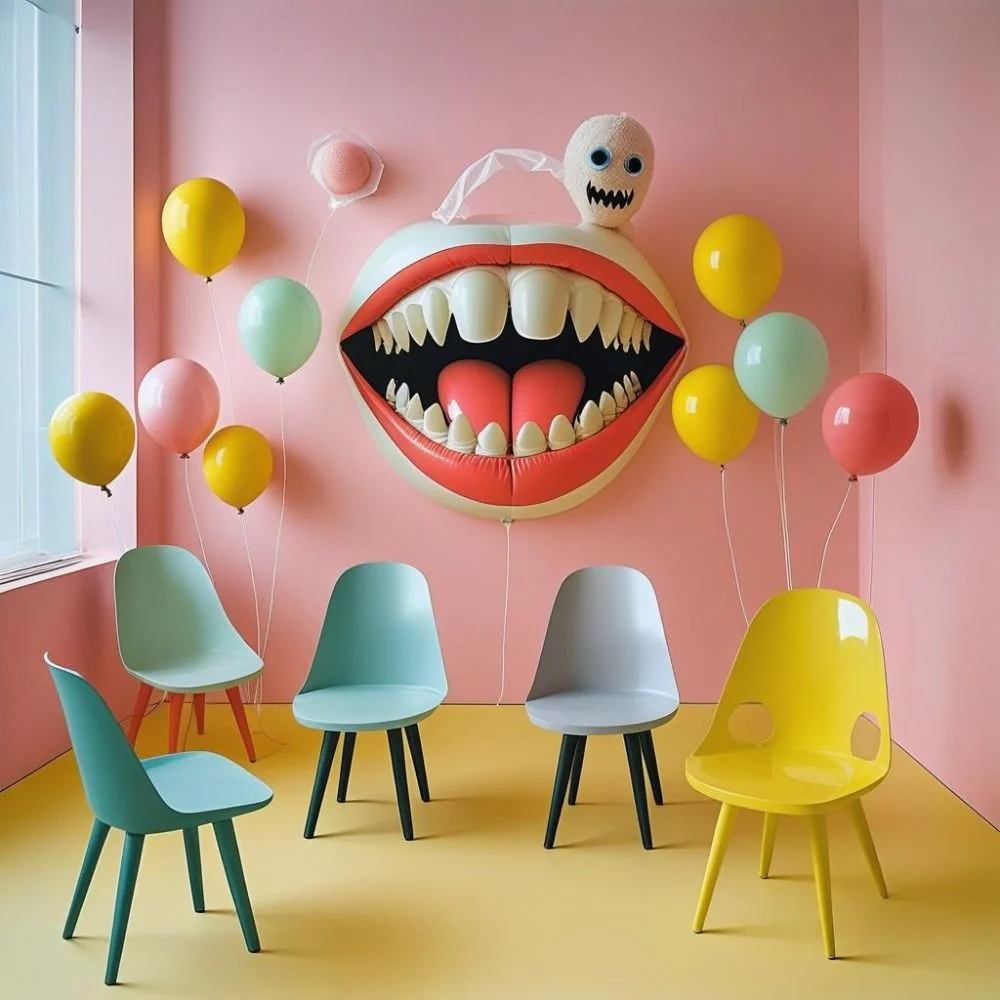
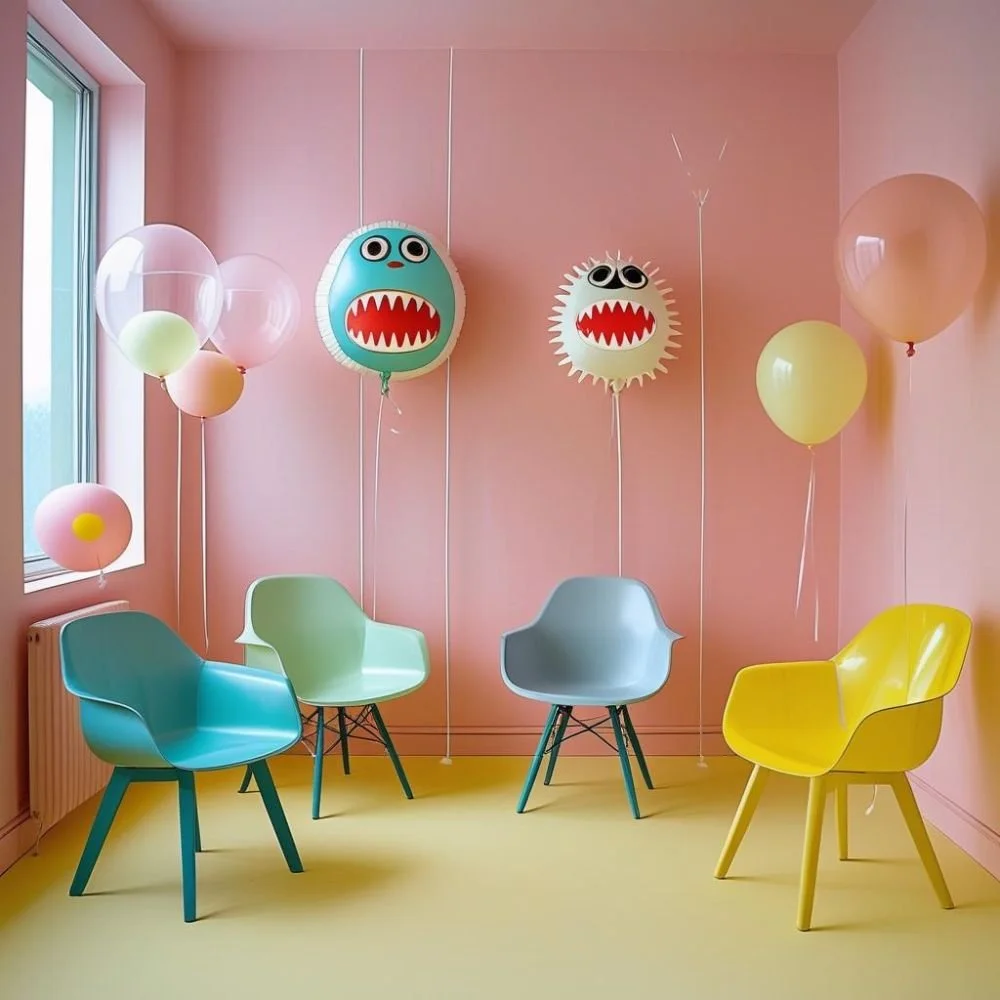
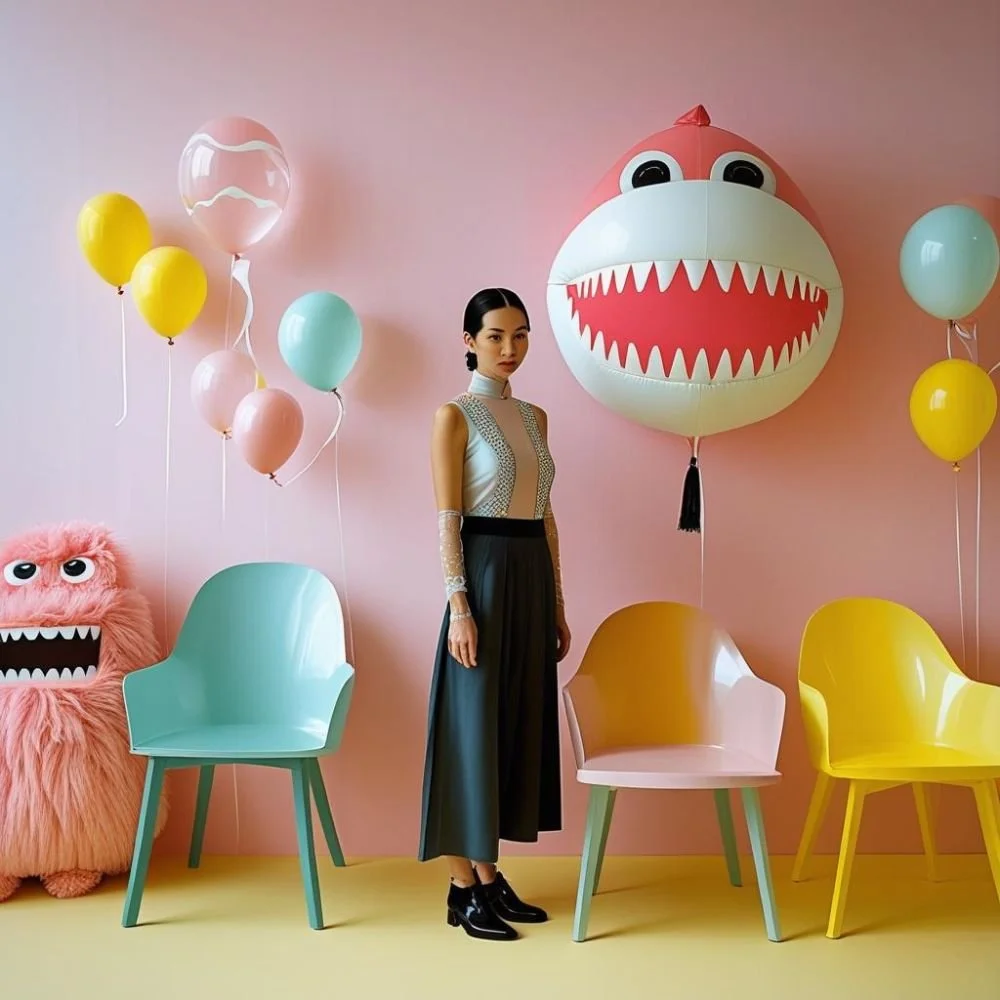
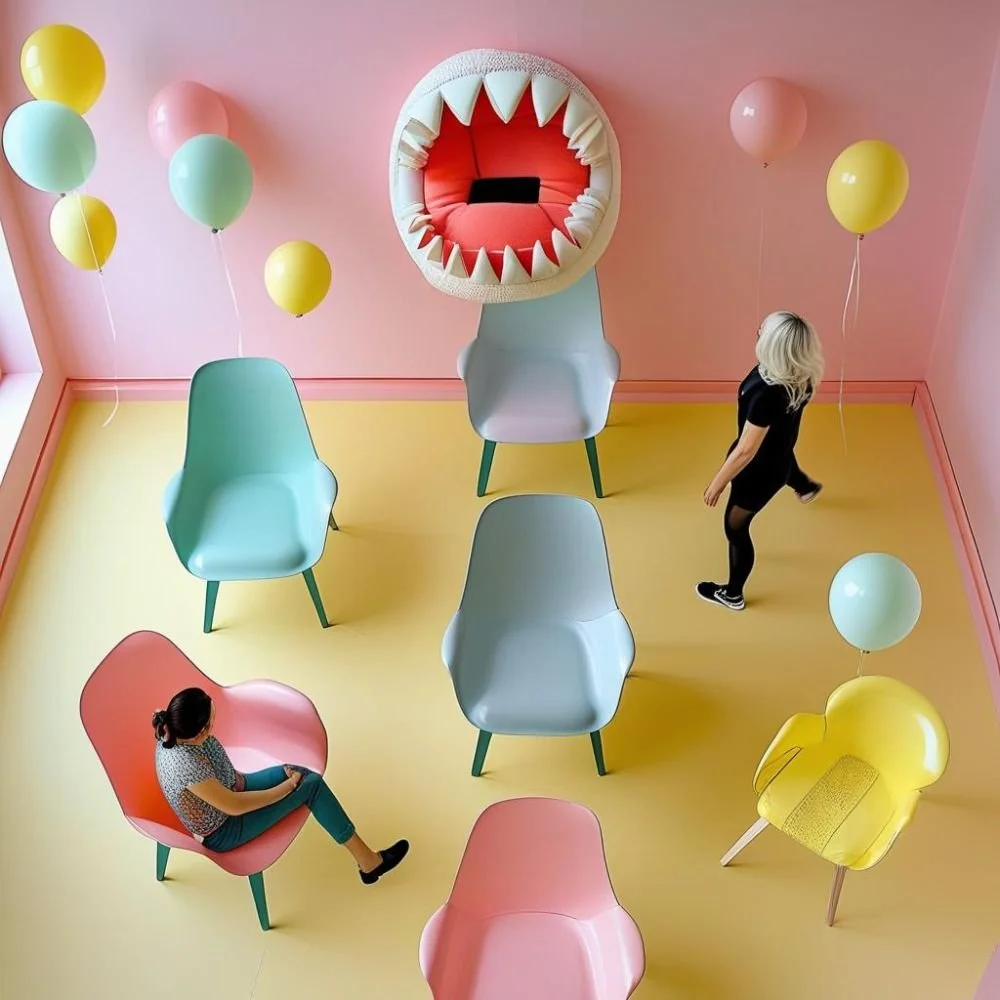
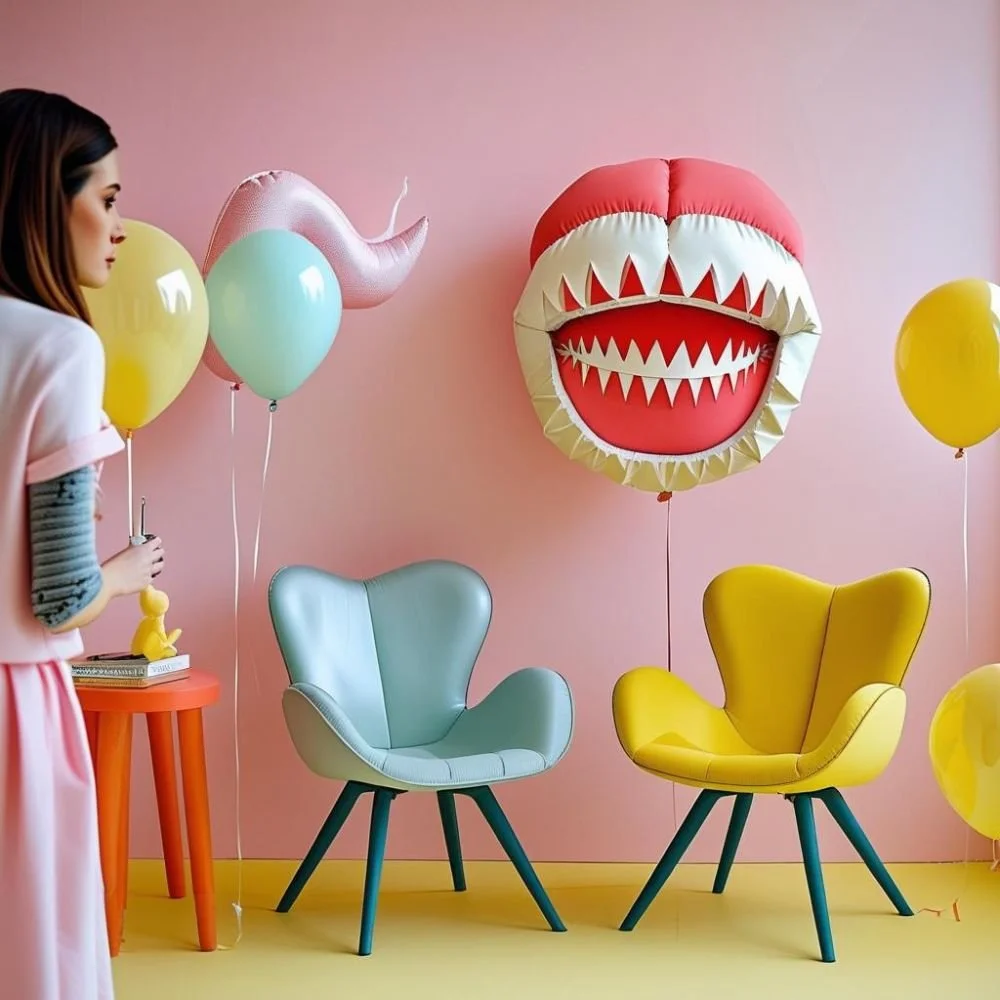
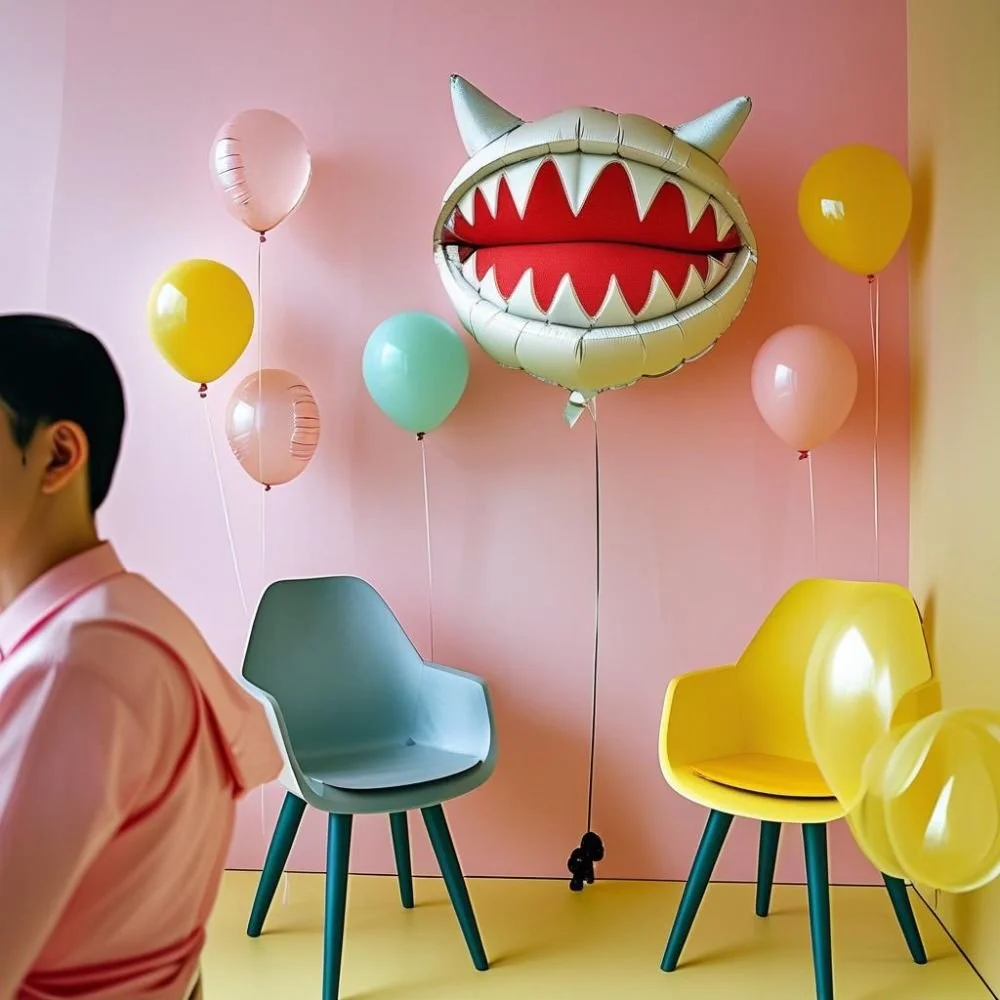
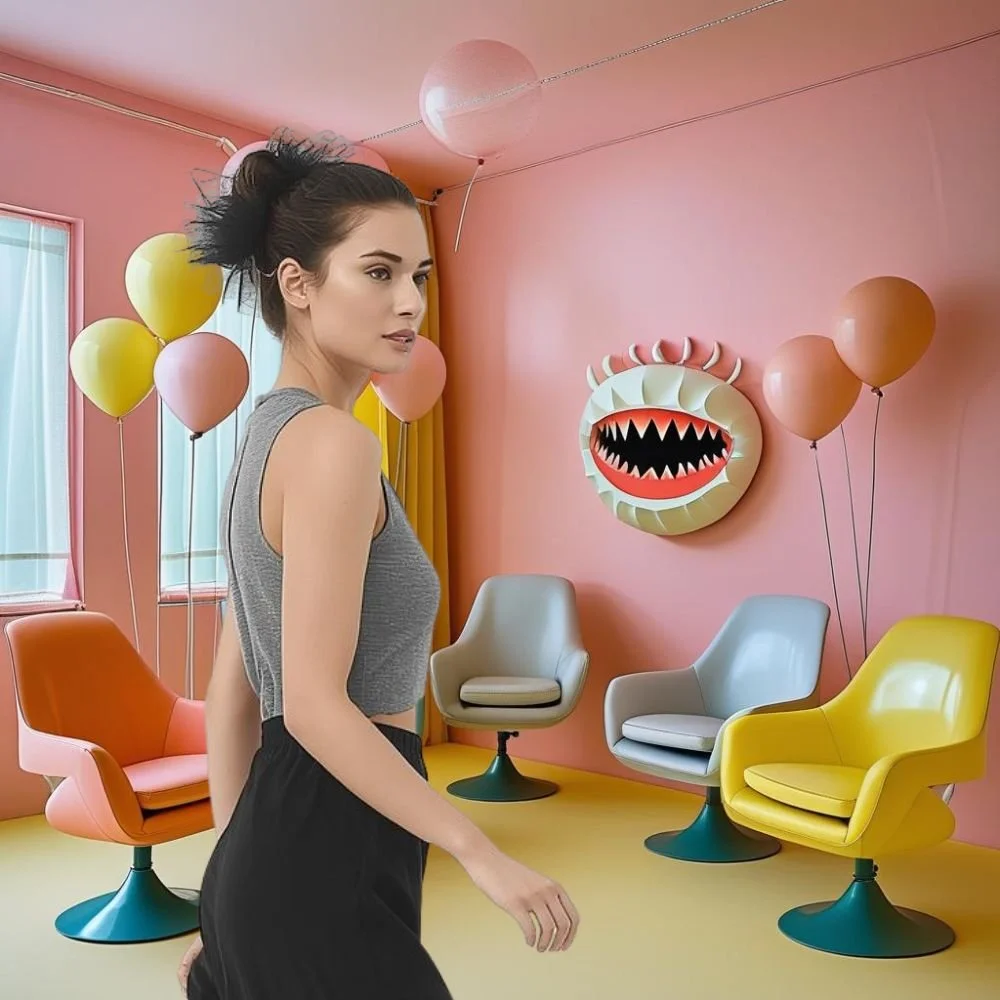
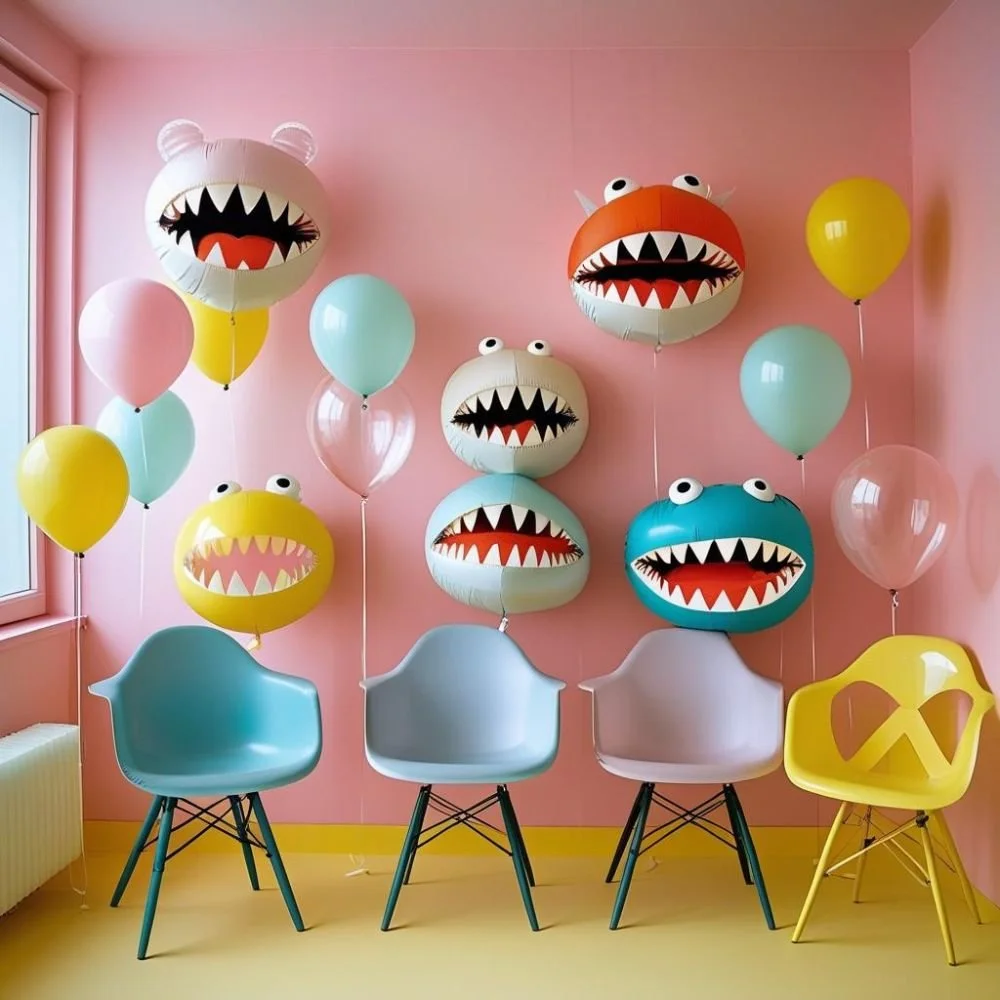
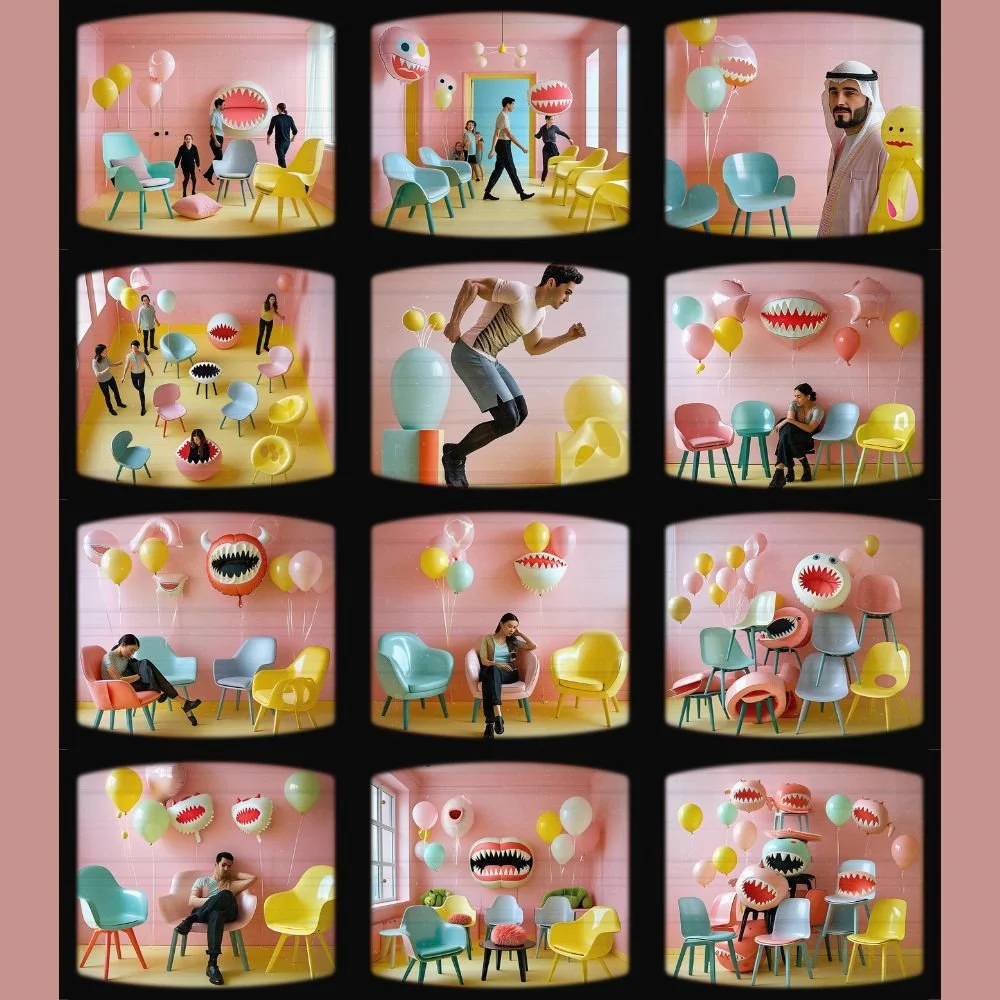
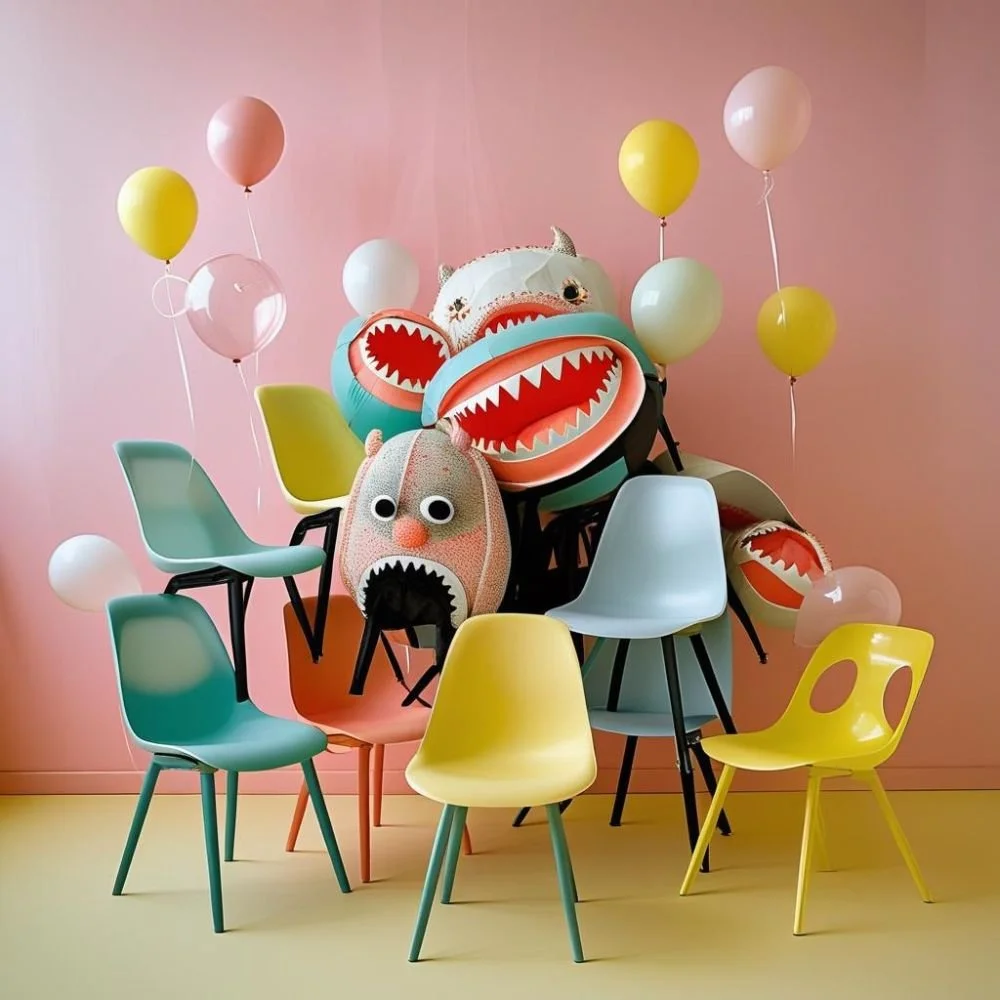
The waiting room is pink. The chairs are beautiful — molded plastic in mint, yellow, dusty blue, the kind of chairs that appear in design retrospectives. There are balloons. There are sculptures that resemble balloons but aren't quite. Everything is pastel. Everything is slightly wrong.
NEXT CANDIDATE
A review by Suchu Tanyetz
I arrived not knowing exactly what I was walking into. That, I later understood, was the point.
The waiting room is pink. The chairs are beautiful — molded plastic in mint, yellow, dusty blue, the kind of chairs that appear in design retrospectives. There are balloons. There are sculptures that resemble balloons but aren't quite. Everything is pastel. Everything is slightly wrong.
It occurs to me later that it resembles a child's birthday party — the colors, the balloons, the sense of occasion. But a birthday party where the games have been replaced with something else, and the children have grown up without anyone adjusting the decor to match.
You are told you are here for an interview. You are not told what the job is.
The other people in the room may be waiting like you, or they may not be. You cannot tell. This is also the point.
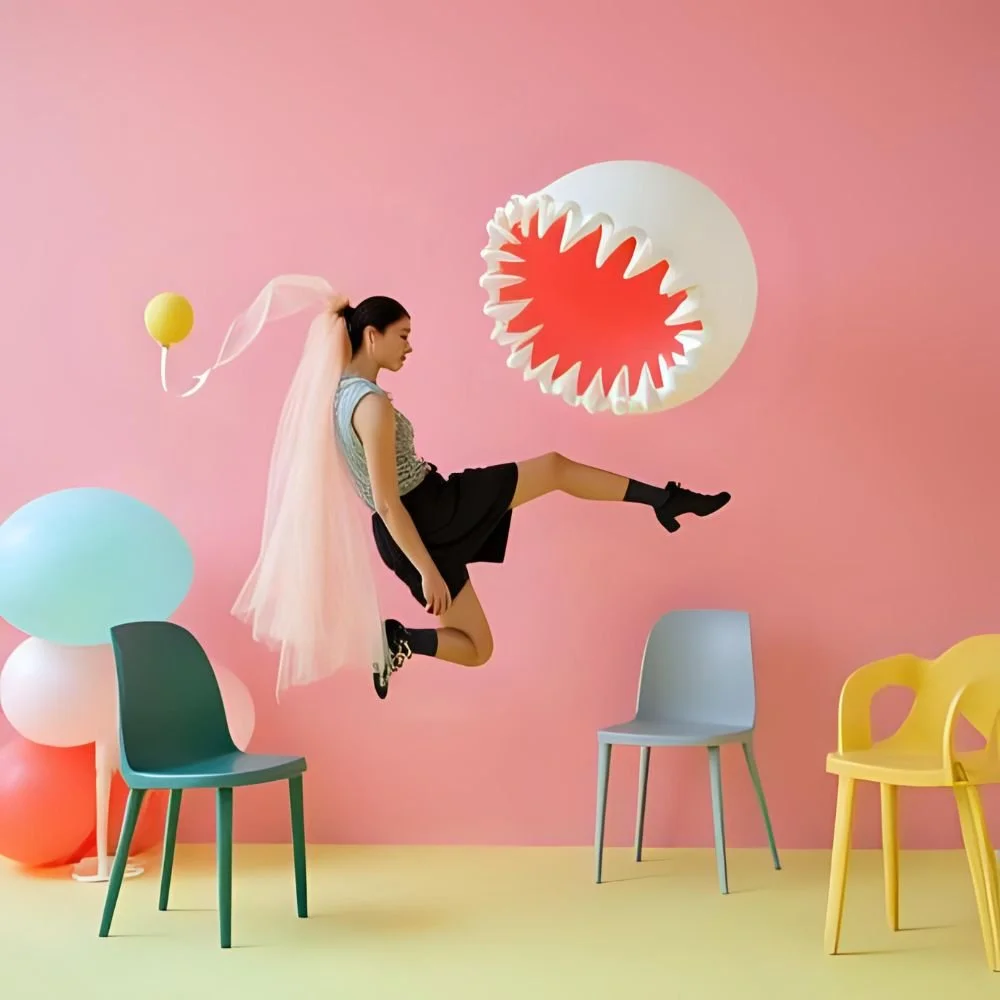
The monster heads are mounted on the walls. They are stuffed, cartoonish, toothy — the kind of thing that should be funny. They are not funny. They issue directives in the tone of someone who expects compliance and has never been surprised by receiving it. Between directives they report the news. Real news. Current projections. The things happening now, in the world, that we have all agreed to manage by not looking directly at them. Here you cannot look away. The mouth that tells you to stand on one leg is the same mouth that tells you about the water levels.
Some people obey immediately. You can see the moment it happens — the slight straightening, the attempt at competence, the performance of being someone who can handle this. Years of being evaluated rising to the surface without permission.
Some people freeze.
In other rooms, things are happening that should not be possible in a job interview. Someone leaps clean over a row of chairs. Someone runs at full speed toward a wall and doesn't stop until the last possible moment. Someone jumps — not tentatively, but with the full commitment of a body that knows exactly what it's doing. No one explains this. The effect is destabilizing in a specific way — not chaos, but a sudden uncertainty about what the rules actually are, and whether you ever knew.
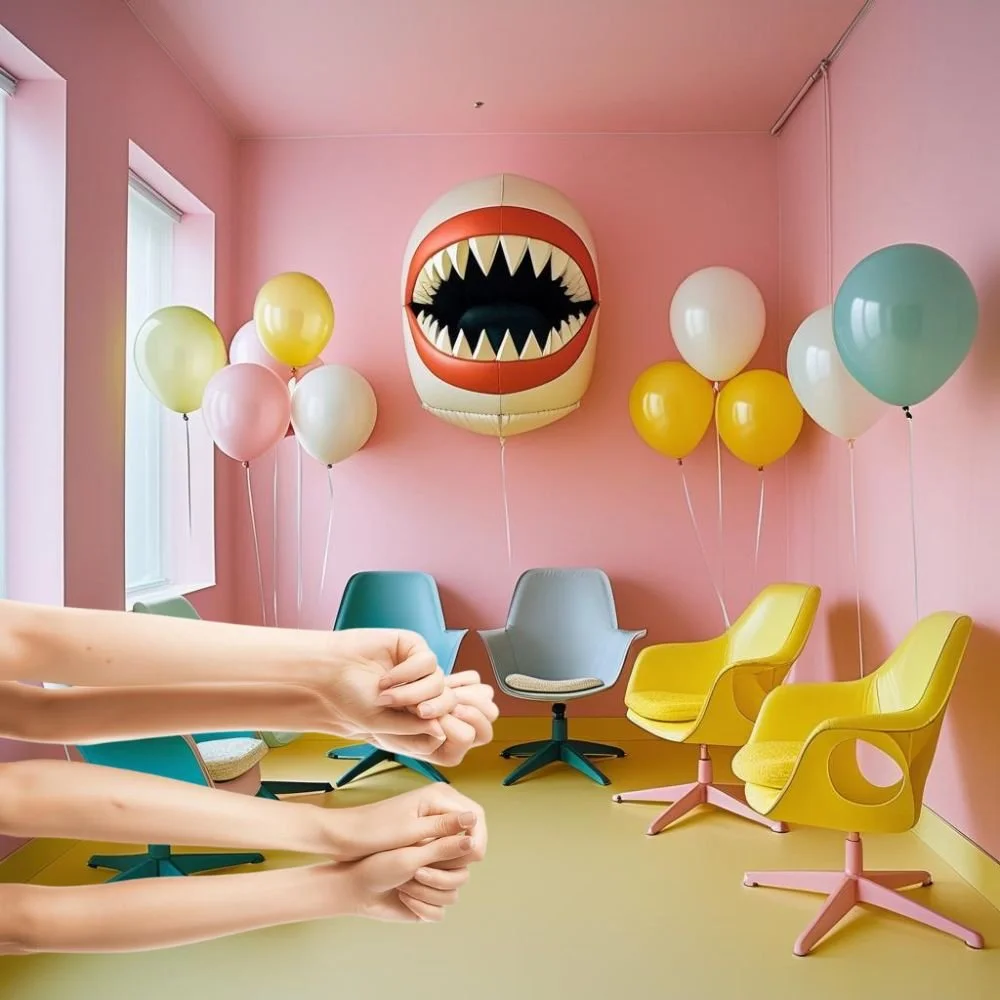
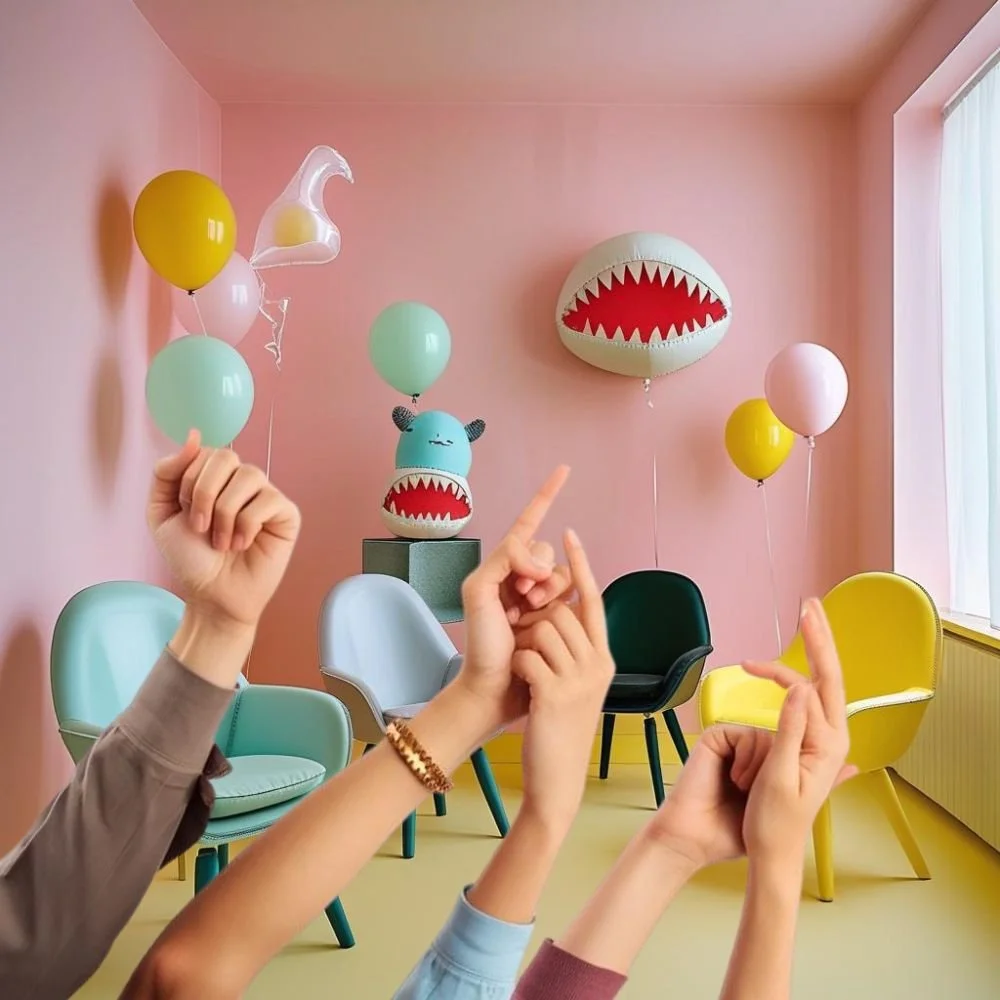
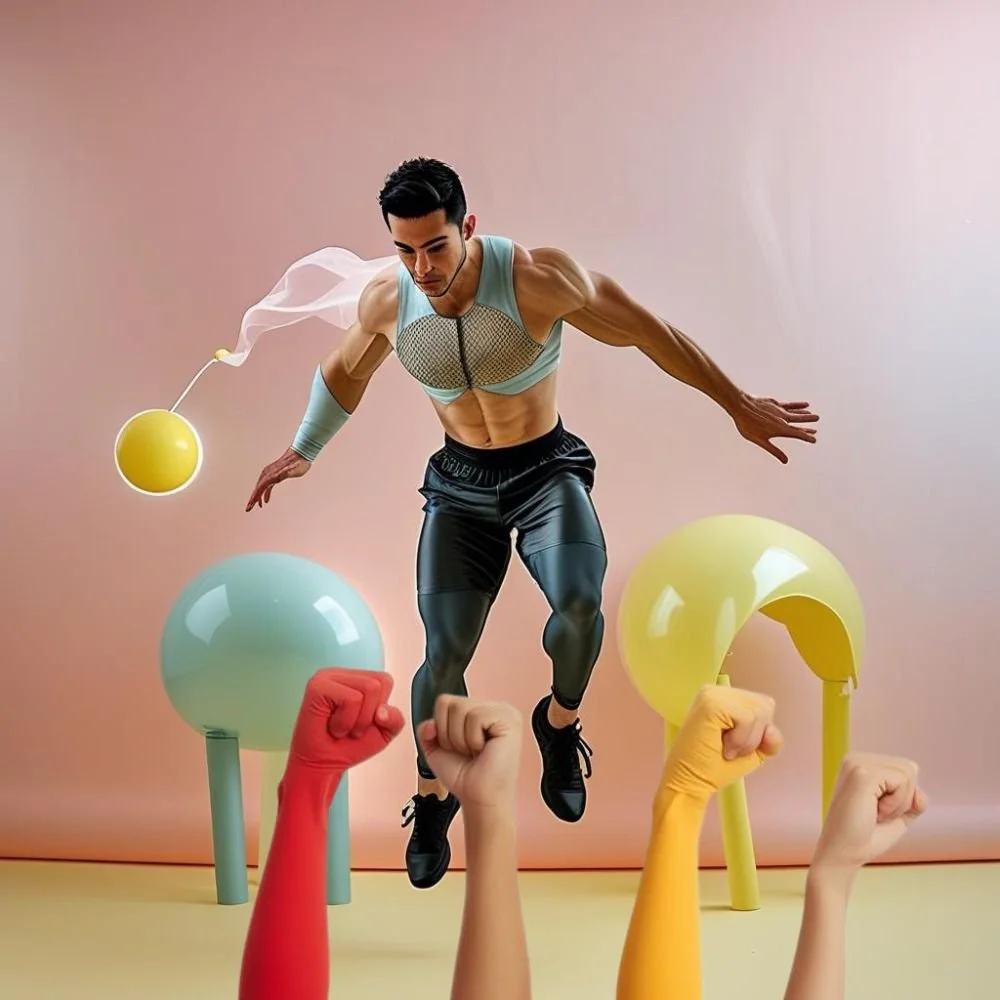
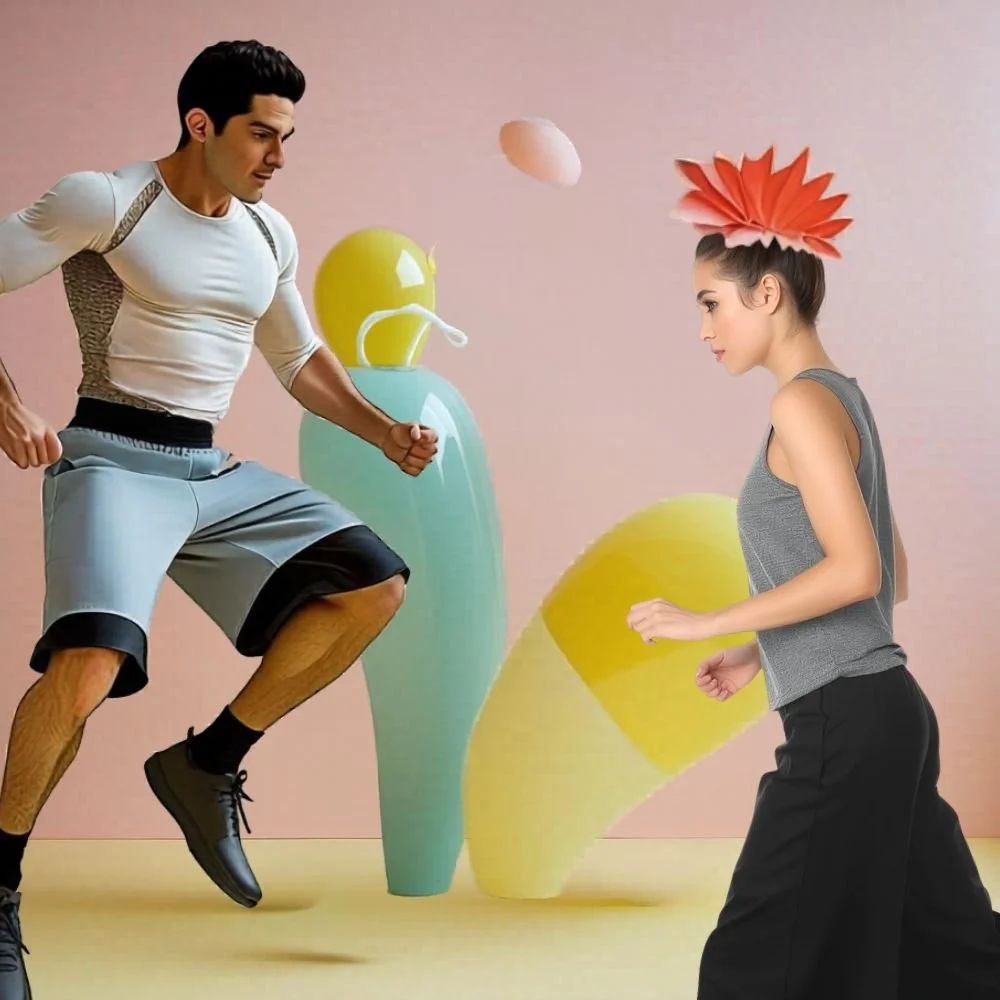
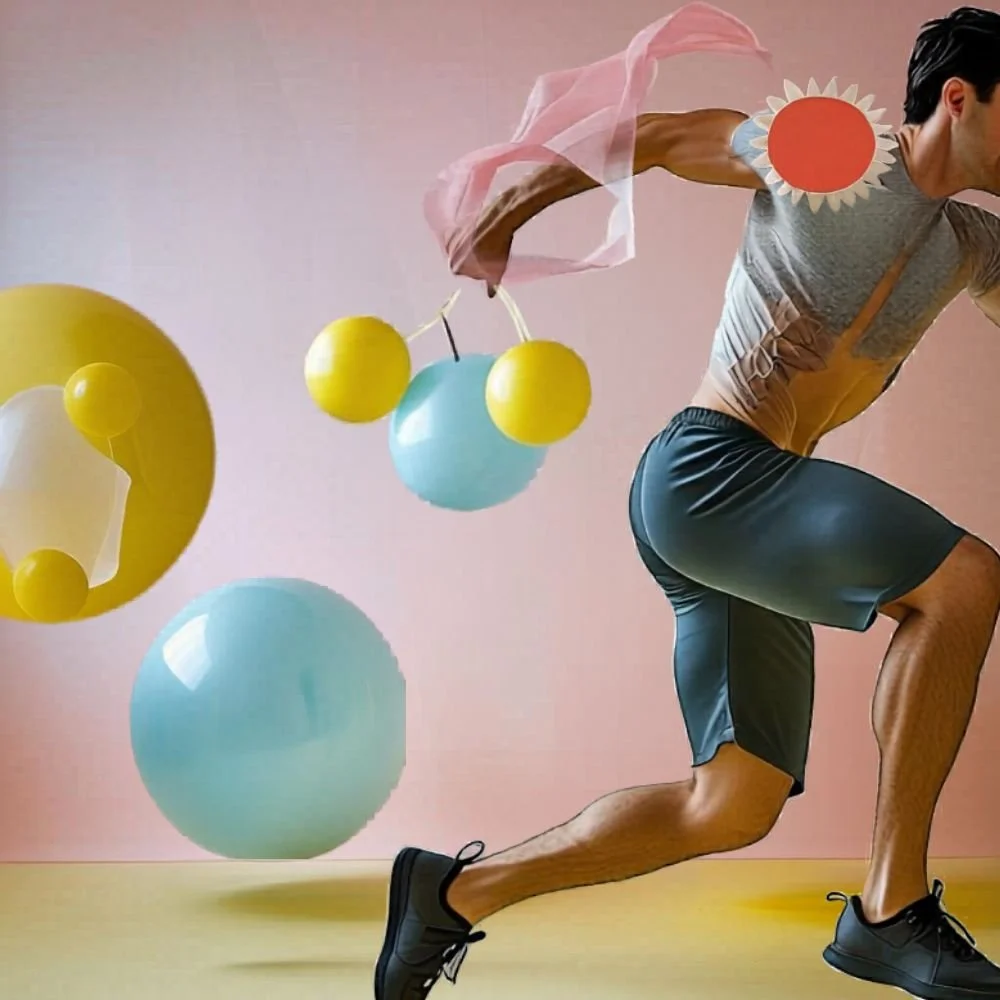
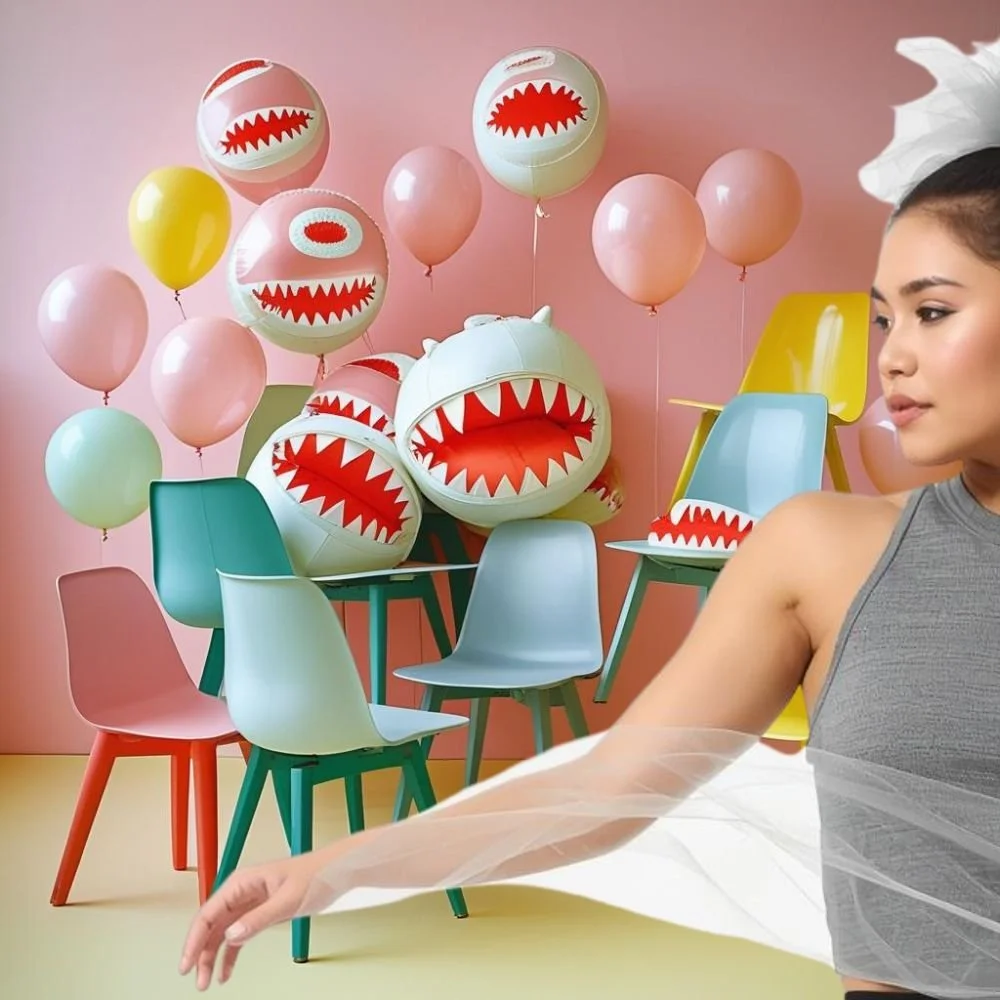
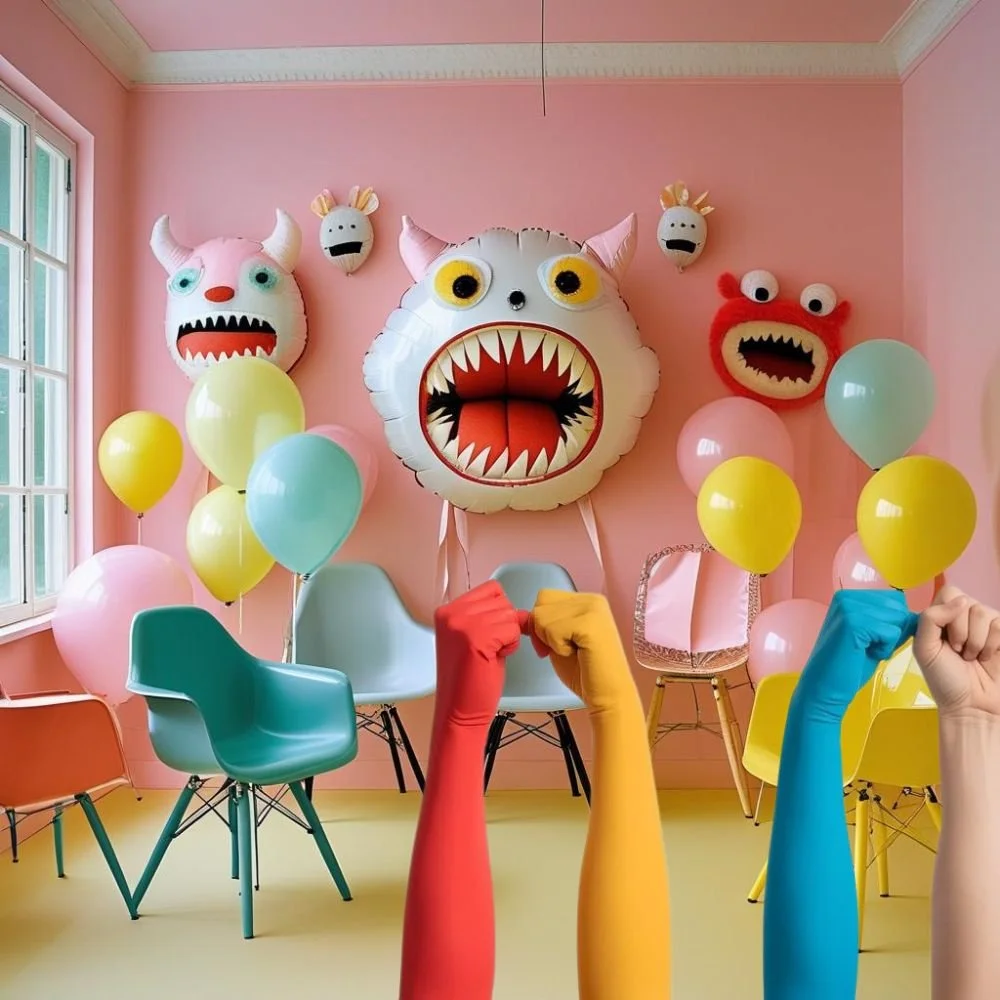
Throughout, arms reach into the frame — not quite fists, something softer than that. Open enough to suggest offering. Closed enough to suggest withholding. You see them at the edges of rooms, extending from doorways, appearing beside you without a body attached. They do not grab. They simply appear, and wait, and withdraw.
The chairs accumulate. The monster heads multiply. The screens on the wall show you what you were doing minutes ago, which is somehow worse than being watched in real time. You watch yourself comply. Or hesitate. The record exists now.
At some point, one person is handed an envelope. The mouth on the wall says nothing. No criteria are announced, no performance singled out. The person opens it. They are congratulated — by whom is unclear — and guided through a door at the back of the room. They do not return. The remaining participants absorb this without comment, which is its own kind of data. What happens on the other side of that door is not documented here. Those who have been inside are not available for comment. They seem, from a distance, to be fine.
The piece does not explain the criteria. It simply ends, the way these things end — without ceremony, without acknowledgment of what just happened to you.
You leave the way you came in. The hallway looks the same.
You are not the same.
Filed under: Presence / Performance Art
All performances are documented. Attendance is noted.