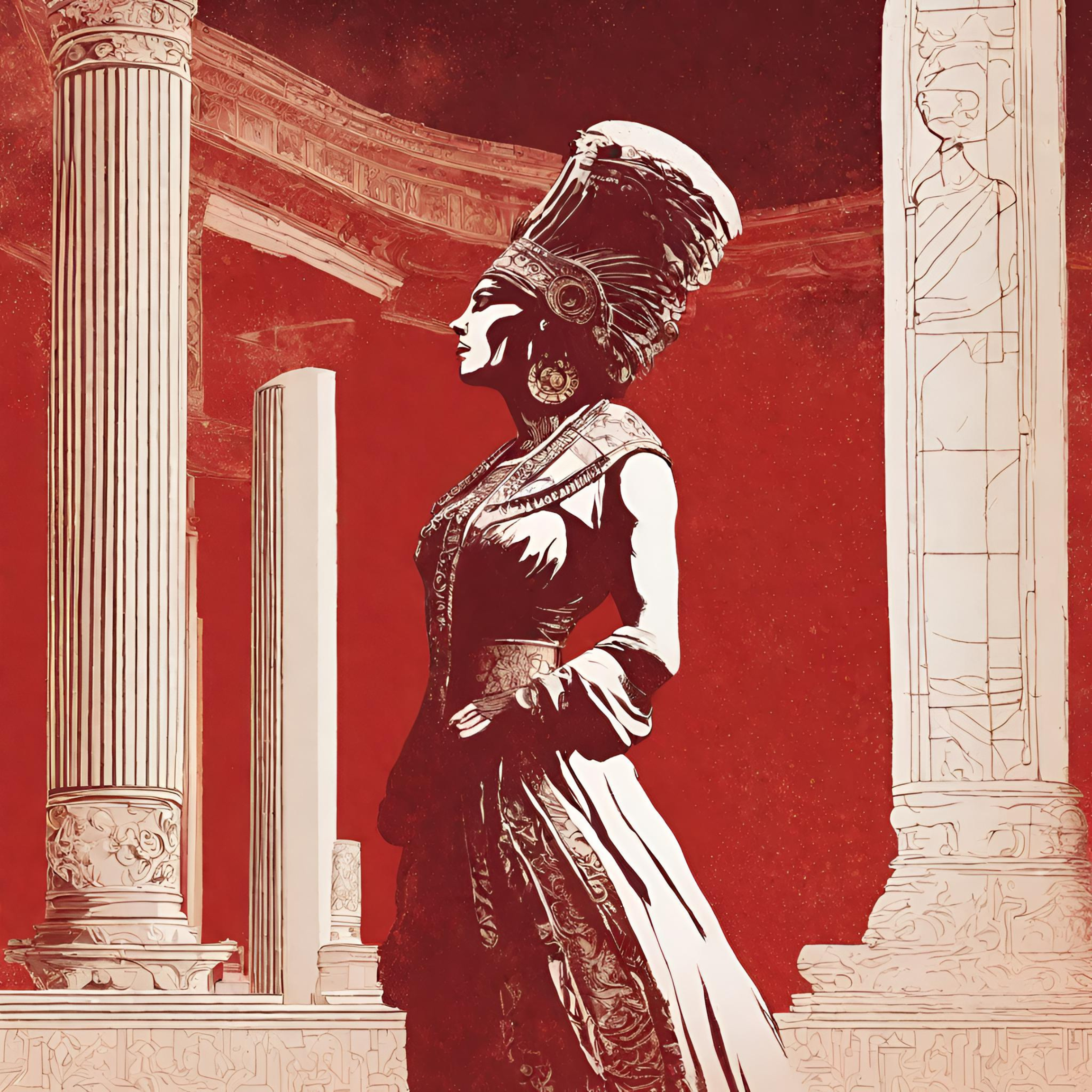
Amidst the Pursuit of Meaning: The Book I Did Not Buy
These entries have been compiled from the marginalia, letters, and encrypted journals of Nepher Roux, a time traveler whose sense of
nostalgia spans several centuries and at least two futures. Each chapter stands as both a memory and a distortion
Chapter 3
The Book I Did Not Buy
There are objects that arrive with the quiet insistence of a creditor — not demanding, exactly, but present in the way that presence itself becomes a kind of pressure. I have lived long enough to know the difference between coincidence and correspondence. I stopped believing in the former sometime in the early eighteenth century, which has made me either more perceptive or considerably more exhausting to spend time with, depending on whom you ask.
I was looking for something else entirely when I found it. This is, I have noticed, always the condition. One does not go looking for the thing that matters. One goes looking for a word half-remembered, a measurement, a receipt tucked into a page as a bookmark three residences ago, and finds instead the thing one has been avoiding.

The book was on the third shelf, between a Finnish flora I have owned since approximately 1887 and a slim volume on Viennese coffeehouses whose author I once met at a Viennese coffeehouse, which struck me as either charming or solipsistic. I did not recognize the spine. It was brown, cloth, with no title visible — the kind of book that suggests it has been waiting rather than simply sitting. Inside the front cover, no name. No provenance. No annotation in any hand I recognized, including my own, which I checked first.
I was three pages in before I found it, pressed flat between chapters on deciduous forests of central Europe, as though someone had used it as a bookmark with great casualness and great deliberateness simultaneously.
A scrap of fabric. No larger than my palm.
Silk, once — degraded now to something softer than silk, which is what silk becomes after enough time and heat and handling. The color was a particular green. Not the green of nature or the green of envy or the green of anything useful or categorizable. It was the green of a specific mind that had decided, after considerable deliberation, that this and only this was the correct green for a trickster to wear into a room and own it completely.
I sat down on the floor. I did not plan to. The floor simply became the appropriate place to be.
His name for the trickster was Šibal. It means, roughly, rogue — but in the Czech of the 1880s it carried additional freight, a kind of fond exasperation, the name you give someone who will always get away with it. Míra had made the costume himself, naturally. He made everything himself. Ernst had once suggested they commission the costumes from a proper theatrical supplier in Vienna and Míra had looked at him with the specific patience of a person deciding not to say several true things simultaneously.
The green had taken him two weeks to source. I know because I was there for one of those weeks, sitting in the corner of the workshop on a chair that had been repurposed from its original function so many times it had forgotten what it was, watching him hold fabric samples up to the light with the seriousness of a man comparing evidence. He discarded twelve greens. The thirteenth he held for a long time without speaking.
This one, he said finally, in Czech, though we had been speaking French. He switched languages when something mattered. As though the right feeling required the right tongue.
I said nothing. I had learned, by then, that Míra's silences were not empty and did not need filling. I had not yet told him what I was. I had not yet decided he was the one person in several centuries I might trust with it. I was still, in that week, simply a woman sitting in a corner watching a man find the correct green, which was, I think, one of the more quietly extraordinary things I have witnessed in a very long life.
The scrap of Šibal's coat sat in my palm for a long time.
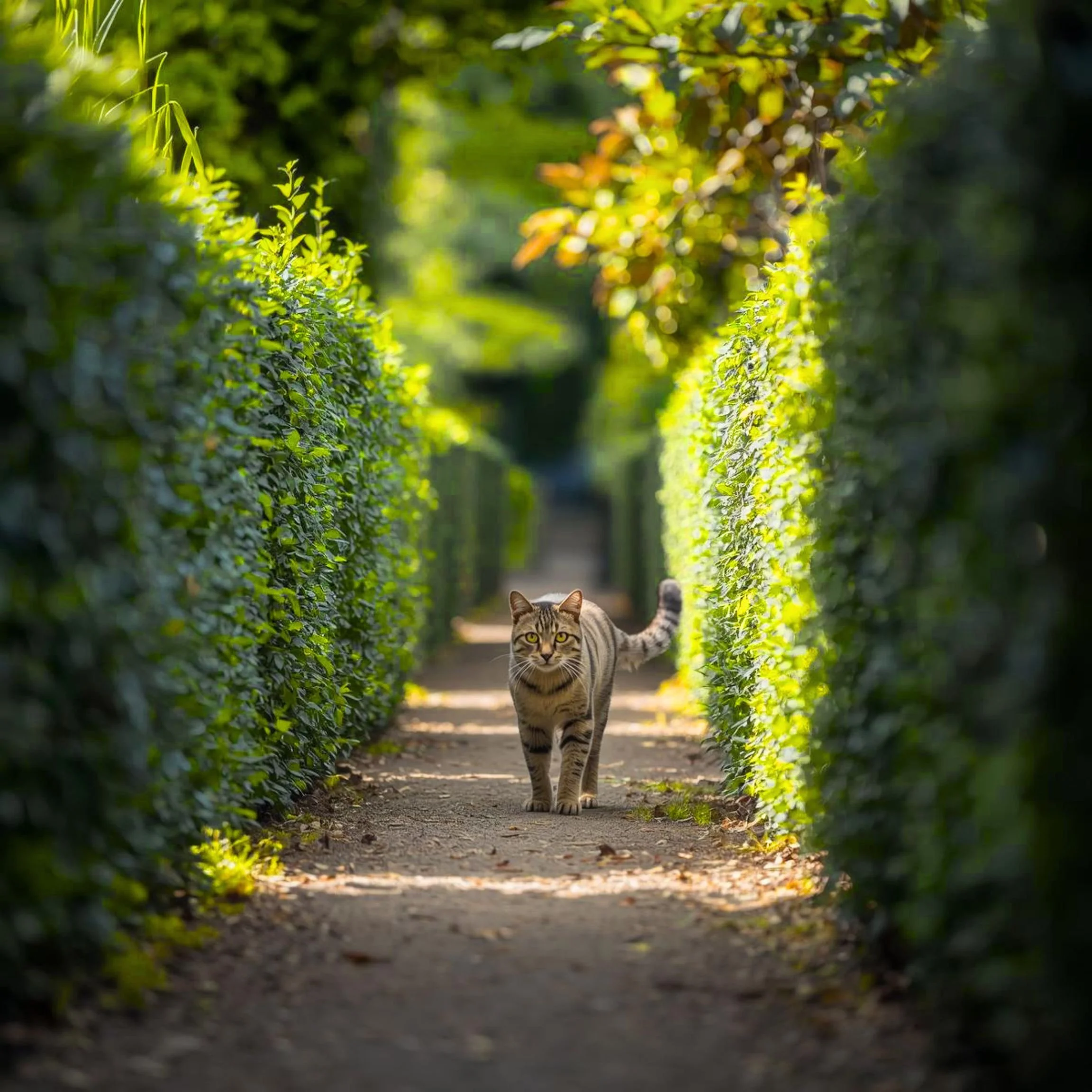
Outside, a cat crossed the garden with the moral certainty of an animal that has never doubted its own trajectory. I watched it until it disappeared through the hedge, and then I looked at the fabric again, and then I looked at the book, still open to its chapter on deciduous forests, beech and oak rendered in careful botanical illustration.

Prague had not been in my mind that morning. It rarely is, deliberately. There are cities one avoids the way one avoids certain streets in cities — not because they are dangerous, exactly, but because the memory of them has a specific gravity that reorganizes everything around it if you let it.
I was not going to let it.
I put the scrap in the pocket of my cardigan — the left pocket, which I noted and declined to interpret — closed the book I had not bought, and went to put the kettle on. The kettle is very old. I have had it in four different residences and at least two different centuries and it has never once boiled faster than it intended to, which I find, on most days, instructive.
I stood at the window while it worked. The garden. The hedge the cat had passed through. The birch tree that has no business growing next to an orange tree but does, stubbornly, which I have always considered one of the more honest things about the current arrangement.
In my left pocket, a scrap of the particular green.
In some direction I was not yet facing: Prague.
I made the tea. I did not move toward anything else. Not yet.