
Nostalgia

Nostalgia Nepher Roux Nostalgia Nepher Roux

Amidst the Pursuit of Meaning: The Book I Did Not Buy

Chapter 3

THE BOOK I DID NOT BUY

There are objects that arrive with the quiet insistence of a creditor — not demanding, exactly, but present in the way that presence itself becomes a kind of pressure. I have lived long enough to know the difference between coincidence and correspondence. I stopped believing in the former sometime in the early eighteenth century, which has made me either more perceptive or considerably more exhausting to spend time with, depending on whom you ask.

These entries have been compiled from the marginalia, letters, and encrypted journals of Nepher Roux, a time traveler whose sense of

nostalgia spans several centuries and at least two futures. Each chapter stands as both a memory and a distortion

Chapter 3

The Book I Did Not Buy

There are objects that arrive with the quiet insistence of a creditor — not demanding, exactly, but present in the way that presence itself becomes a kind of pressure. I have lived long enough to know the difference between coincidence and correspondence. I stopped believing in the former sometime in the early eighteenth century, which has made me either more perceptive or considerably more exhausting to spend time with, depending on whom you ask.

I was looking for something else entirely when I found it. This is, I have noticed, always the condition. One does not go looking for the thing that matters. One goes looking for a word half-remembered, a measurement, a receipt tucked into a page as a bookmark three residences ago, and finds instead the thing one has been avoiding.

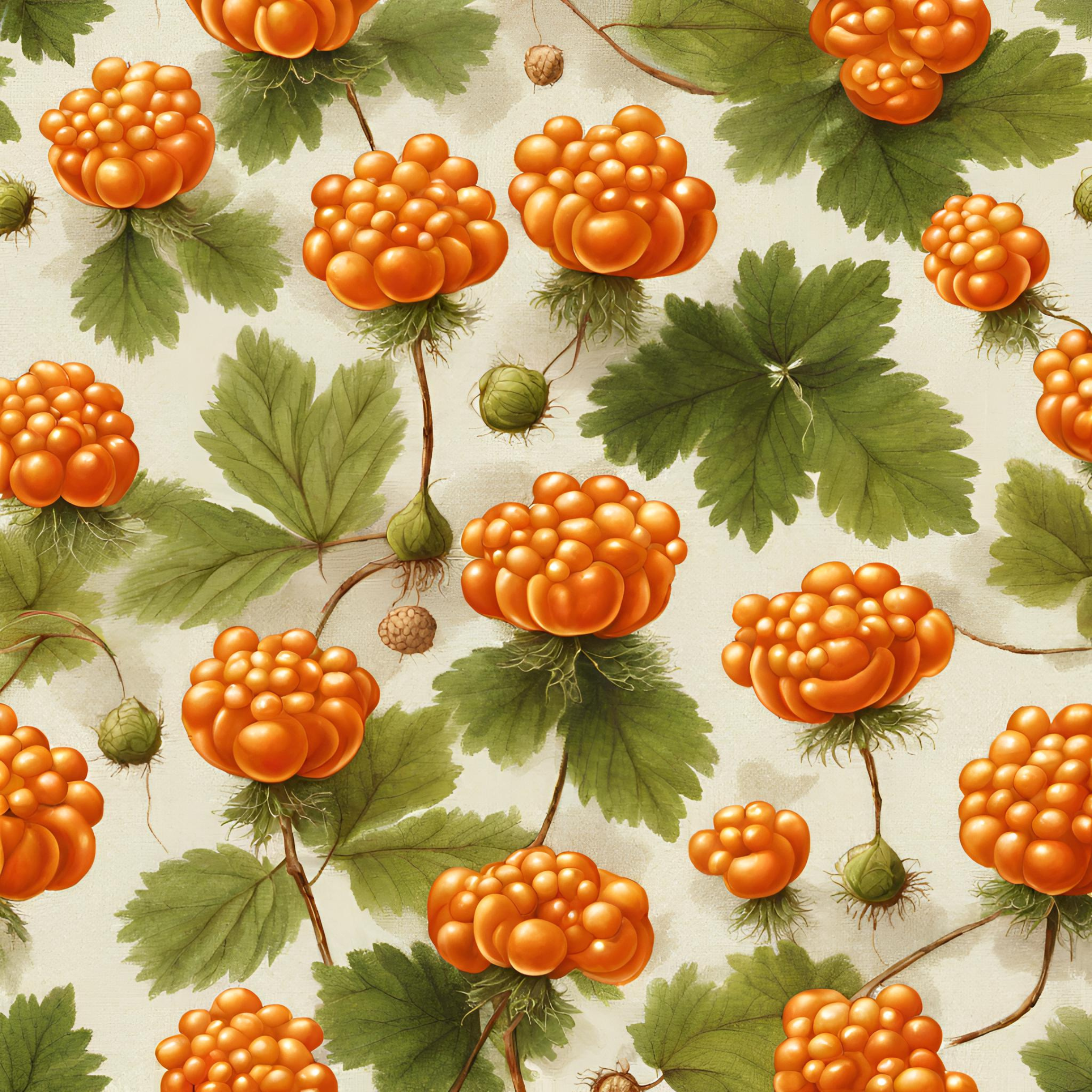
The book was on the third shelf, between a Finnish flora I have owned since approximately 1887 and a slim volume on Viennese coffeehouses whose author I once met at a Viennese coffeehouse, which struck me as either charming or solipsistic. I did not recognize the spine. It was brown, cloth, with no title visible — the kind of book that suggests it has been waiting rather than simply sitting. Inside the front cover, no name. No provenance. No annotation in any hand I recognized, including my own, which I checked first.

I was three pages in before I found it, pressed flat between chapters on deciduous forests of central Europe, as though someone had used it as a bookmark with great casualness and great deliberateness simultaneously.

A scrap of fabric. No larger than my palm.

Silk, once — degraded now to something softer than silk, which is what silk becomes after enough time and heat and handling. The color was a particular green. Not the green of nature or the green of envy or the green of anything useful or categorizable. It was the green of a specific mind that had decided, after considerable deliberation, that this and only this was the correct green for a trickster to wear into a room and own it completely.

I sat down on the floor. I did not plan to. The floor simply became the appropriate place to be.

His name for the trickster was Šibal. It means, roughly, rogue — but in the Czech of the 1880s it carried additional freight, a kind of fond exasperation, the name you give someone who will always get away with it. Míra had made the costume himself, naturally. He made everything himself. Ernst had once suggested they commission the costumes from a proper theatrical supplier in Vienna and Míra had looked at him with the specific patience of a person deciding not to say several true things simultaneously.

The green had taken him two weeks to source. I know because I was there for one of those weeks, sitting in the corner of the workshop on a chair that had been repurposed from its original function so many times it had forgotten what it was, watching him hold fabric samples up to the light with the seriousness of a man comparing evidence. He discarded twelve greens. The thirteenth he held for a long time without speaking.

This one, he said finally, in Czech, though we had been speaking French. He switched languages when something mattered. As though the right feeling required the right tongue.

I said nothing. I had learned, by then, that Míra's silences were not empty and did not need filling. I had not yet told him what I was. I had not yet decided he was the one person in several centuries I might trust with it. I was still, in that week, simply a woman sitting in a corner watching a man find the correct green, which was, I think, one of the more quietly extraordinary things I have witnessed in a very long life.

The scrap of Šibal's coat sat in my palm for a long time.

Outside, a cat crossed the garden with the moral certainty of an animal that has never doubted its own trajectory. I watched it until it disappeared through the hedge, and then I looked at the fabric again, and then I looked at the book, still open to its chapter on deciduous forests, beech and oak rendered in careful botanical illustration.

Prague had not been in my mind that morning. It rarely is, deliberately. There are cities one avoids the way one avoids certain streets in cities — not because they are dangerous, exactly, but because the memory of them has a specific gravity that reorganizes everything around it if you let it.

I was not going to let it.

I put the scrap in the pocket of my cardigan — the left pocket, which I noted and declined to interpret — closed the book I had not bought, and went to put the kettle on. The kettle is very old. I have had it in four different residences and at least two different centuries and it has never once boiled faster than it intended to, which I find, on most days, instructive.

I stood at the window while it worked. The garden. The hedge the cat had passed through. The birch tree that has no business growing next to an orange tree but does, stubbornly, which I have always considered one of the more honest things about the current arrangement.

In my left pocket, a scrap of the particular green.

In some direction I was not yet facing: Prague.

I made the tea. I did not move toward anything else. Not yet.

-Nepher Roux

Read More
Nepher Roux Nepher Roux

Amidst the Pursuit of Meaning: The Wane of Velvet Hours

THE WANE OF VELVET HOURS

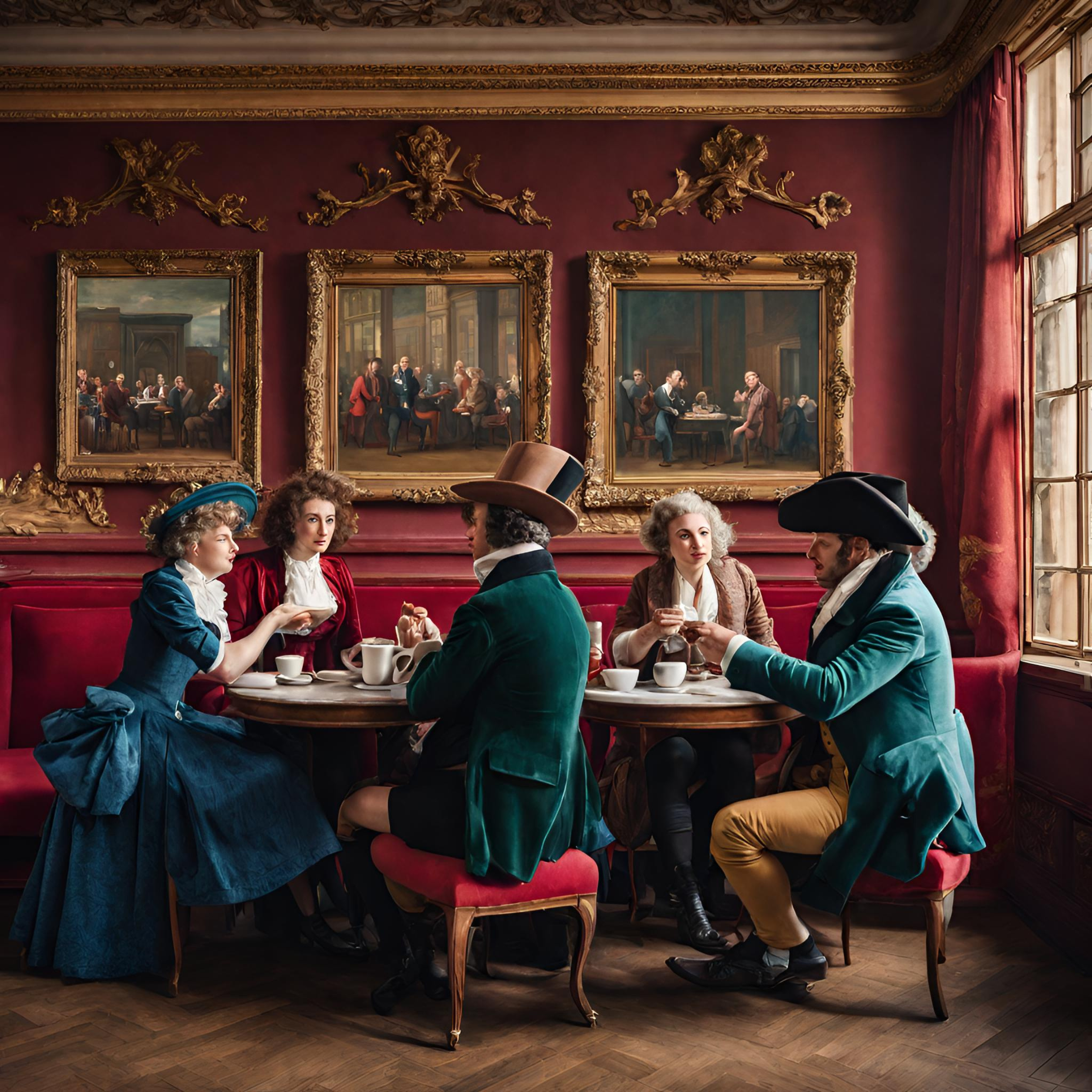
There are evenings that seem to unspool without gravity—those dusklit interludes where memory and presentiment intermingle like shadow and perfume. In such an hour, I recall the winter salons of Vienna in the 1780s, where candlelight slid languidly across parquet floors and the clink of porcelain demitasses was almost orchestral.

These entries have been compiled from the marginalia, letters, and encrypted journals of Nepher Roux, a time traveler whose sense of nostalgia spans several centuries and at least two futures. Each chapter stands as both a memory and a distortion

Chapter 2

The Wane of Velvet Hours

There are evenings that seem to unspool without gravity—those dusklit interludes where memory and presentiment intermingle like shadow and perfume. In such an hour, I recall the winter salons of Vienna in the 1780s, where candlelight slid languidly across parquet floors and the clink of porcelain demitasses was almost orchestral. I was then Madame Roux of the Rue Tuchlauben, allegedly widowed (and conveniently so), a woman of indeterminate age but practiced gaiety, known among the polymaths and melancholics who haunted the smoke-coiled evenings.

They called me “La Finnoise,” and though the name was exoticized beyond recognition, it suited the person I was playing—aloof, elliptical, draped in silk and affectation. Yet beneath the sapphire velvet and powdered coiffure was the child who once scraped frost off her mother’s window with the back of a spoon, watching the moonlight cleave through the pine forest.

It is strange how the past never obeys chronology. I find that the Helsinki of my girlhood now bleeds into Mozart’s Vienna, and that both are haunted by the lemon trees of Alexandria, where I lived (or rather, was detained by my own fascination) during the late 1920s. I wore linen then, and my skin remembered the sun like a private scandal. The conversations in Alexandria were endless, scented with cardamom and empire. We debated time as though it were a negotiable substance. I often remained silent, knowing better.

What persists, what truly binds these epochs together, is not the architecture or the fashion, though I adored both and curated them obsessively—it is the ache. The ache of being unmoored. Of remembering too much. Of having no fixed death to arrange one's life around.

So many of the people I loved—truly loved—exist now only in the marginalia of my journals. A man in Vienna who taught me to waltz using only shadows. A girl in Helsinki whose laugh made the crows quiet. A scholar in Alexandria who believed he had deciphered a universal script and vanished before breakfast.

I have learned, reluctantly, that nostalgia is not a longing for the past, but for a version of the self that could feel astonishment without irony. That is the real loss. And perhaps, the real crime of time travel—not that one escapes chronology, but that one must survive the erosion of wonder.

I write this now from an unnamed year. The fashion is anachronistic, the climate confused. But outside, a single birch tree stands beside an orange tree, and for a moment, they coexist, as all my lives do, folded into one another like forgotten letters pressed into a book.

And somewhere, beyond the reach of my recollection, someone is beginning again. Or has just said goodbye.

It was then—mid-sentence, quite literally—that I was interrupted by a low mechanical chime. Not one of my own devising. I have never trusted alarms, clocks, or anything that insists on linearity. But this was not the polite bell of the 18th-century butler, nor the rattle of a pneumatic message tube from my days in pre-war Berlin. No, this was unmistakably modern—or possibly future—though worn with age. Tinny, like a wind-up toy exhaling its last breath.

I rose, somewhat dramatically, from my writing chaise (a gift from an ill-fated Spanish marquis, long decomposed), and padded toward the front vestibule of my current residence—a nondescript row house that pretends to be Edwardian but is riddled with inconsistencies, much like myself.

There, waiting on the doormat, was a small, cloth-bound parcel, tied with string. The handwriting was my own.

I hesitated—not from fear, for fear is a luxury of the inexperienced—but from annoyance. Time anomalies are so rarely punctual.

Opening the parcel revealed three items:

  1. A faded, annotated recipe card for Piirakka Kivimarja—gooseberry tarts, the rustic kind, with rye crust and a smudge of honey at the corner.

  2. A silk glove, left-hand only, with scorched fingertips.

  3. And most curiously, a pressed sprig of vitsaspensas—a flowering shrub extinct in this century, though I distinctly remember cultivating it in the gardens of 2074 Helsinki.

Naturally, I made the tarts. What else is one to do with a temporal puzzle but eat it?

The recipe was in my grandmother’s hand. Or possibly mine, forged for subtlety. The gooseberries had come from nowhere discernible; I found them in a bowl beside the icebox, glistening like small planets. Their taste was exact—sharp, citric, ancestral. They pulled open a memory I had not summoned:

A summer bonfire. Helsinki. Me at fourteen. A boy named Ilari trying to teach me how to throw a rock into a lake so it skips more than five times. I failed. He laughed. I hated him for it—for the ease of his joy. But then he handed me a gooseberry. And I forgave him, entirely.

I stood for a long while in the kitchen, dusted with flour, tart cooling by the window, trying to place the source of the glove and the reason for its scorch marks. I knew that soon I would have to follow the thread—perhaps back to Alexandria, or forward to wherever I had left the glove, or lost the hand.

But not yet.

For now, I write. And eat. And let the present—such as it is—pretend to hold me in place.

Read More
Nepher Roux Nepher Roux

Amidst the Pursuit of Meaning: A Mosaic of Fractured Moments

Chapter 1, A Mosaic of Fractured Moments

In the remote corners of memory, where the recesses of time weave a delicate tapestry, I am drawn to the days of my youth, a realm imbued with the austere beauty of the Nordic landscape, where the silvery whispers of birch trees intermingled with the melancholic sighs of the Baltic Sea. This was an epoch when Helsinki was but a nascent outpost, and the gilded echelons of society mirrored the cadence of the northern seasons, unyielding and contemplative.

These entries have been compiled from the marginalia, letters, and encrypted journals of Nepher Roux, a time traveler whose sense of nostalgia spans several centuries and at least two futures. Each chapter stands as both a memory and a distortion

Chapter 1

A Mosaic of Fractured Moments

In the remote corners of memory, where the recesses of time weave a delicate tapestry, I am drawn to the days of my youth, a realm imbued with the austere beauty of the Nordic landscape, where the silvery whispers of birch trees intermingled with the melancholic sighs of the Baltic Sea. This was an epoch when Helsinki was but a nascent outpost, and the gilded echelons of society mirrored the cadence of the northern seasons, unyielding and contemplative.

My earliest recollections unfold in the shadow of a manor nestled amidst the pristine expanse of the Finnish countryside. The manor, a resplendent edifice cloaked in lichen and moss, harbored the whispers of generations past. Within its hallowed halls, I, a mere specter of innocence, navigated the labyrinthine corridors of childhood. The resonant laughter of my kin reverberated through the grand halls, a symphony that blended seamlessly with the rustle of the birch leaves outside, heralding the arrival of autumn.

The long winters, draped in the ethereal glow of the Northern Lights, fostered a sense of introspection. Sequestered within the embrace of flickering candlelight, familial tales were spun, each narrative a fragment of the ancestral tableau. The chronicles of familial lineage, entwined with the history of the land, wove a narrative that bound us to both the soil beneath our feet and the infinite heavens above.

Adulthood unfurled its wings in the hallowed halls of academia, where the pursuit of knowledge became a solemn pilgrimage. Helsinki, a city burgeoning with intellectual fervor, mirrored the enlightenment coursing through my veins. The salons and coffeehouses, sanctuaries of discourse, were the crucibles wherein ideas fermented, and debates, like tempestuous storms, stirred the very foundations of our understanding.

Yet, in the triumph of reason and the edification of the mind, a disquieting realization took root—the inexorable passage of time, a relentless current that swept away the grandiloquence of youth. The once-vibrant discussions, the spirited dialogues, all seemed but ephemeral echoes in the caverns of memory.

In the social spheres, where the veneer of civility masked the tumult beneath, I waltzed through the patterns of cordial expectations. The grand balls, the whispered intrigues, became a masquerade where faces were obscured, and hearts concealed. The pursuit of eminence, the relentless march towards societal approbation, all cast shadows on the pristine snow of my erstwhile ideals.

As the years belabored by, I found myself standing at the precipice of a world transfigured. The manor, once a haven of familial warmth, now stood weathered and silent. The companions of my youth, like brief apparitions, had vanished into the mists of time. The gilded high society, once a stage for the theater of my aspirations, now revealed itself as a mere illusion, a mirage shimmering on the icy horizon.

On the shores of the Baltic, where the sea met the land in a perpetual dance, I contemplated the cadence of life. The ebb and flow of the tides mirrored the transient nature of existence—the relentless march of the hours and the insatiable hunger of the abyss. The Baltic, an emblem of eternal continuity, whispered secrets of epochs long past, a reminder that our short-lived sojourn on this terrestrial stage was but a fleeting pageant.

As the aurora borealis painted the night sky with ethereal hues, I found myself adrift in the ceaseless currents of retrospection. The grand miscellanea of my life, once vibrant with the colors of ambition and purpose, now seemed a mere patchwork of fractured moments, an unwinding narrative lost in the vast expanse of born days. The relentless ticking of the clock echoed in the chambers of my consciousness, a somber reminder of the irretrievable seconds slipping through the hourglass.

In the solitude of my contemplation, I pondered the elusive nature of meaning. The pursuits that once animated my spirit—the quest for knowledge, the dalliances in elite society, the familial bonds that once seemed immutable—now appeared as mere phantoms, dissolving into the vapour. The grandiloquent ambitions of my prime, like ships on the horizon, sailed away beyond the reach of my grasp.

In the crucible of memory, where the flames of retrospection flicker, I am left to confront the enigma of time's capricious passage. The luminosity of my youthful dreams has dimmed, eclipsed by the inexorable shadows cast by the march of temporal inevitability. The icy winds of Finland, whispering through the evergreen pines, carry with them the plaintive echoes of a soul wrestling with the profound question—what intent lies beneath the veneer of existence, and what vestiges remain when the momentary dance with life concludes?

-Nepher Roux


Read More